I have not worn a watch since September 11, 2001, when I lost mine at Ground Zero.
In the years since, that day has taught me to measure time differently — through memorials, family moments and the painful tally of friends who are no longer here.
For survivors, first responders and the people who lived or worked in lower Manhattan after the attacks, time has been both a blessing and, too often, a punishment.
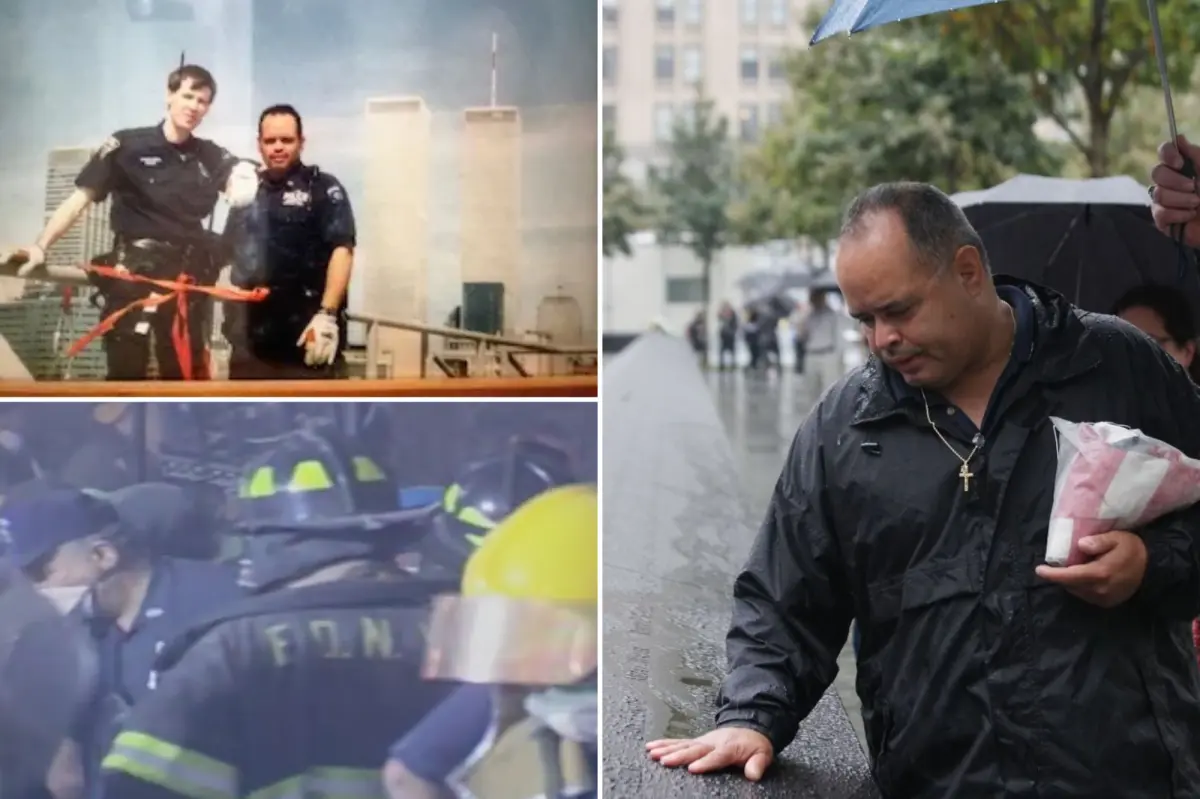
It was unforgiving for me and the other NYPD officers searching for survivors on 9/11. The towers were struck in the morning, but evening had already fallen when a firefighter told us two officers were trapped somewhere beneath the wreckage of the collapsed World Trade Center.
We did not yet understand that the rescue would stretch into a 14-hour fight for rookie Port Authority Police Officer Will Jimeno, and a 22-hour struggle for Port Authority Police Sgt. John McLoughlin.
They were badly injured, buried beneath roughly 30 feet of debris. For them, survival came minute by minute. For us, crawling and clawing through the darkness with our bare hands, the mission became deeply personal. I thought about my own family, and about those two men, who would become among only 20 people pulled alive from the fallen towers.
Fourteen of my friends died that day. I remember them whenever I catch the time on someone else’s wristwatch, a computer screen or a television, because I never replaced the watch I lost. It is a ritual now, and one I have no desire to give up.
At times, I am struck by the fact that I did not lose even more friends on September 11. Then I think about the deaths that followed — the ones that day quietly set in motion.
They’re ongoing, because people who worked at Ground Zero have been developing cancers and chronic illnesses from the toxic dust and debris at the site. A single, terrifying day left a 25-year trail of medical and emotional challenges.
Physicians at the World Trade Center Health Program, where I am a patient, have diagnosed, treated and monitored more than 5,0000 patients and a range of diseases that are still unfolding.
Everything from respiratory conditions, sleep disorders, and mental health challenges, to more than 16 categories of cancer have led us to a new, painful statistic: the cumulative death toll from certified 9/11-related illnesses now surpasses the immediate number of fatalities of Sept. 11.
Physicians see it in their exam rooms. I see it too. Each year, someone else is unable to attend a 9/11 remembrance because they’ve fallen ill, or another acquaintance has a new symptom or diagnosis.
For my part, I’ve undergone major surgical repairs to my trachea, both bronchial tubes and my sinuses. I had a bout of skin cancer. My family worries about a chronic cough I developed years ago.
I may no longer have my Timex, but I carry my inhalers. And still, I’ve been given time.
That makes me one of the lucky ones. I recognize how fortunate I am even when my gratitude for the time I’ve had becomes murky.
It has come with the responsibility and honor of carrying the memory of those who died that day, offset by anger I still feel toward the terrorists who carried out the attacks. This mix of emotions is part of the unfinished tragedy they left behind, and a tough reality to accept.
Despite it, I’ve been able to watch my two sons grow up, marry and become police officers in the same police unit where I worked.
I was overcome with joy when the daughter of a friend I lost on 9/11 brought her infant son to a remembrance event.
There was sadness, too. It devastates me that this baby has never met his grandfather. That child is the same age as one of my two grandchildren.
I’ve also spent much of the last 25 years building an unbreakable camaraderie with other responders, Ground Zero volunteers and people who were inspired to join the military after the attacks.
Will Jimeno and I have developed an especially close friendship. He’s still working through his own emotional and physical challenges and has written a book about them. Once, when we spoke about the rescue, we each recalled details the other didn’t know, or perhaps had forgotten.
Only recently, he learned that I’d lost my Timex the day I fought time to dig him out of the rubble.
Not long after that conversation with him and his wife, Allison — who was seven months pregnant during his rescue — I received a box in the mail from the Jimeno family.
It contained a new Timex with a note: “You should have said it was a Rolex.”
Maybe one day I’ll wear it. For now, I’m grateful for the time.
Scott Strauss is vice president of Security & Support Systems for Northwell Health and a former detective with the New York City Police Department’s Emergency Service Unit.