
Share this @internewscast.com
MEXICO CITY: Recent reports are surfacing about the experiences of Americans caught in the midst of cartel violence in Mexico, following the death of Nemesio Oseguera Cervantes, infamously known as “El Mencho.”
The murder of the leader of the Jalisco New Generation Cartel (CJNG) has sparked armed conflicts between rival criminal factions and Mexican security forces. This unrest has led to orchestrated vehicle fires and temporary highway blockades. Mexican officials indicate that these events are often tied to internal gang feuds or specific law enforcement operations.
As conditions stabilize, Americans vacationing in areas like Puerto Vallarta are recounting the chaos they witnessed firsthand.

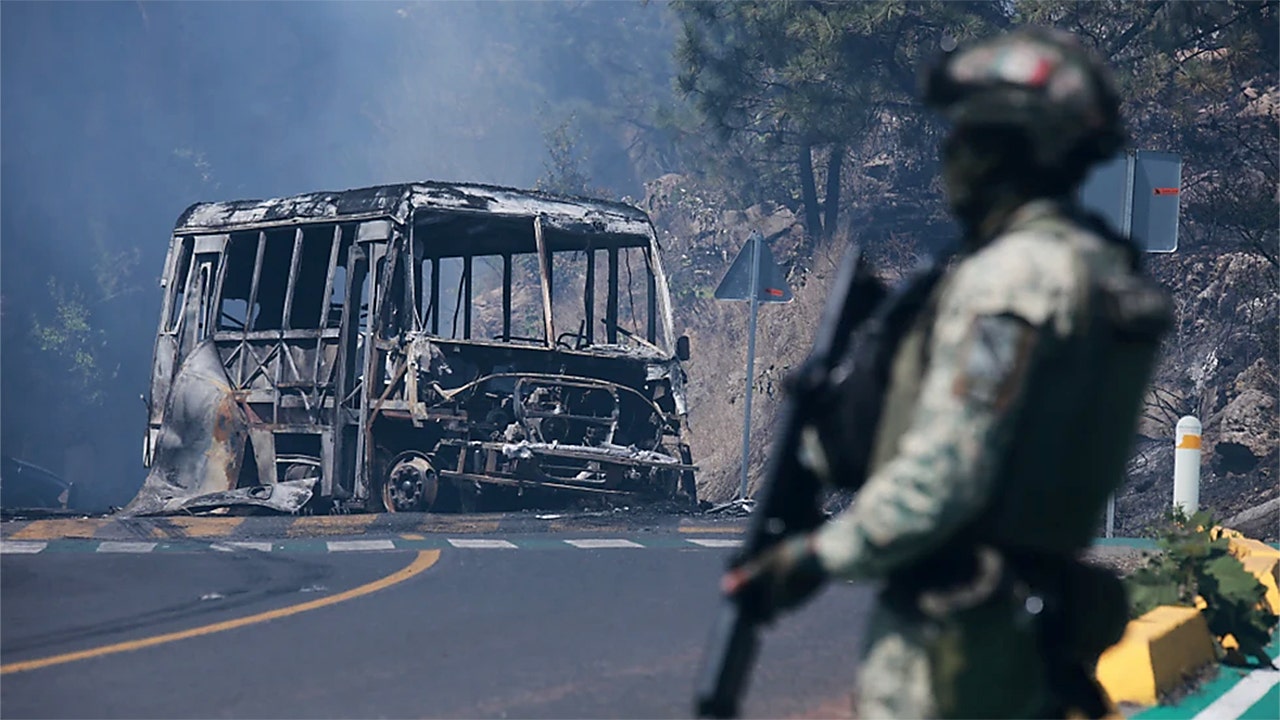
A soldier guards a burnt-out vehicle in Cointzio, Michoacán state, Mexico, on Sunday, February 22, 2026, following the demise of the CJNG leader, Nemesio Rubén Oseguera Cervantes, known as “El Mencho.” (Armando Solis/AP Photo)
Scott Posilkin from Colorado shared his harrowing experience with Fox News Digital. “Our group of seven was heading to the main port in Puerto Vallarta in a local shuttle when we encountered a bus blocking the road. Initially, we assumed it was an accident until we noticed people fleeing in terror,” he recounted.
“As we tried to make sense of the situation, a gunman emerged from the other side of the bus. He motioned us to turn around with his weapon, which we did without hesitation. Attempting to escape in the opposite direction, we were confronted with another burning vehicle, trapping us between the two fiery obstacles,” Posilkin continued.
He continued, “We went down to the only beach we could access. One of the locals advised us that the safest place for us would be out on the water. We took a tender boat out to the snorkeling boat we were supposed to be on and stayed there for a few hours. From the water, we could see what looked like much of the town burning.”
Posilkin said, “Getting a boat back to shore took a long time, and at one point we even considered swimming because there was no one on the beach to come get us. The captain said he had never seen the beach empty like that in his life, and he grew up there. We eventually flagged down a passing tender that brought us to shore. There were cartel members on a motorcycle who yelled ‘Viva Mexico’ at us, but we did not feel that they were threatening us in any way. Both our shuttle driver and the locals assured us that the cartel was not interested in harming Americans and that it was still safest for us to get home that way.”
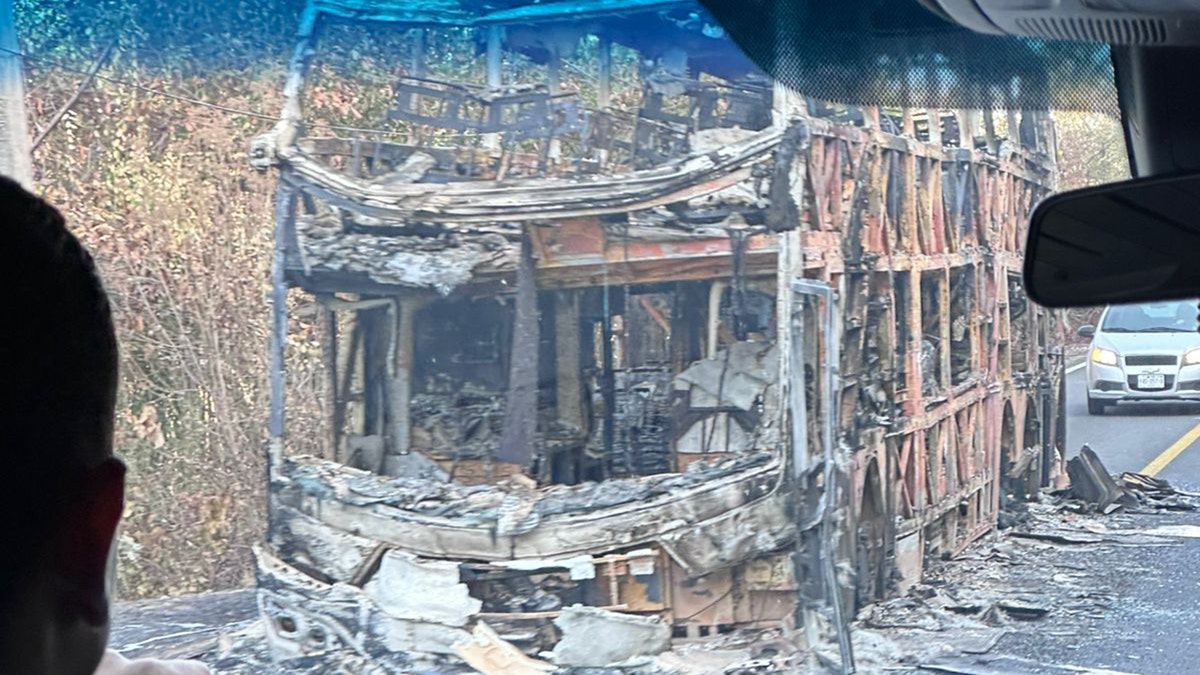
A burned-out bus in the Puerto Vallarta area of Mexico. (Photo courtesy of Scott Posilkin)
Posilkin gave credit to the locals for their help and support. “I want to emphasize how above and beyond the locals went to help us during an incredibly stressful situation. Everyone we interacted with — from our boat captain to our shuttle driver — had grown up here, and none of them had ever seen anything like this before… More than anything, I feel bad for the locals. Tourism is their livelihood, and I worry about the impact this will have on them. This experience hasn’t changed my love for travel or for Mexico, though it was a serious ordeal.”
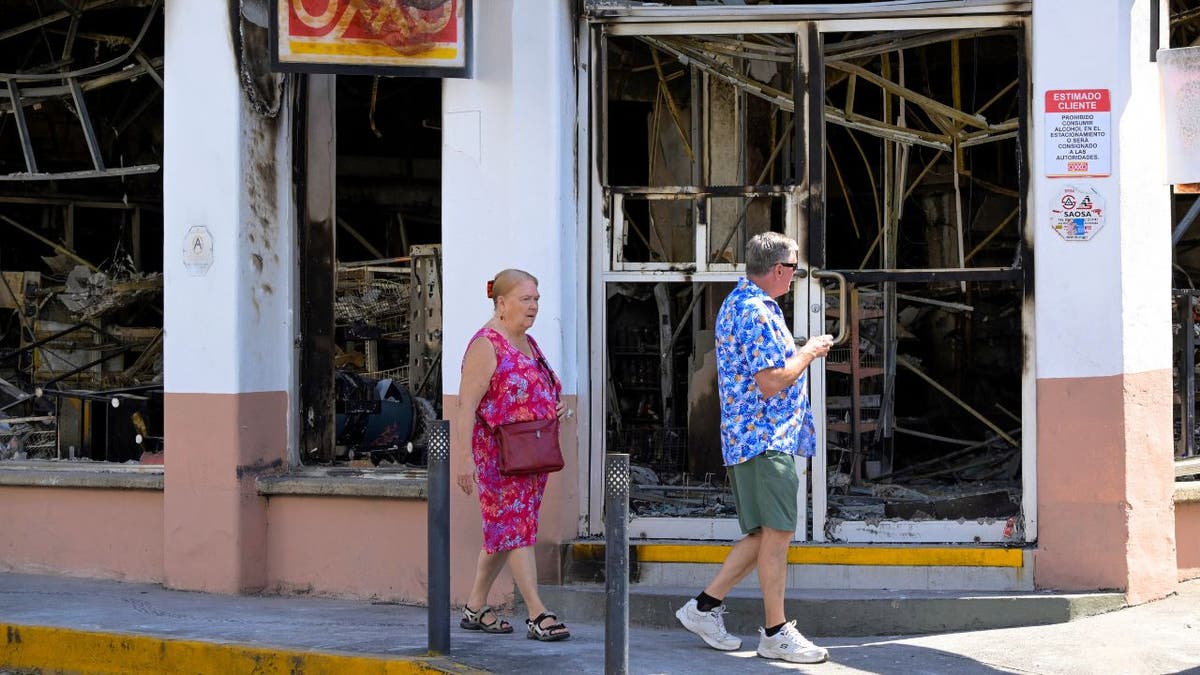
Tourists walk past a burned shop in Puerto Vallarta, Jalisco state, Mexico, on Feb. 24, 2026, after cartel-linked violence erupted following the death of Jalisco New Generation cartel leader Nemesio “El Mencho” Oseguera Cervantes. (Alfredo Estrella/AFP via Getty Images)
Rodolfo Flores, an American citizen and executive in the energy sector talked to Fox News Digital: “Although it wasn’t one of the worst-affected areas, on Sunday I saw a convenience store in Querétaro that had been burned down with a Molotov bomb.”
He said, “On the way to Mexico City, we saw cars and trucks that had been set on fire. This is just one example of how vulnerable we are, and it’s astonishing how these criminal organizations can terrorize the population. The authorities are to blame for allowing them to grow and expand with highly effective criminal cells.”
Security analysts note that cartel violence often intensifies following high-profile arrests, internal leadership disputes, or shifts in territorial control. Public displays of force — such as coordinated blockades or attacks on infrastructure — can serve as demonstrations of operational capacity.
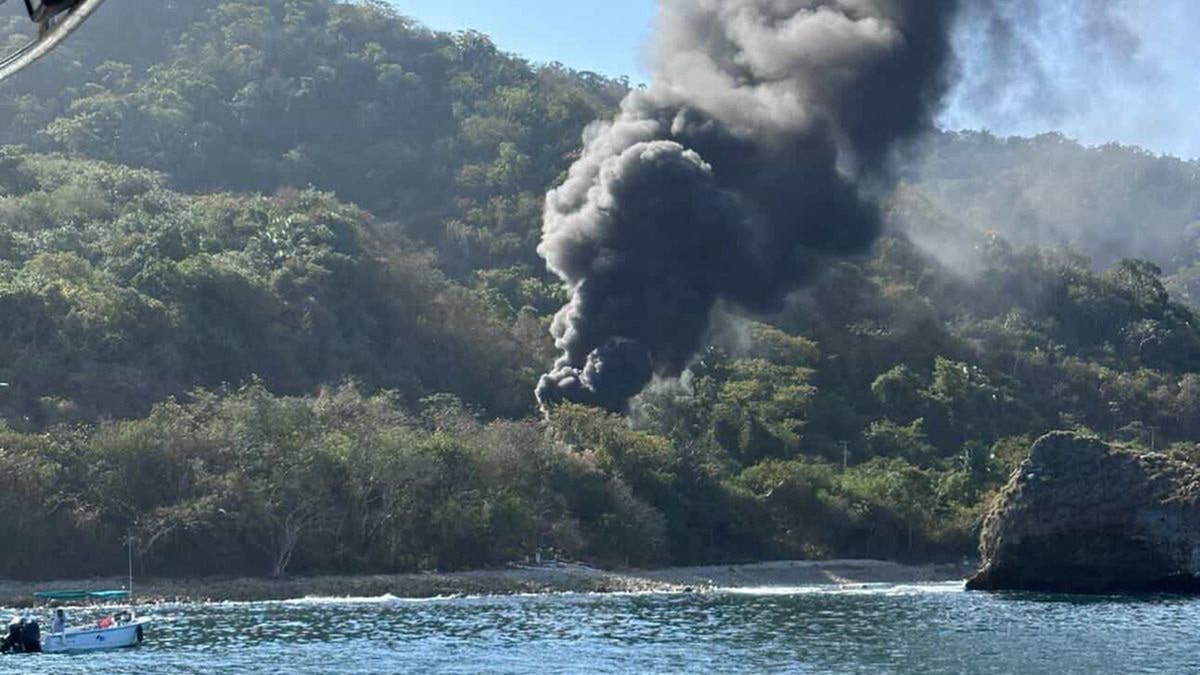
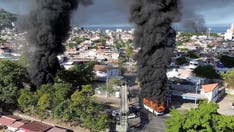
Smoke rises after violence hit Puerto Vallarta, Mexico. (Photo courtesy of Scott Posilkin)
Another American, who asked to remain anonymous for security reasons, told Fox News Digital, “I left Coalcoman Michoacan on Sunday at 11:00 a.m. when the chaos began. As I left town, I saw them burning cars and trucks, pulling people out of their vehicles, and setting them on fire. Luckily, I managed to escape and cross the mountains; it’s a mountainous region. All along the way, I kept seeing burning cars and armed people. I was fortunate that they didn’t stop me,” he said.
“I made it all the way to Colima and then to Guadalajara. Later, things got worse in my town. I heard they started burning gas stations and set fire to a supermarket. They closed off the town so people couldn’t get in or out.”
On Tuesday afternoon, the U.S. Embassy in Mexico posted an update stating that “U.S. citizens are no longer urged to shelter in place.”
Related Article