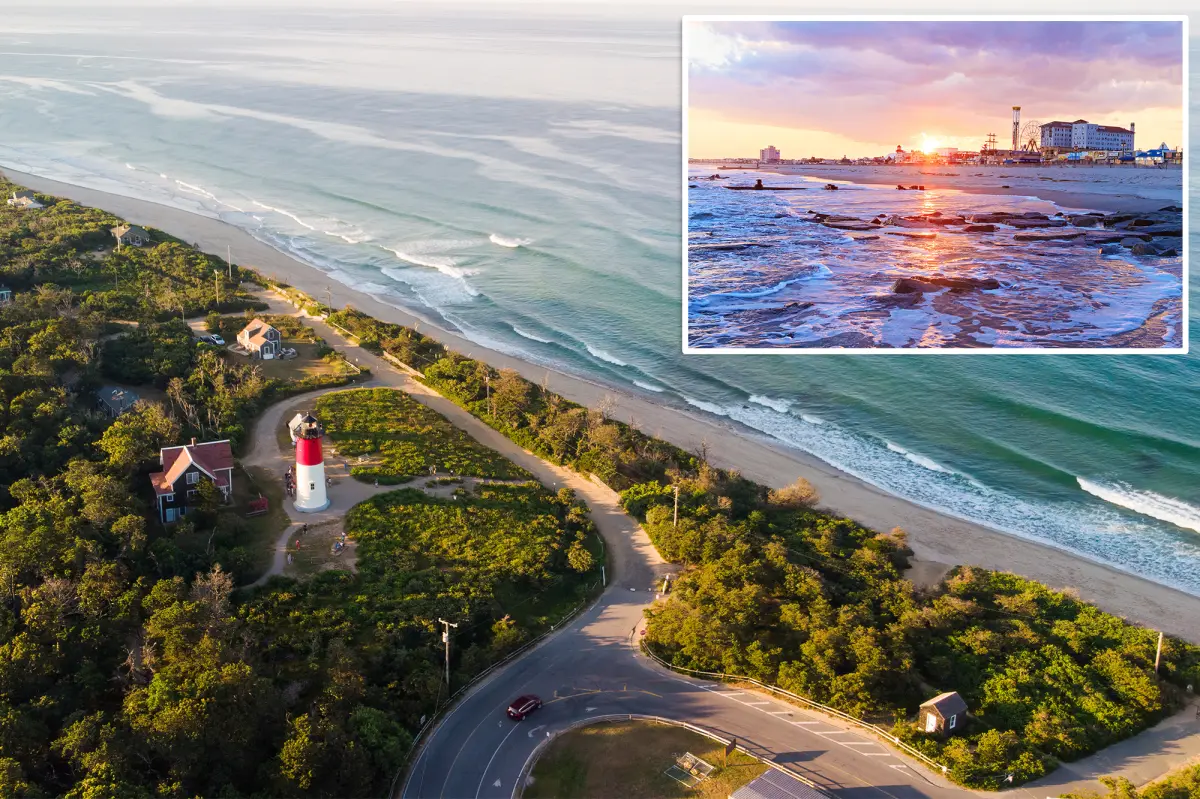
Public health agencies in multiple states have announced water quality warnings and beach closures as the summer swim season remains in full swing.
Officials in Massachusetts, New Jersey, Washington, and other states have limited access to certain beaches after detecting high bacteria counts, sewage-related contamination, and runoff from urban areas, according to Fox News.
Such conditions are commonly linked to harmful algal blooms and the rapid growth of bacteria in recreational waters.
In New York City, advisories are now posted for Schuyler Hill Civic Association in the Bronx, Douglaston Manor in Queens, Gerritsen/Kiddie Beach in Brooklyn, and the swimming beach at Kingsborough Community College.
Water testing at those sites found enterococci bacteria levels above 100 per 110 milliliters, exceeding the marine water safety benchmark of 104 per 100ml.
A review of the 2025 summer season showed that eight of 11 New York City beaches on the Long Island Sound earned poor water quality marks, receiving either D or F grades.
The assessment identified several private membership clubs among the weakest performers, including the White Cross Fishing Club, American Turners, and the Trinity Danish Young People’s Society.
READ MORE: Melania Turns Heads in Black at White House UFC Event
The report pointed to nearby aging combined sewer systems as the main factor behind the poor water quality scores.
During storms, these systems can discharge untreated sewage mixed with rainwater directly into local waterways, contributing to bacterial accumulation.
New Jersey officials have issued swimming advisories for eight locations due to high fecal bacterial concentrations, including Ferry and Bay, Baywyn and Bay, Wildwood and Bay, Cedar Point Beach, Beachwood Beach West, Mirror Lake, Sleepy Lagoon, and Vernon Valley Lake.

Additionally, Breesley’s Point Beach in Upper Township and Lake Meridian Park were fully closed to the public.
In Massachusetts, multiple beaches were closed after testing confirmed high levels of bacteria and the presence of algae blooms, including Damon Pond Beach, both beaches at Cliff Pond, Cochituate State Park, College Pond, both Fearings Pond beaches, Forest River and Juniper Point.
The Iowa Department of Natural Resources issued health alerts for more than five local beaches following the detection of elevated E. coli levels — in Washington State, many of the advisories are listed as “permanent.”
Health officials warn that swallowing contaminated beach water can cause severe illness.
Enterococci exposure typically triggers nausea, vomiting, watery diarrhea, or painful skin and urinary tract infections.
E. coli poisoning manifests within days as agonizing abdominal cramps and debilitating, often bloody diarrhea, alongside a low-grade fever. In severe cases, especially among young children, E. coli can lead to life-threatening kidney failure, making immediate medical evaluation crucial if symptoms escalate.