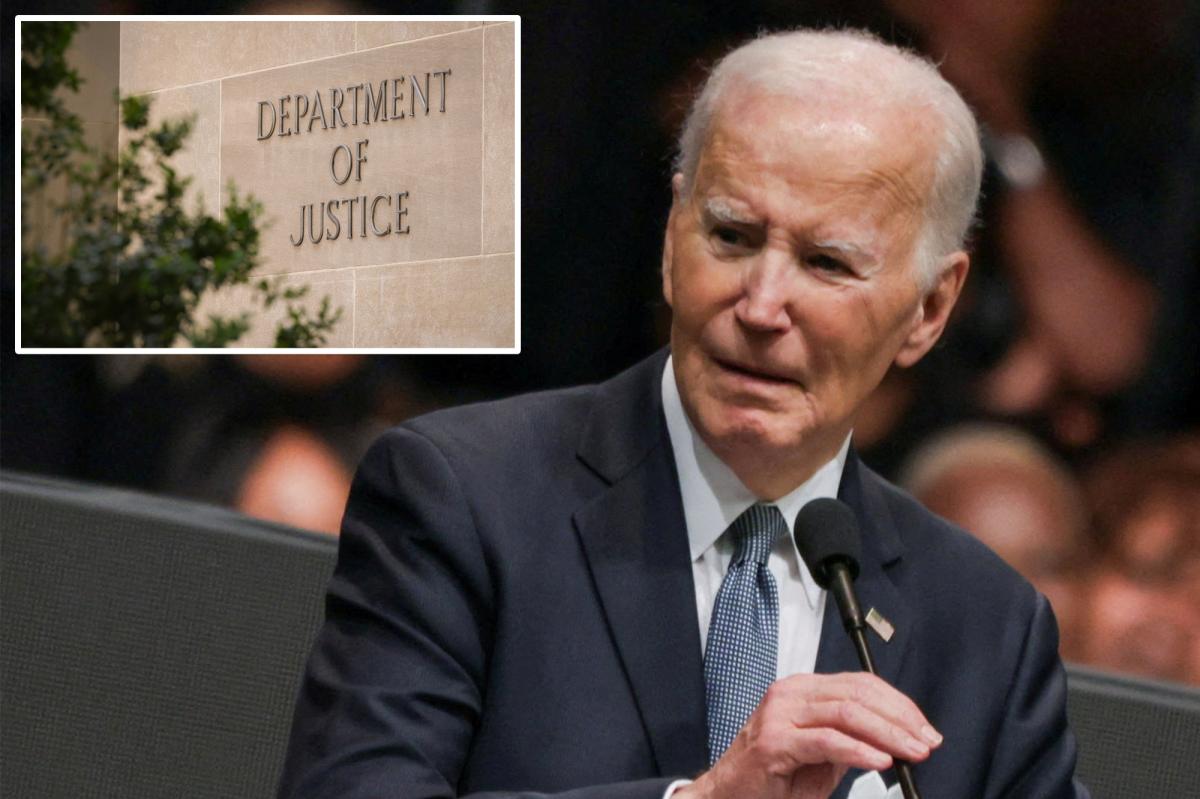


On Tuesday, Joe Biden took legal action against the Justice Department, aiming to prevent the release of audio recordings and transcripts from his interviews with a ghostwriter. These materials were obtained during a special counsel investigation into Biden’s handling of classified documents.
The lawsuit, filed by Biden’s legal team in a Washington federal court, challenges the Justice Department’s decision to provide these files to Congress and the Heritage Foundation, a conservative organization. Previously, the department had argued that such files were exempt from public records law disclosure.
Biden’s attorneys contend that releasing these recordings would be “an unwarranted invasion of President Biden’s privacy.” They emphasized the importance of privacy for all Americans, including current or former high-ranking officials. “Every American, including a sitting or former Vice President, has a right to privacy in the personal conversations he has within his own home,” the attorneys stated. They further argued that when the Justice Department acquires such private information through a criminal investigation, it has a heightened duty to safeguard it from public exposure.
The contested materials include audio recordings and transcripts from Biden’s discussions at his home in 2016 and 2017 with Mark Zwonitzer, who collaborated with Biden on his two memoirs. These files were examined by special counsel Robert Hur during his investigation into Biden’s improper handling of classified documents, a scrutiny that spans his time as both a senator and vice president.
At issue in the case are audio recordings and transcripts of Biden’s interviews at his home in 2016 and 2017 with Mark Zwonitzer, who worked with Biden on his two memoirs.
The files were scrutinized by special counsel Robert Hur as part of his investigation into the president’s improper retention of classified documents, from his time as a senator and as vice president.
Hur’s yearlong investigation led to a 345-page report that questioned Biden’s age and mental competence but recommended no criminal charges against the then-81-year-old. Hur said he found insufficient evidence to successfully prosecute a case in court.
Biden has separately fought the release of the audio of his interview with Hur.
The House in 2024 voted to hold Biden Attorney General Merrick Garland in contempt of Congress for refusing to turn over that audio after the White House exerted executive privilege, shielding it from Congress.
The transcripts of five hours of Biden interviews with federal prosecutors was released that same year.
While Biden was adamant that he treated classified information seriously, the transcript shows that he was at times fuzzy about dates and details and he said he was unfamiliar with the paper trail for some of the sensitive documents he handled.
Republicans have argued Biden was being given a pass by his own Justice Department and that Trump had been unfairly victimized by prosecutors.
Democrats, for their part, stressed Biden’s cooperation in the investigation and strongly contrasted that with the separate criminal case against Trump, who was accused of refusing to return classified documents requested by the National Archives that he had at his Florida estate.