
MISSISSIPPI – A leader with the United Cajun Navy who joined the search for 18-year-old Nolan Wells says the waters near the area where the teen was later found are well known for dangerous, churning currents that locals have long considered deadly.
Wells vanished on July 4 following a boating outing with friends to Horn Island, a barrier island along Mississippi’s Gulf Coast. After an extensive search, a National Park Service ranger discovered his remains on July 6 at the island’s northwestern tip.
His friends had returned to the mainland that afternoon without him. Jackson County Sheriff John Ledbetter has said investigators believe Wells decided to remain on the island. His mother did not learn he was missing until later that night, when one of his friends told her, prompting her to contact authorities.
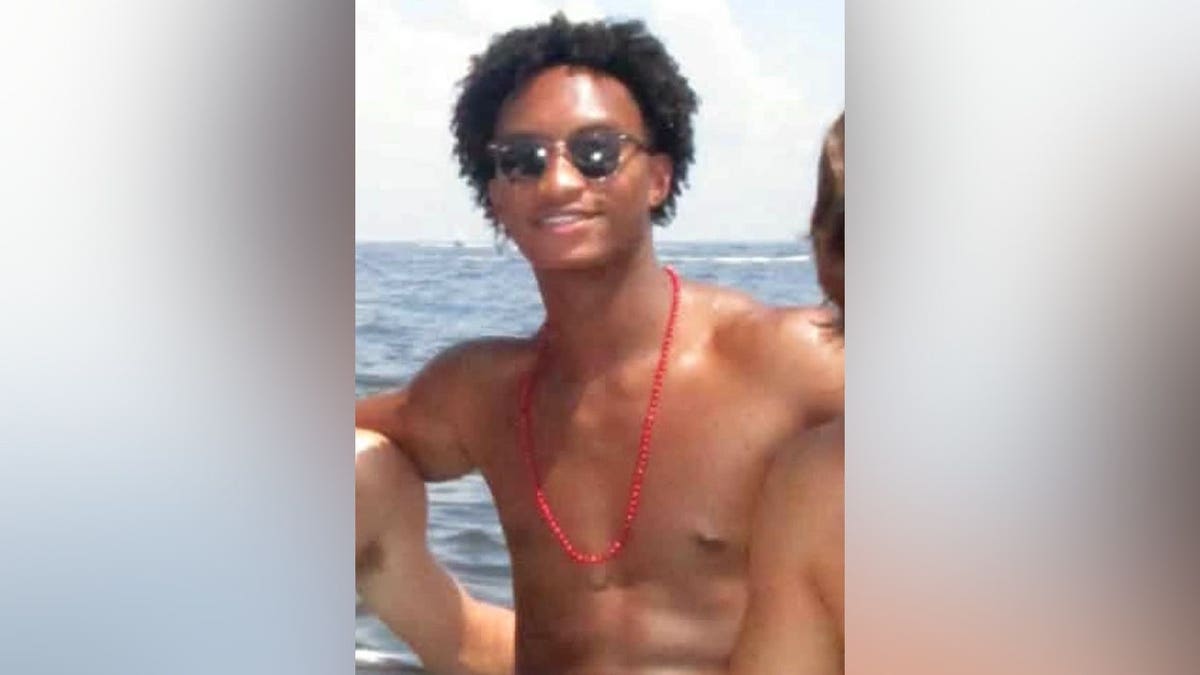
Nolan Xavier Wells disappeared on the Fourth of July while boating with friends, according to authorities. (Jackson County Sheriff’s Department via Facebook)
The waterway between Horn Island, where Wells was found dead, and nearby Ship Island has a grim reputation among residents, United Cajun Navy Vice President Brian Trascher told INC News. Locals refer to it as a “washing machine” because of powerful rip currents and a history of drownings. Authorities have previously told the Associated Press they do not suspect foul play.
“Yeah, there is some kind of nickname for it, and it’s because they’ve had a lot of drownings in that area and on that island. And to the west, there’s Ship Island, just another few miles to the West. And in between those two islands, there’s a strong divergent occurrence,” Trascher said. “And that area is called the washing machine by locals.”
Trascher said people who were on Horn Island on July 4 described the rip current that day as “extremely strong.” He also noted that the water near the island’s northwestern point can shift quickly, dropping from shallow to deep within only a few steps.
Although Wells was a capable swimmer and spent time in the water regularly, Trascher said even strong swimmers can be overwhelmed by a forceful rip current. Factors such as panic, heat and sun exposure, or alcohol can make an already dangerous situation far worse.

Nolan Wells smiles on the field while playing wide receiver for Southwest Mississippi Community College. (Christine Wonsley/Facebook)
Trascher said one of the biggest unresolved questions in Wells’ death is what happened between when he was last seen, around 4 or 4:30 p.m. on July 4, and when his body was found, calling it a “gaping hole” that still needs to be answered.
“I’ve heard virtually no explanation, no eyewitness accounts. Nobody seemed to see him after that… there don’t seem to be any photographs or videos of him after that time. So what happened? It wasn’t dark yet. There was still a lot of people on the island… why did he just vanish and show up dead two days later?” Trascher said. “That is a question that needs to be asked. And I’m not suggesting that means that there was foul play involved. I’m just saying that there is a gaping hole in the story that needs to filled.”
During a Wednesday news conference, attorney Ben Crump revealed that an area of “red discoloration” was found on Wells’ head, but said Dr. Roger Mitchell, who performed an independent autopsy, couldn’t come to a conclusion on a cause or manner of death “pending further investigation.” An official autopsy into Wells’ death hasn’t been completed.

Attorney Ben Crump, center, speaks next to Elmore and Christine Wonsley, at left, and Rev. Al Sharpton during a memorial service for Nolan Xavier Wells, an 18-year-old found dead after taking a July 4 boat trip with friends, Monday, July 20, 2026, in Ocean Springs, Miss. (AP Photo/Gerald Herbert)
When asked by INC News about the case, forensic pathologist Dr. Michael Baden said the head injury doesn’t point to foul play.
“So that could be from bumping into something in the water. There’s a lot of debris in the water, for example. It depends how deep it is, but it’s describing a really superficial impact that could have happened before death or after death,” Baden said. “What he’s describing is a minor injury that could be… totally innocent.”
Without having additional information, Mitchell wrote in his report that he couldn’t rule out the possibility that “non-accidental factors contributed to or caused the death.”