
California ranchers frustrated by wolf attacks on their herds are pressing for permission to use pepper-ball projectiles to deter predators, as Republican lawmakers challenge what they describe as the state’s overly restrictive rules on protected wildlife.
Assemblywoman Heather Hadwick, R-Alturas, appeared Wednesday at the Capitol alongside law enforcement officials and ranchers to promote a legislative package that would let livestock producers, along with others authorized by the California Department of Fish and Wildlife, use pepper-ball-style rounds to haze gray wolves, mountain lions and other animals that pose a threat to livestock or human safety.
Hadwick told The California Post the proposal is not about using “crowd control tear gas,” but rather a tool more comparable to bear pepper spray — “something a little smelly that keeps the wolf away and may leave a bruise.”
“Pepperball hazing gives ranchers and wildlife managers another way to protect livestock, reduce wolf-livestock conflict, and prevent situations where wolves become so conditioned to eating cattle that lethal removal becomes the only option left on the table,” Hadwick said.
James Gallagher, a former Republican assemblymember from Yuba City who helped author the bills before heading to Congress, said ranchers in Northern California have faced devastating losses from wolf attacks.
“It’s been a terrible issue for a lot of ranchers,” Gallagher told The Post.
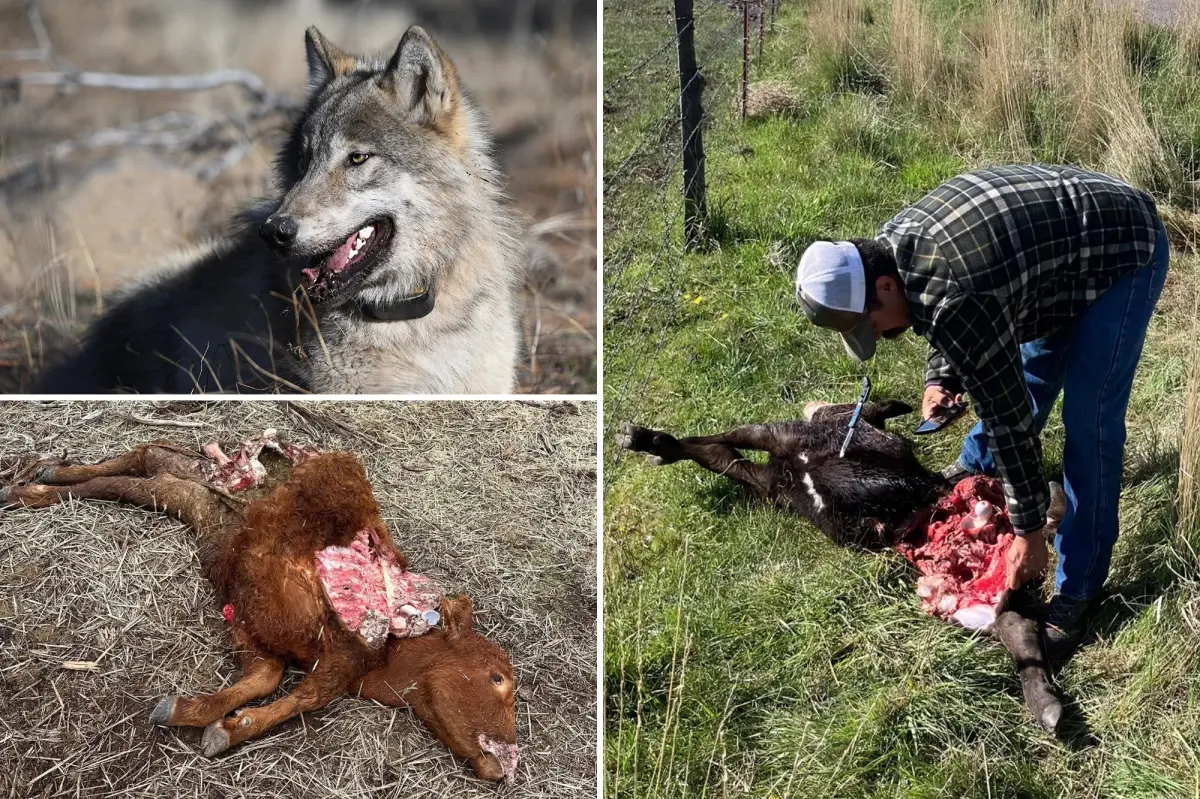
He described the injuries to cattle as severe, saying that in many cases the animals are left badly wounded and must ultimately be euthanized. “Killing the cow is probably the most merciful thing that happens in many cases,” Gallagher said. “These cattle are maimed and have terrible wounds that are walking around with open wounds, and they have to be put down.”
Gallagher also criticized Gov. Gavin Newsom, accusing him of failing to respond to the problem while rural Californians shoulder the financial and emotional toll.
“Gavin’s running for president,” Gallagher said. “He’s not even addressing housing or homelessness or any of the major issues in California — let alone a wolf problem that’s affecting mostly rural California.”
Download The California Post App, follow us on social, and subscribe to our newsletters
Gallagher added, “With his policies, he’s shown a complete disregard for farmers and ranchers and rural people. He pays lip service to it, but then he saddles us with the highest costs of the nation.”
The governor’s office did not immediately respond to a request for comment.
Gray wolves are protected under both state and federal endangered species laws. They disappeared from California about a century ago before returning through natural migration from Oregon in 2011.
READ MORE: Rihanna’s Ethnicity and Nationality: Where Is the Singer From?
AB 1673, in its current form, would allow people authorized by the Department of Fish and Wildlife to apply “aversive conditioning” on wolves to buy, possess or use a tear-gas weapon that expels a projectile. It’s a more aggressive approach than one researchers recently tried: blasting the AC/DC tune “Thunderstruck.”
Sightings have become increasingly frequent, including a lone gray wolf spotted in Los Angeles County.
Sen. Shannon Grove, a Central Valley Republican and coauthor of Hadwick’s additional bill, AB 1722, said ranchers in Sierra Valley and other northern parts of the state have been left powerless while wolves prey on calves.
She added that the issue may not be felt in more urban areas like Los Angeles and San Francisco, allowing animal rights activists to frame the issue in disingenuous terms. In a social media post in May, the group Women for Wolves defended the gray wolves as “just native wildlife.”
“These people say they care about animals, but they don’t care about this baby [calf] just dropping on the ground, and then these wolves come and just start ripping it apart,” Grove told The Post.
“It’s not just a revenue thing, it should be a kindness thing too.”
AB 1722 would shield Californians from civil, administrative or criminal penalties under the California Endangered Species Act. Ranchers would be allowed to use necessary and reasonable force to protect themselves, a family member or another person from immediate bodily harm from an endangered, threatened or “candidate species,” which covers animals and plants being considered for protective status.
Gallagher said ranchers are not asking for open season on wolves, but for authority to deal with animals that have learned to attack cattle.
“We’re not talking about going out and taking out every wolf,” Gallagher said. “We’re just talking about the problem of wolves who have essentially learned to kill cattle.”
The bills follow the Department of Fish and Wildlife’s October announcement that it lethally removed four gray wolves from the Beyem Seyo pack after what officials called an “unprecedented” wave of livestock attacks in Sierra Valley.
Between March 28 and Sept. 10, 2025, the wolves were responsible for 70 livestock losses, accounting for 63% of all confirmed or probable wolf-caused livestock losses statewide during that period. Officials documented 17 additional confirmed or probable losses between Sept. 10 and Oct. 14.
State officials said the wolves had become habituated to cattle despite months of nonlethal deterrence efforts, including drones, bean bags, all-terrain vehicles, diversionary feeding, fladry and 24-hour field presence.
“Wolves are as fat as fat can get because they’re feeding on baby calves,” Grove said.
“Let us use tear gas to scare the wolves away. Let us do this to protect people’s property — and actually human life.”