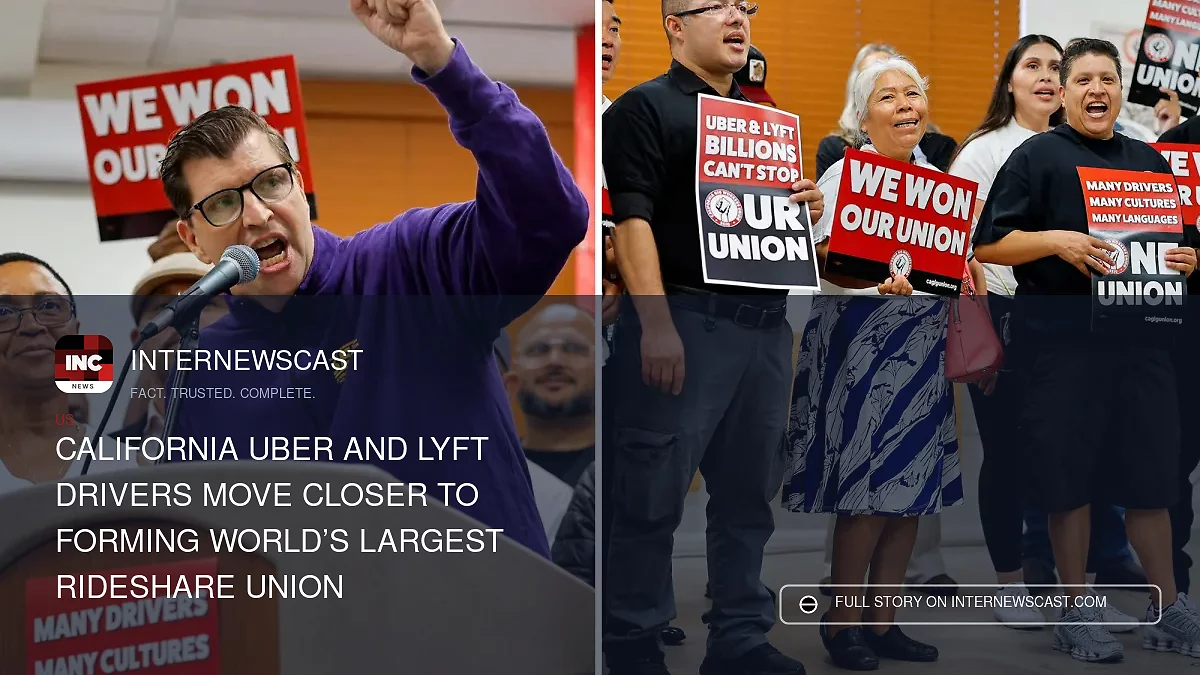

Hundreds of thousands of Uber and Lyft drivers in California are moving closer to forming what organizers describe as the largest rideshare driver union anywhere in the world.
On Aug. 7, the California Public Employment Relations Board informed the California Gig Workers Union (CGWU) that the group had gained backing from at least 30% of active rideshare drivers. That level of support is the key threshold under a 2025 state law for advancing toward union representation.
After a 30-day waiting period, CGWU is expected to be certified as the exclusive bargaining representative for Uber and Lyft drivers across California, the union said in its announcement. The state has more than 800,000 registered drivers, while labor groups estimate the active rideshare workforce at about 350,000.
The organizing drive is rooted in AB 1340, a law that established a collective-bargaining framework for app-based rideshare drivers, who are typically treated as independent contractors and do not have the same bargaining rights as traditional employees.
The measure came after more than 10 years of organizing by drivers and the Service Employees International Union, which supported CGWU. Once the law took effect, drivers began gathering union authorization cards in more than a dozen languages through social media, text messages, emails and face-to-face outreach.
“It’s taken more than a decade to reach this moment, and every step of the way, gig drivers have built unstoppable momentum through their courage,” David Green, president and executive director of SEIU 721, said in the announcement.
Drivers are now preparing to bring their demands directly to Uber and Lyft, with compensation, benefits, app deactivations and overall working conditions expected to be central issues in negotiations.
“We’re so happy and proud to have finally won our union, and that we will get Uber and Lyft to the table so we can bargain with the gig companies for what we need: strong pay, adequate benefits, and dignified working conditions,” Vikaas Shanker, a Fresno driver, told CalMatters.
Some San Diego rideshare workers have raised concerns about potential union dues and whether the new organization will deliver enough benefits to justify the cost, according to KPBS.
The California Gig Workers Union has said drivers will not be charged dues until a collective-bargaining agreement is ratified.
Margarita Penalosa, a Los Angeles Uber and Lyft driver who helped organize the effort, said drivers had spent years trying to gain a stronger voice over their work.
“We overcame fear, hundreds of millions of dollars spent by the gig companies to undermine our rights at the ballot and proved it’s not the gig apps that connects us, it’s our shared demand for fair pay and treatment as gig workers,” Penalosa said in the union’s announcement.
The certification process is expected to take another 30 days, after which CGWU would become the statewide bargaining representative if no competing organization qualifies to challenge it.
“As this new process moves forward, we’re committed to engaging in good faith. Lyft does well when drivers do well, and we’ll stay focused on helping drivers succeed while keeping rideshare affordable and dependable for everyone who counts on it,” a spokesperson for Lyft told the California Post.
Uber did not immediately respond to The California Post’s requests for comment.