
Anesthesiologist who advised Christa Pike’s defense condemns Tennessee lethal injection
Anesthesiologist Dr. Joel Zivot joins Bill Hemmer to examine the legal consequences of the failed execution of Christa Pike after a judge directed Tennessee officials to preserve evidence. Zivot, who advised Pike’s attorneys, discusses complications involving the drugs used in the state’s lethal-injection procedure. Pike remains on death row after surviving the attempted execution.
The physician who took part in Christa Pike’s failed execution in Tennessee said an improperly positioned IV delivered lethal drugs into the tissue of her arms rather than her bloodstream. He also acknowledged that the execution team should have stopped after Pike reported severe pain.
Dr. Mark Fowler, the physician present during Pike’s Sept. 30 execution attempt, gave New York Magazine a rare firsthand account of the problems that unfolded. The interview was published Friday.
Pike, 50, survived after receiving two doses of pentobarbital. She remained hospitalized for several days before regaining consciousness.
Fowler told the magazine he realized something was wrong as the execution continued for roughly 45 minutes. By the time he entered the chamber, Pike was still alive and gasping for air.
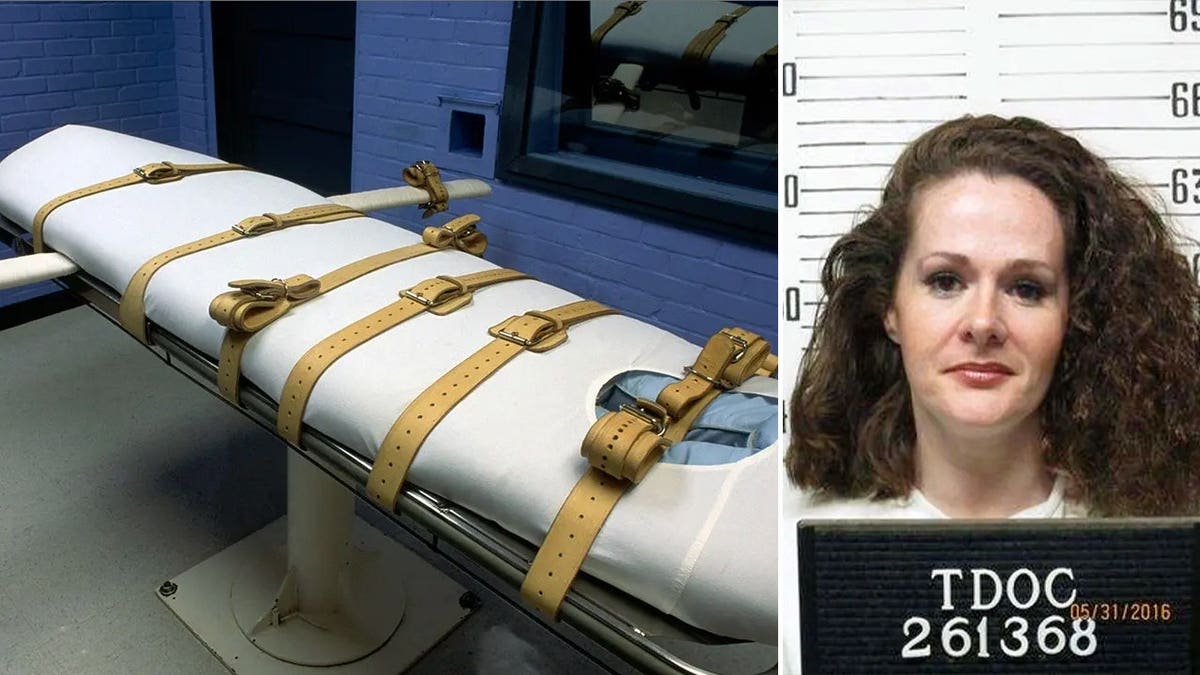
An execution gurney is pictured beside a Tennessee Department of Correction booking photo of death row inmate Christa Pike. Her attorneys filed an emergency motion seeking to preserve evidence after the state’s failed execution attempt. (Greg Smith/CORBIS/Corbis via Getty Images ; Tennessee Department of Correction via AP)
Fowler said he initially wondered whether Pike was simply taking longer than expected to respond to the medication, so he allowed the process to continue.
After another 30 minutes, he feared Pike could survive with permanent brain damage. Fowler later determined that she was comatose before a deputy commissioner ordered officials to halt the execution.
Fowler then ordered oxygen, and Pike was transported by ambulance to Vanderbilt University Medical Center.
According to Fowler, the IV used to administer pentobarbital had not been properly placed in Pike’s veins.
“It was delivering medicine to the subcutaneous tissue” in her arms, Fowler said.

Convicted killer Christa Gail Pike listens to proceedings in Knox County Criminal Court in April 2008 as she sought a new trial in the 1995 killing of fellow Job Corps student Colleen Slemmer. (USA TODAY Network via Reuters Connect)
Pike’s attorneys previously stated in a court filing that she complained of intense arm pain during the procedure, telling officials in the chamber, “My arm feels like it’s about to burst open.”
“They should have stopped and reassessed, and they didn’t,” Fowler told New York Magazine.
Fowler’s account came days after Pike described the lasting effects of the failed execution in a statement issued by her attorneys. She said she remains in constant pain and continues to have difficulty speaking.
“My body hurts. My arms hurt. My hands hurt. My throat hurts,” Pike said Friday. “I still struggle to speak.”
READ MORE: Pop-Up “Death Boutiques” Gain Popularity Across the United States
Pike added that she was “deeply hurt by the incompetence that has put so many people in this terrible position.”
The failed execution was not the first time Fowler’s role in a Tennessee execution had attracted scrutiny.
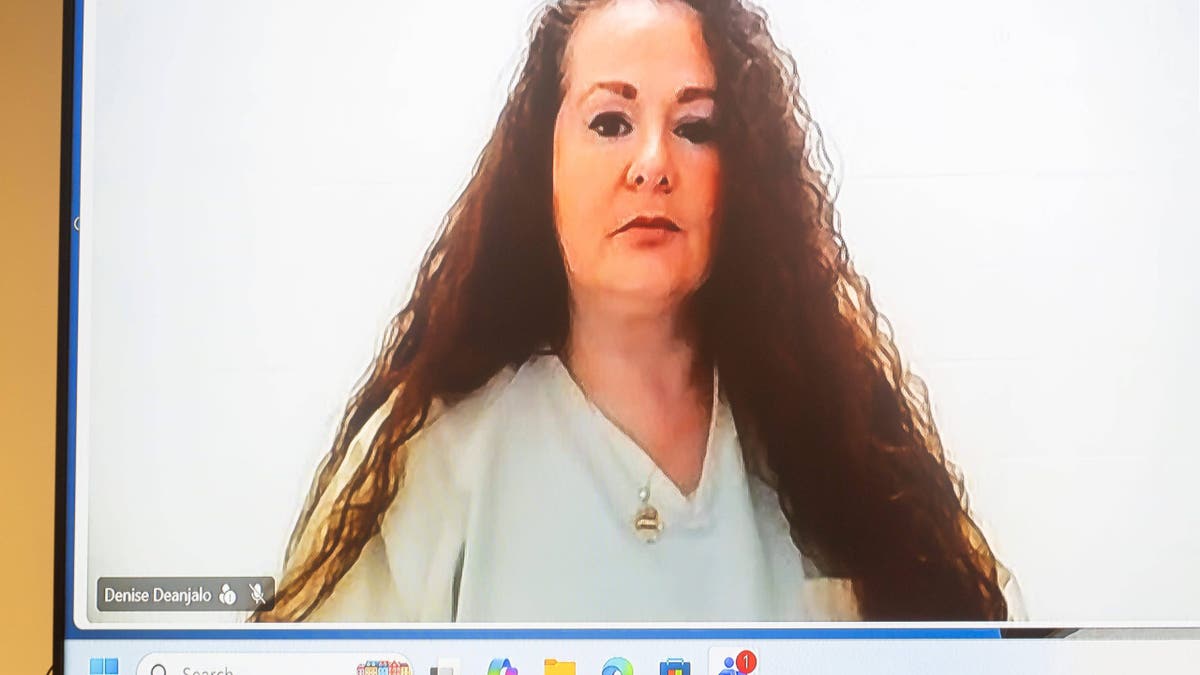
Christa Gail Pike appears remotely from Deborah K. Johnson Rehabilitation during a hearing in Knox County Criminal Court in Knoxville, Tennessee, on Aug. 11, 2026. (USA TODAY Network via Reuters Connect)
New York Magazine reported that Fowler also participated in the 2025 execution of Byron Black and the failed execution of Tony Carruthers in May.
During Carruthers’ execution, paramedics could not establish conventional IV access, so Fowler attempted to place an IV near his clavicle. Fowler said he eventually stopped because he did not have enough anesthetic and the procedure was becoming excessively painful for Carruthers.
“I’m not an evil, vicious person. I’m not unscrupulous. I’m not uncaring, and I’m not incompetent,” Fowler said.
Even so, Fowler said Tennessee needs to revise its lethal-injection procedures.
He recommended reducing the number of handoffs between execution team members and said the people who insert IV lines should stay in place to monitor them while the lethal drugs are delivered.
“The people who place the IV lines should thereafter be observant about what’s happening with them as the medicine goes in,” Fowler said.

A split image shows Christa Pike at her 1995 murder trial, left, and Colleen Slemmer, the young woman Pike was convicted of torturing and killing, right. (Reuters)
After the failed execution, Tennessee Gov. Bill Lee paused the state’s remaining executions for the year and ordered an independent investigation into what went wrong.
Lee said last week that Pike remains incarcerated under state law and indicated that her death sentence is unlikely to be altered.
“I suspect her sentence will be the same as it was before unless determined otherwise by the courts,” Lee said.
Pike was sentenced to death for the 1995 murder of 19-year-old Colleen Slemmer, a fellow participant in a federal Job Corps program in Knoxville.
Pike’s attorneys have urged Lee to commute her death sentence to life without parole.
News Outlet contacted Fowler and the Tennessee Department of Correction seeking additional comment and an interview, but neither had responded.