
Share this @internewscast.com

PARIS — A new leader is set to take the helm at the Louvre, home to the world-renowned “Mona Lisa.”
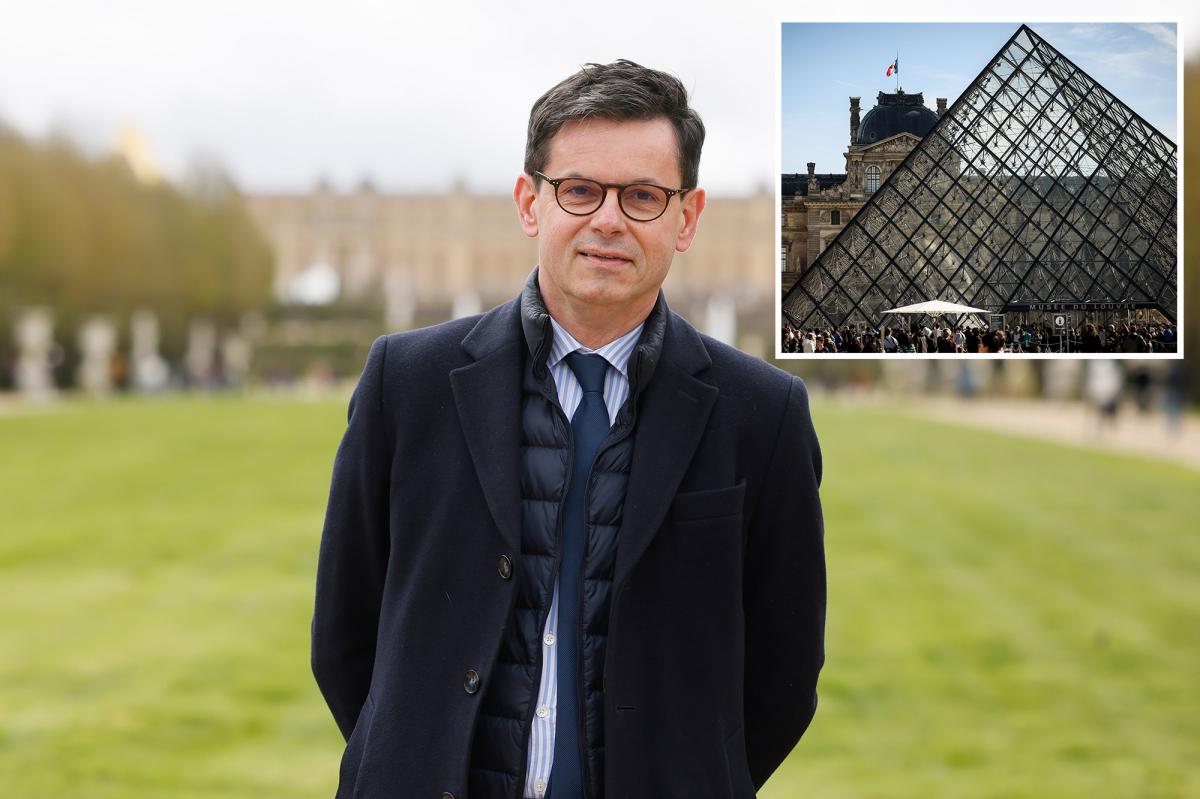
Christophe Leribault, an esteemed art historian with extensive experience in museum management, has been appointed as the new director of the Louvre. His primary task will be to steer the world’s largest museum through a challenging period following the daring theft of the French crown jewels in October.
The announcement came on Wednesday from French government spokesperson Maud Bregeon, who confirmed that Leribault will succeed Laurence des Cars, the outgoing director who stepped down on Tuesday.
Leribault faces significant challenges in his new role.
The audacious daytime heist—one of the most notorious museum thefts in recent memory—has highlighted serious security vulnerabilities at this iconic Parisian institution.
This former royal palace is also grappling with a range of other issues, painting a troubling picture of a cherished national treasure in disarray.
They include a burst pipe near the “Mona Lisa,” water leaks that damaged priceless books, aging buildings, staff walkouts over overcrowding, understaffing and ticket price hikes for most non-European visitors.
Pressure for new leadership deepened in recent weeks when authorities revealed a suspected decade-long ticket fraud operation linked to the museum that investigators say may have cost the Louvre 10 million euros ($11.8 million).
Leribault brings a proven track record. He has been running another world-renowned French landmark and tourist attraction, the Versailles Palace, overseeing an annual budget of about 170 million euros ($200 million).
The former palace for French royalty west of Paris was the venue for Olympic equestrian sports when Paris hosted the summer games in 2024.
Leribault also is a previous head of Paris’ Orsay Museum.
“He will be tasked with leading important projects that are crucial for the institution’s future,” Bregeon said as she announced Leribault’s appointment at the Louvre.
They include security and modernization upgrades and the pursuit of a sweeping overhaul plan, branded “Louvre New Renaissance,” that President Emmanuel Macron is championing.
Unveiled by Macron in January 2025, the renovation, which could take up to a decade, aims to modernize a museum widely seen as overstretched and physically worn down by mass tourism.
The plan includes a new entrance near the Seine River to ease pressure on I.M. Pei’s pyramid, new underground spaces and a dedicated room for the “Mona Lisa” with timed access — all intended to improve crowd flow and reduce the daily crush of visitors that has become a symbol of the Louvre’s success and its dysfunction.
The project is expected to cost about 1.15 billion euros ($1.35 billion) according to a recent report from France’s court of auditors.
It will be partly funded by ticket revenue, state support, donations and income from the Louvre branch in Abu Dhabi.
Bregeon described Leribault as “very solid, trusted” and said he’s expected to provide “vision” and “calm” to the museum.
In a statement, the Culture Ministry highlighted “his extensive experience at the helm of major institutions” and said Leribault will prioritize strengthening the security and safety of the Louvre’s buildings, its collections and visitors and staff, and “restoring a climate of trust.”