President Donald Trump hinted this week at potential actions the United States might take regarding Cuba, sparking new inquiries into what could unfold if increasing pressure leads to a political upheaval on the island.
This warning arrives as Cuba grapples with one of its most intense internal crises in decades. The country is struggling with an economic downturn, frequent power outages, and fuel shortages, all of which are challenging the regime’s capacity to maintain control. The situation has deteriorated further due to reduced shipments of subsidized fuel from Venezuela, a crucial energy source for Cuba.
With pressures intensifying both domestically and internationally, experts suggest the pivotal issue is not who might succeed President Miguel Díaz-Canel but rather the absence of a definitive successor.
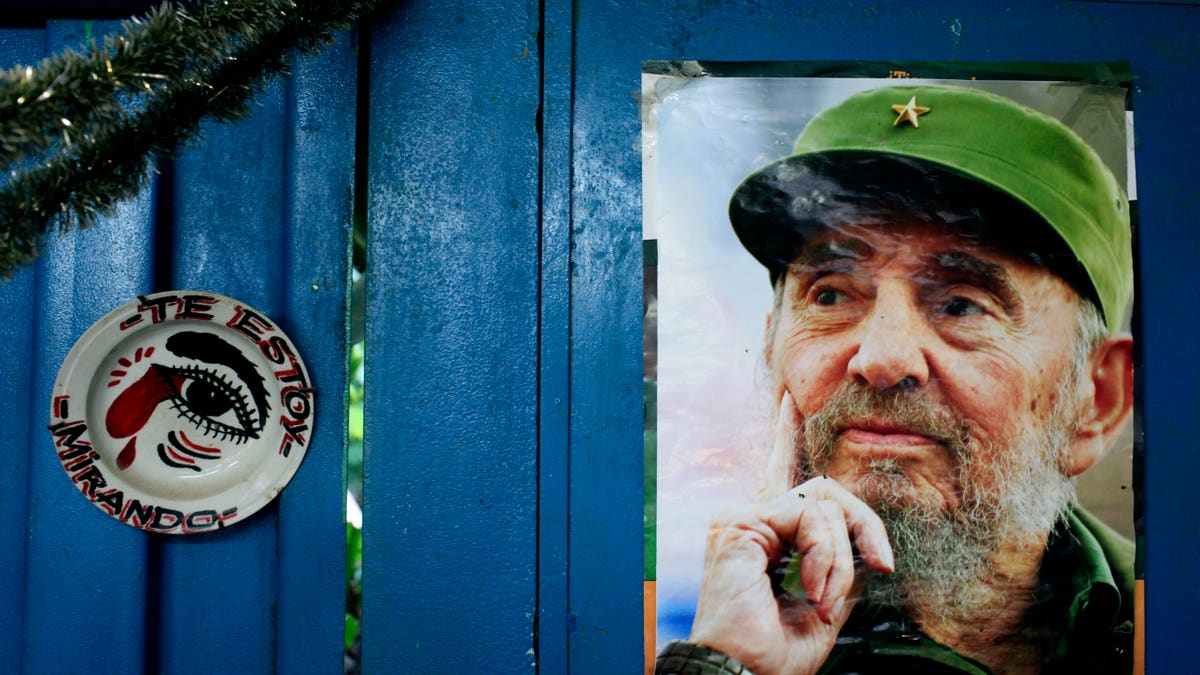
In a food market in Havana, Cuba, a poster of Fidel Castro is displayed alongside a sign reading “I’m looking at you” in Spanish, dated Tuesday, August 13, 2013. Fidel Castro’s brother, Raul Castro, took over leadership following Fidel’s serious illness in 2006. (AP Photo/Franklin Reyes)
“The leadership void in Cuba is a result of a system designed over decades to prevent any independent leadership from emerging,” explained Melissa Ford Maldonado, director of the Western Hemisphere Initiative at AFPI, to Fox News Digital.
She further noted that the regime has “monitored communication, restricted public gatherings, surveilled its citizens, suppressed press freedom, criminalized opposition, and essentially made the rise of a strong opposition force highly improbable.”
“Who replaces Díaz-Canel is more symbolic than anything else,” Sebastián A. Arcos, interim director of the Cuban Research Institute at Florida International University, told Fox News Digital.
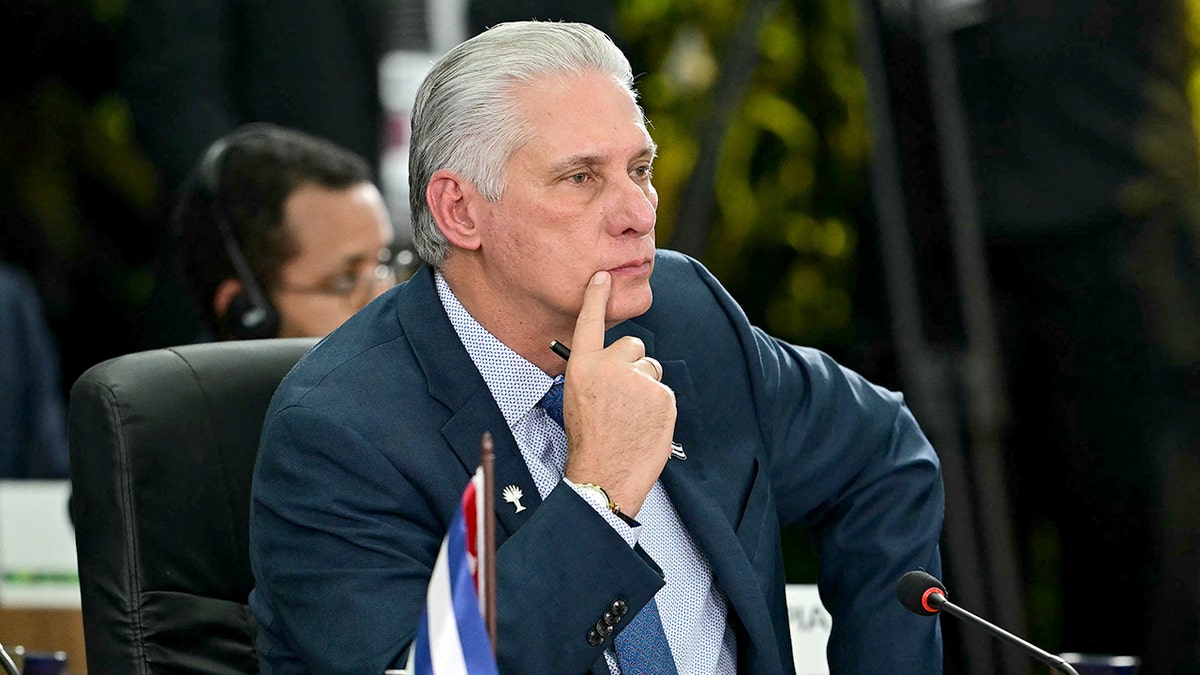
Cuba’s President Miguel Diaz-Canel gestures during the BRICS summit second plenary session in Rio de Janeiro, Brazil, on July 6, 2025. (PABLO PORCIUNCULA/AFP via Getty Images)
Arcos said Díaz-Canel “has very little power,” describing him as a figure installed to project a younger image without altering the system.
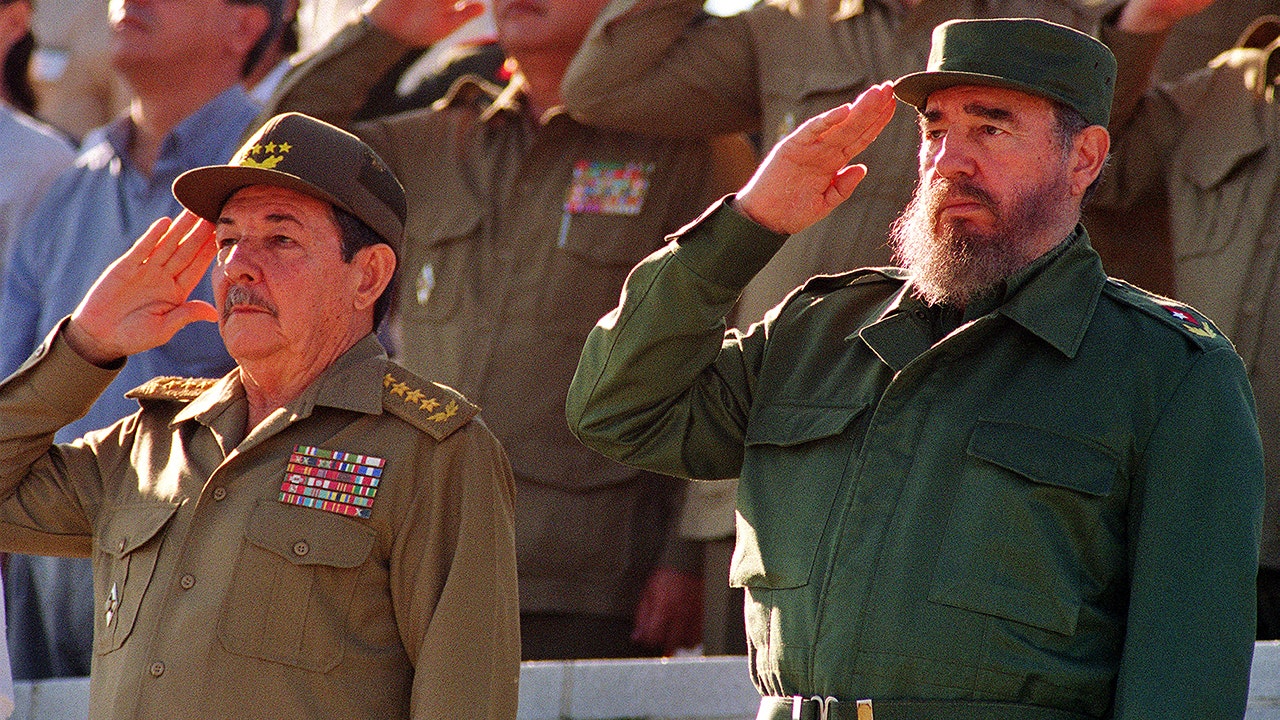
“The key person continues to be Raúl Castro,” he said, referring to the 94-year-old former Cuban leader.
That dynamic, analysts argue, explains why even a dramatic shift — whether driven by internal collapse or external pressure — may not immediately produce a new leader.
And yet a small group of insiders, technocrats and opposition figures are seen as potential players in any transition — though none represent a clear or unified alternative.
Óscar Pérez-Oliva Fraga: the technocratic option
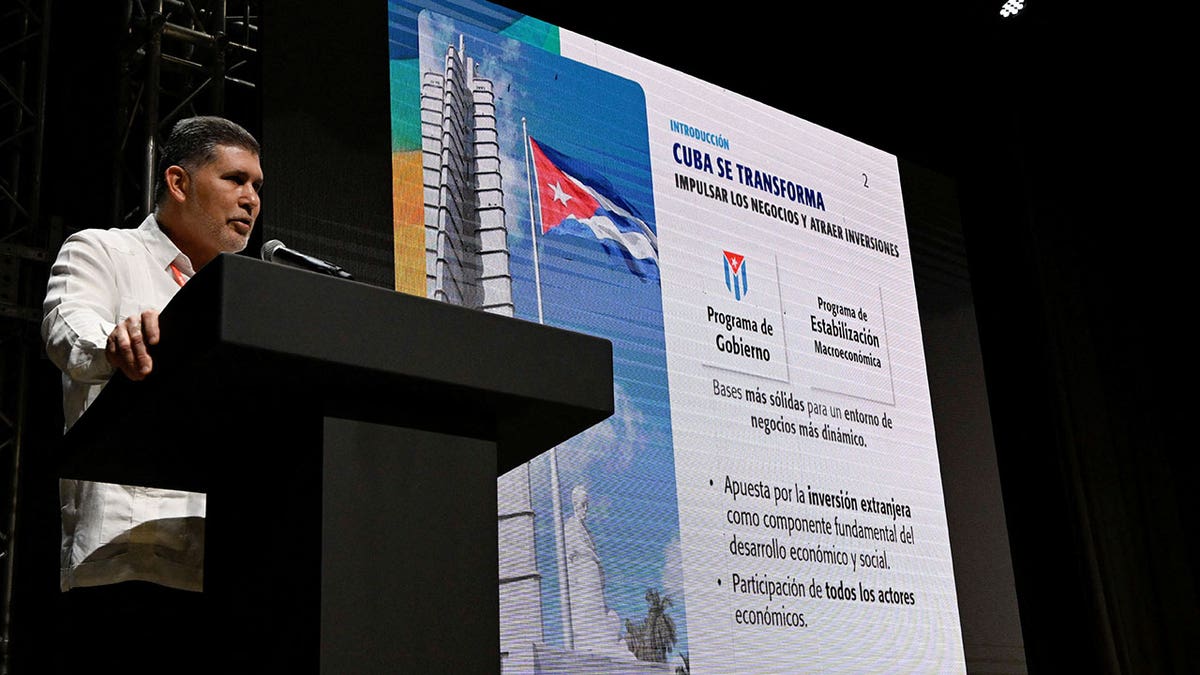
Cuba’s Minister of Foreign Investment Oscar Perez-Oliva Fraga speaks at the 41st Havana International Fair (FIHAV) in Havana, Cuba Nov. 25, 2025. (Norlys Perez/Reuters)
A relatively unknown figure to most Cubans, Óscar Pérez-Oliva Fraga has quietly risen through the ranks.
The 54-year-old electronics engineer serves as deputy prime minister and minister of foreign trade and foreign investment, and is the great-nephew of Fidel and Raúl Castro.
“He’s part of the family,” Arcos said, underscoring how even emerging figures remain embedded within the same ruling network.
Arcos said his rapid rise makes him one of the more plausible faces of a controlled transition.
“He might be a good technocrat… based on the standards of the Castro system,” he said.
But any such move would likely be cosmetic. “They might take Díaz-Canel down and replace him with someone like Pérez-Oliva… as a gesture… but it doesn’t change anything,” Arcos said, explaining it would be a technocratic reshuffle designed to ease pressure, not reform the system.
Alejandro Castro Espín: the security continuity
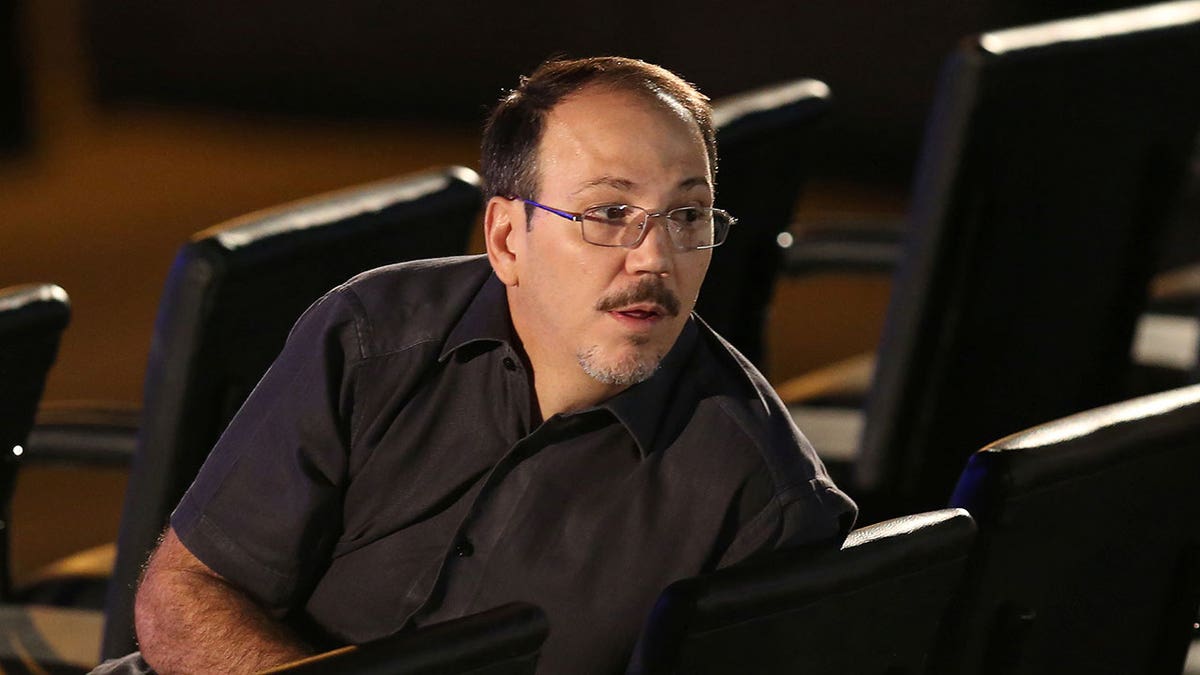
Alejandro Castro Espin, son of Cuba’s President Raul Castro, is seen during an event commemorating the one-year anniversary of the death of late Cuban President Fidel Castro, in Havana, Cuba, Nov. 25, 2017. (Alexandre Meneghini/Reuters)
Raúl Castro’s son, Alejandro Castro Espín, represents the regime’s security backbone.
A longtime intelligence official, he is closely tied to Cuba’s internal security apparatus and the inner circle of power, according to El País.
While not publicly positioned as a successor, his influence underscores how power remains concentrated within the Castro family and military-linked elite, which experts say could lead to a hardline continuity scenario rooted in security control.
Manuel Marrero Cruz: tied to the crisis
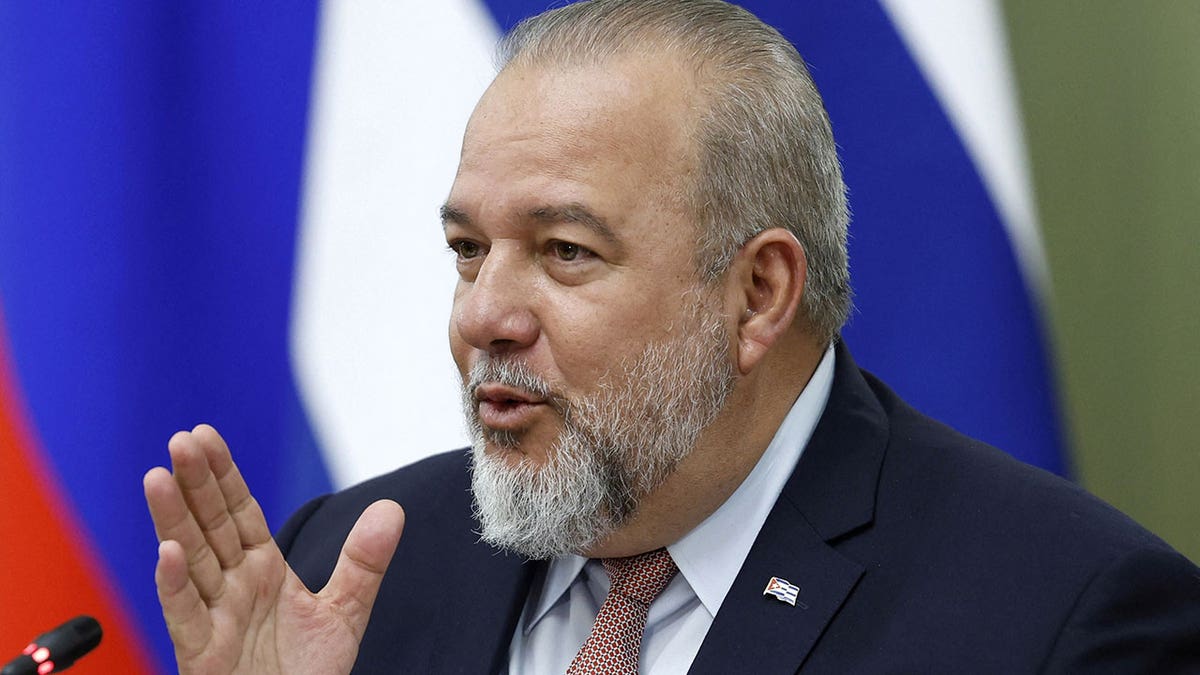
Cuban Prime Minister Manuel Marrero Cruz attends a meeting with Russian Prime Minister Mikhail Mishustin in Moscow, Russia June 13, 2023. (Sputnik/Dmitry Astakhov/Pool via Reuters)
Prime Minister Manuel Marrero Cruz remains one of the most visible figures in Cuba’s current leadership.
But Arcos noted that Marrero’s tenure is deeply tied to the country’s economic collapse. “He’s been there during this dramatic decline… so he’s closely associated with the catastrophe,” he said.
Experts cited by El País similarly assess that figures like Marrero are unlikely to represent meaningful change, and that he represents continuity tied to the current crisis, with little credibility for reform.
Roberto Morales Ojeda: the party structure
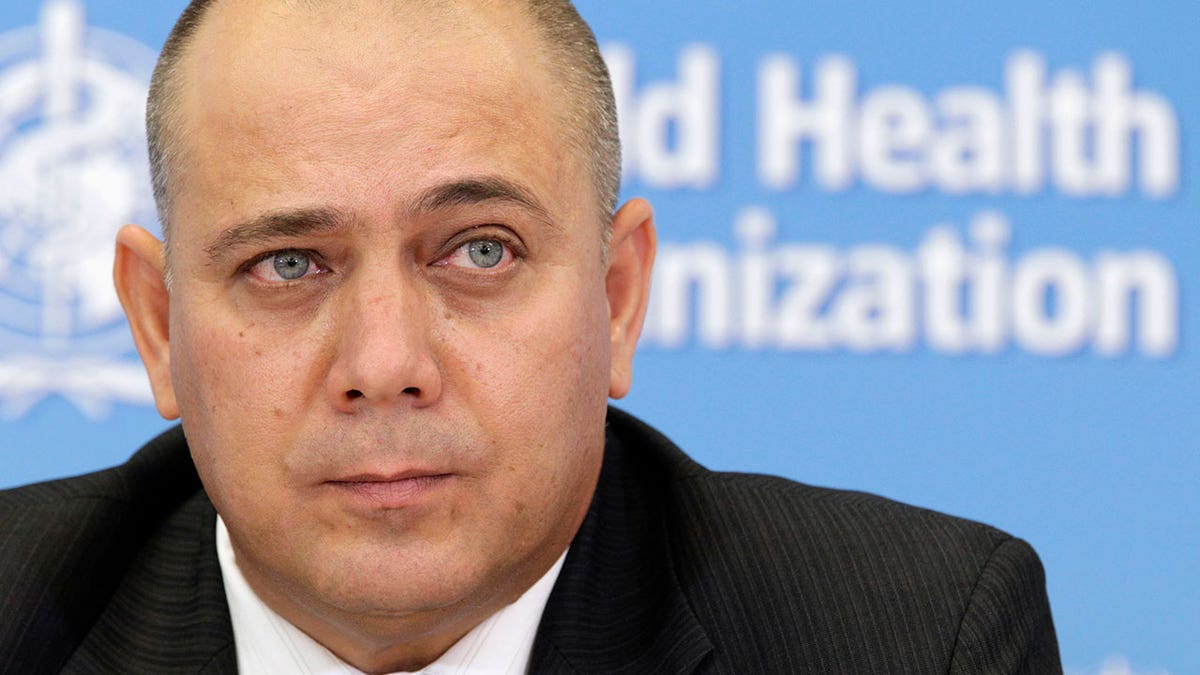
Cuba’s Minister of Public Health Roberto Morales Ojeda looks on during a news conference on support to Ebola-affected countries at the World Health Organization (WHO) headquarters in Geneva on September 12, 2014. (Pierre Albouy/Reuters)
As a senior Communist Party official, Roberto Morales Ojeda represents the regime’s institutional core. His power lies within the party apparatus, enforcing loyalty and ideological control.
Like other insiders, he is seen as part of the continuity model rather than a break from it.
Rosa María Payá and the opposition: influence from the outside

Rosa Maria Paya, daughter of late Cuban dissident Oswaldo Paya, is seen during a tribute to her father’s memory in Santiago, Chile April 17, 2017. (Ivan Alvarado/Reuters)
While regime insiders dominate succession discussions, opposition figures remain largely outside the island.
Rosa María Payá, a prominent activist and founder of Cuba Decide, has emerged as a leading voice for democratic change from exile.
“The Cuban opposition is organized, we are present both inside Cuba and in the diaspora, and we have a concrete plan,” Rosa María Payá told Fox News Digital. “Cubans do not need to be liberated from the outside and handed a government. We are ready to lead. What we need is for the United States and the international community to ensure that when this regime falls, the opposition has a seat at the table.”
“The first priority is political prisoners and guaranteeing basic civil liberties,” she described their plan. “They must be released immediately, and that has to be a non-negotiable condition of any agreement. The second is dismantling the repressive apparatus… From there, the plan moves to a transitional government, addressing the humanitarian situation and setting a clear timeline toward free and internationally monitored elections.”
Arcos spoke positively about Payá role and the broader opposition movement. “They are honorable, respectful, smart people, who want the best for Cuba,” he said. “They’re not just seeking power… they’re doing this based on a sense of duty.”
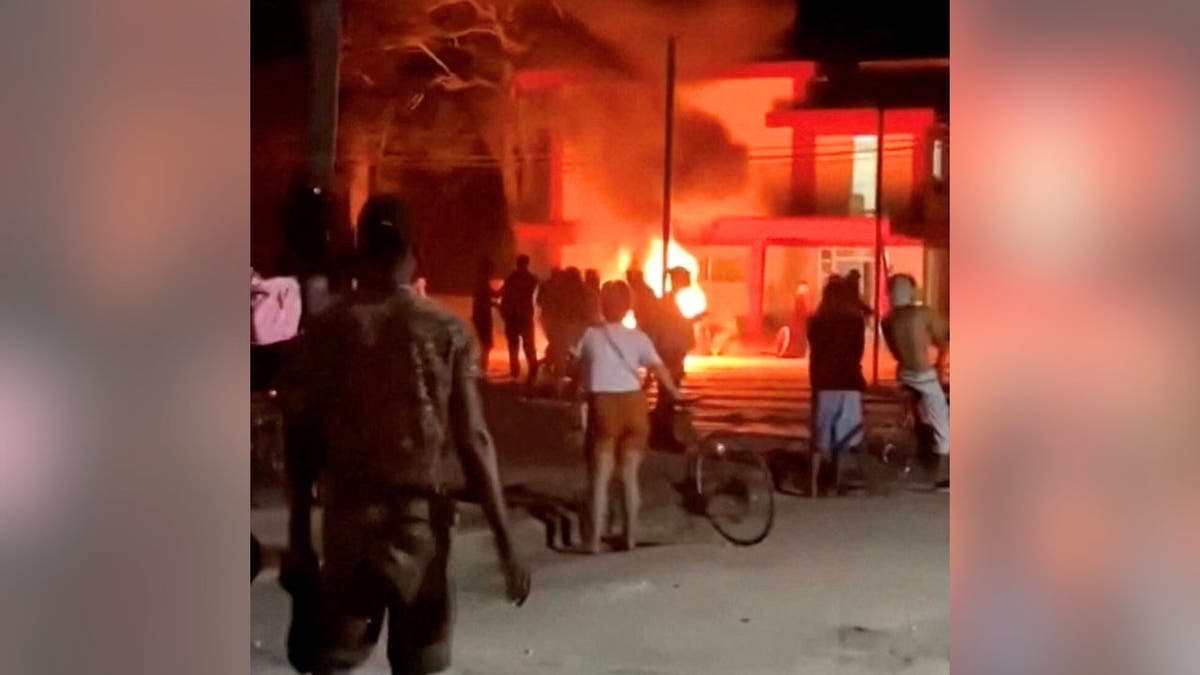
Protesters gather outside a Communist Party headquarters in Morón, Cuba, as a fire burns in the street during overnight unrest. Video obtained by Fox News Digital appeared to show demonstrators attempting to set fire to the building amid protests linked to widespread blackouts. (Reuters)
Still, analysts caution that the system leaves little room for an opposition-led transition in the near term.
“The reality is that much of Cuba’s real opposition no longer lives on the island,” Ford Maldonado said, noting that repression has pushed leadership into exile.
The bottom line: no clear heir, no easy transition
Despite speculation around individual names, experts say the real issue is structural.
“If Raúl dies tomorrow, that could open the Pandora’s box,” Arcos said, suggesting internal power struggles could surface.
Even then, he warned, the regime is unlikely to relinquish control easily after decades in power.
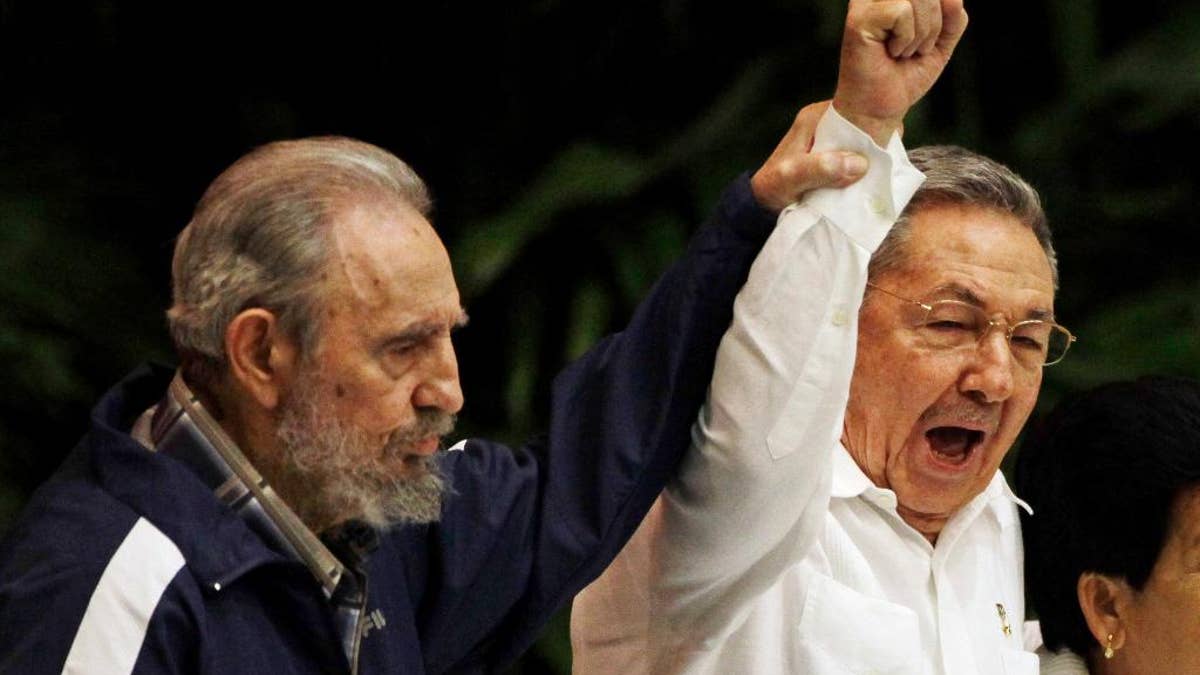
Fidel Castro, left, raises his brother’s hand, Cuba’s President Raul Castro, center, as they sing the anthem of international socialism in Havana, Cuba. (AP)
“There’s likely no real path forward that runs through the Castros or the current regime,” Ford Maldonado said.
For now, Cuba’s succession question remains unresolved, not because there are no names, but because the system itself was designed to ensure there is no true alternative waiting in the wings.


