
Share this @internewscast.com
The Department of Justice has initiated legal action against Illinois Governor JB Pritzker and Attorney General Kwame Raoul, challenging a state law designed to protect immigrants in sensitive locations such as courthouses, hospitals, and daycare centers. This legal battle highlights the ongoing tensions between state and federal authorities over immigration enforcement.
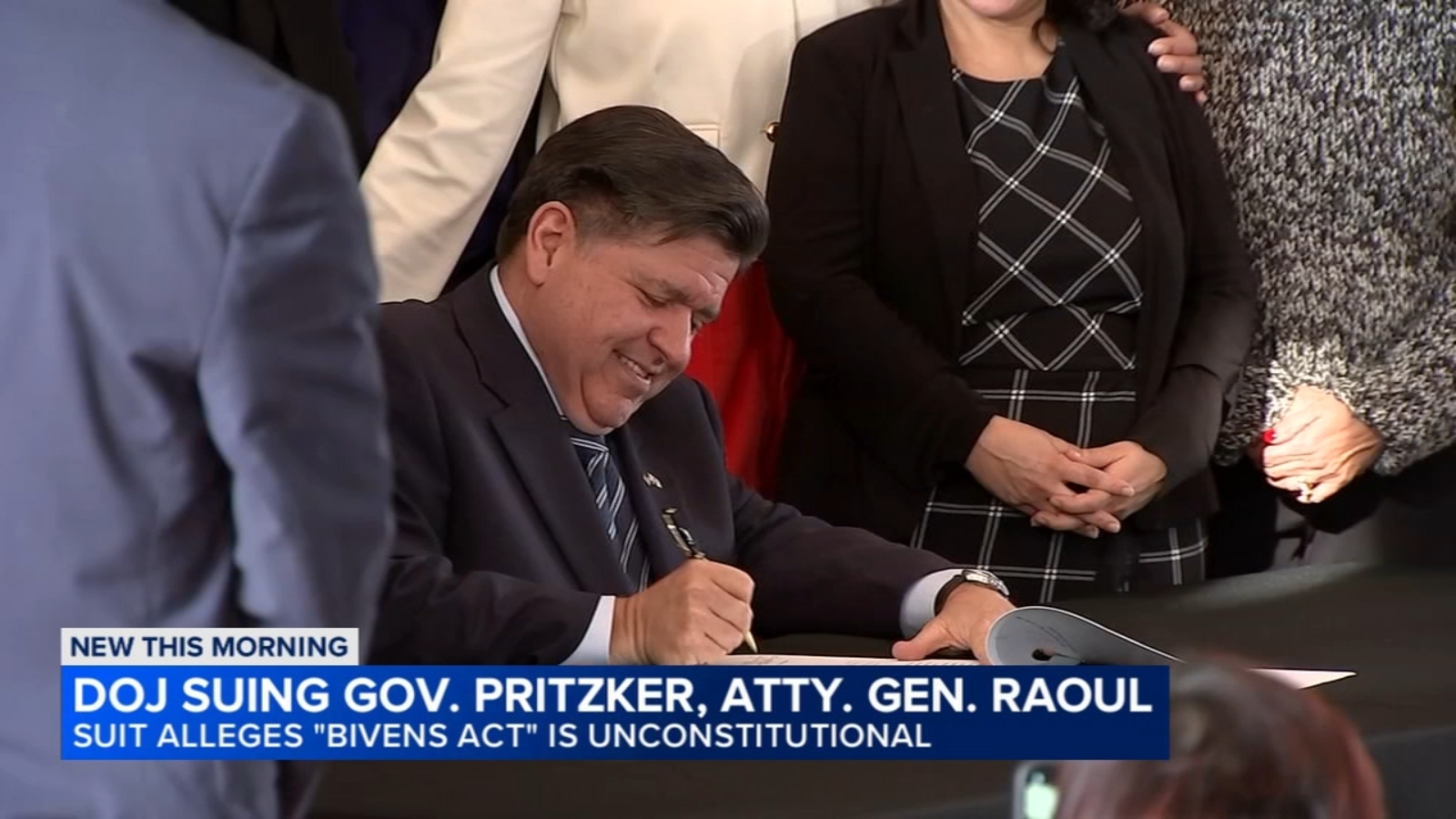
Earlier this month, Governor Pritzker signed the legislation with the intent to create safer environments for immigrants by restricting immigration enforcement activities. The law specifically prohibits immigration operations inside or within 1,000 feet of courthouse buildings. Moreover, it mandates that hospitals, public universities, community colleges, and daycare facilities develop comprehensive plans to address potential visits from federal immigration agents.
Governor Pritzker has defended the law, describing it as a necessary measure to safeguard individuals from what he perceives as the unfair practices of Immigration and Customs Enforcement (ICE). The governor’s stance underscores his commitment to protecting immigrant communities within the state of Illinois.
However, the Department of Justice argues that the law oversteps constitutional boundaries. The DOJ’s lawsuit claims that the legislation conflicts with federal authority, presenting a legal challenge that could have significant implications for the relationship between state and federal governance in matters of immigration.
This legal dispute was formally announced on Monday, as the DOJ filed the lawsuit against Governor Pritzker and Attorney General Raoul, setting the stage for a potentially landmark court case that will test the limits of state autonomy in the realm of immigration policies.
Monday, the DOJ said it has filed a lawsuit against the governor and attorney general over the protections.
“The Department of Justice will steadfastly protect law enforcement from unconstitutional state laws like Illinois’ that threaten massive punitive liability and compromise the safety of our officers,” said Assistant Attorney General Brett A. Shumate of the Justice Department’s Civil Division.
At the time of the bill signing, Pritzker said he’s not worried if his bill is legally challenged.
“No doubt, they have the ability to go to court about it, but I believe this is a not just a good law, but a great law,” Pritzker said.