
Share this @internewscast.com

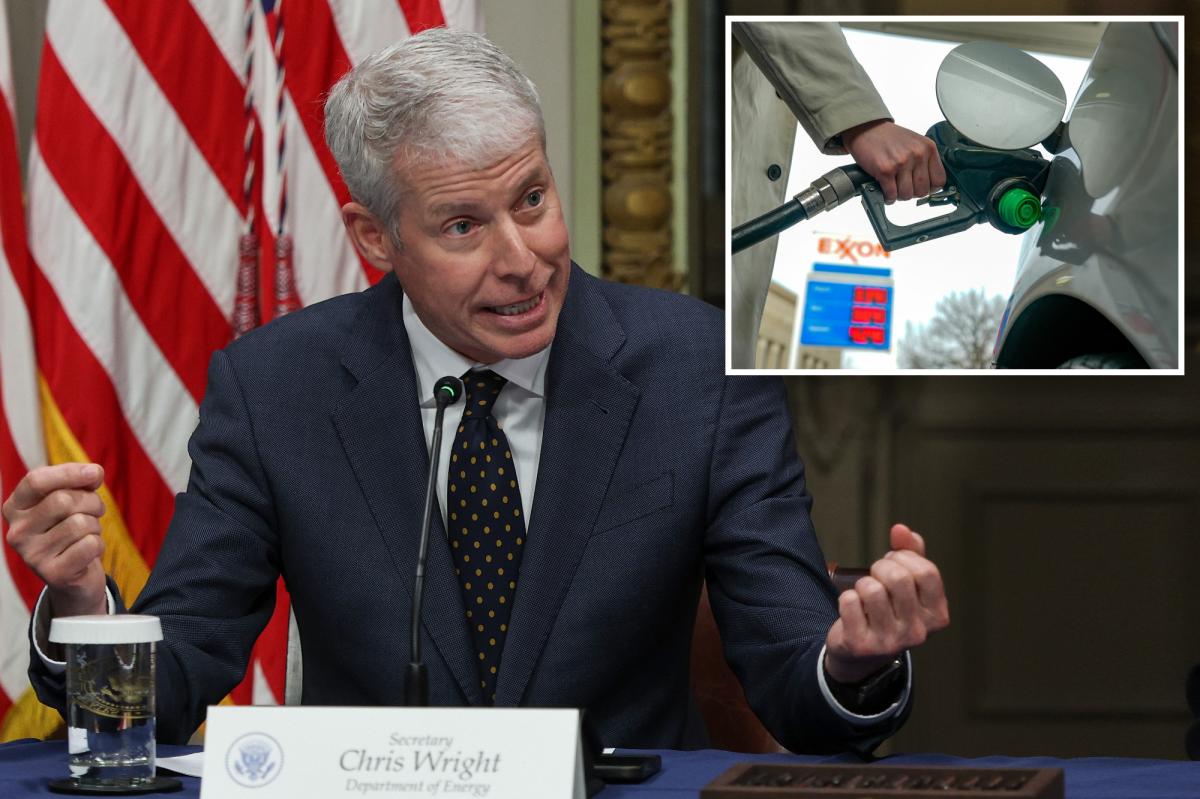
On Friday morning, Energy Secretary Chris Wright expressed optimism that gas prices, which recently spiked due to conflict in the Middle East, would decrease in the coming weeks rather than months.
“Iran has been a driver of rising energy prices for 47 years, ever since their regime came into power,” Wright remarked on “Fox & Friends.”
He continued, “We are experiencing a temporary disruption, and it’s crucial to halt their capacity to cause chaos, harm Americans, and intimidate neighboring countries.”
The American Automobile Association (AAA) reports that the national average price for a gallon of regular gas has climbed to $3.32, up from $2.98 just a week ago prior to the commencement of Operation Epic Fury.
This marks the first time since November that gas prices have surpassed the $3 per gallon mark, potentially posing challenges for President Trump and congressional Republicans as they promote their “affordability” agenda in anticipation of the 2026 midterm elections.
Drivers in the tri-state area are experiencing a slightly lesser impact from the price surge. In New York, the average price for a regular gallon reached $3.23, while it was $3.20 in New Jersey and $3.18 in Connecticut, reflecting increases of 22, 29, and 26 cents since February 27, respectively.
A Reuters/Ipsos poll released Sunday showed a plurality of voters (45%) said they were more likely to oppose Operation Epic Fury if military action led to increased gas and energy prices in the US.
In a phone interview with CNN, Trump echoed Wright’s optimism, saying the gas price spike would be “short-term” and “go way down, very quickly.”
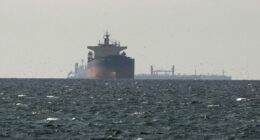
President Trump said Tuesday that US Navy vessels would begin escorting oil tankers through the Strait of Hormuz if necessary to stabilize the global petroleum supply chain.
On Friday, Wright promised those convoys would start “as soon as it’s reasonable to do it.”
Tehran had announced the closure of the passage through the Persian Gulf and threatened to attack ships entering the strait through which roughly 20% of the world’s oil supply passes.
More than 20 million barrels passed through the strait every day in 2023, the most recent year forwhich records are available, per the US Energy Information Administration.
Trump claimed to CNN anchor Dana Bash that he had “already figured out” the problem of moving oil shipments through the strait.
“We’ve knocked their navy because, you know, when you knock out the navy, they can’t do what they wanted to be able to do,” he said. “The navy is almost, we just hit about the 25 mark. Can you imagine that? Big ones — 25 ships are down.”
Iran has also continued to carry out retaliatory strikes on oil-rich Gulf nations like the United Arab Emirates, Qatar, Bahrain, Saudi Arabia, and Kuwait.
Trump has indicated the conflict could last for four weeks or fewer, but other members of his administration have refused to put a timetable on how long the war could last.
Inflation cooled to 2.4% in January, though prices remain high for many household goods, according to the latest Consumer Price Index figures from the Bureau of Labor Statistics.
Fuel prices had also surged following Russia’s invasion of Ukraine in February 2022 — with crude oil prices rising to nearly $119 per barrel.