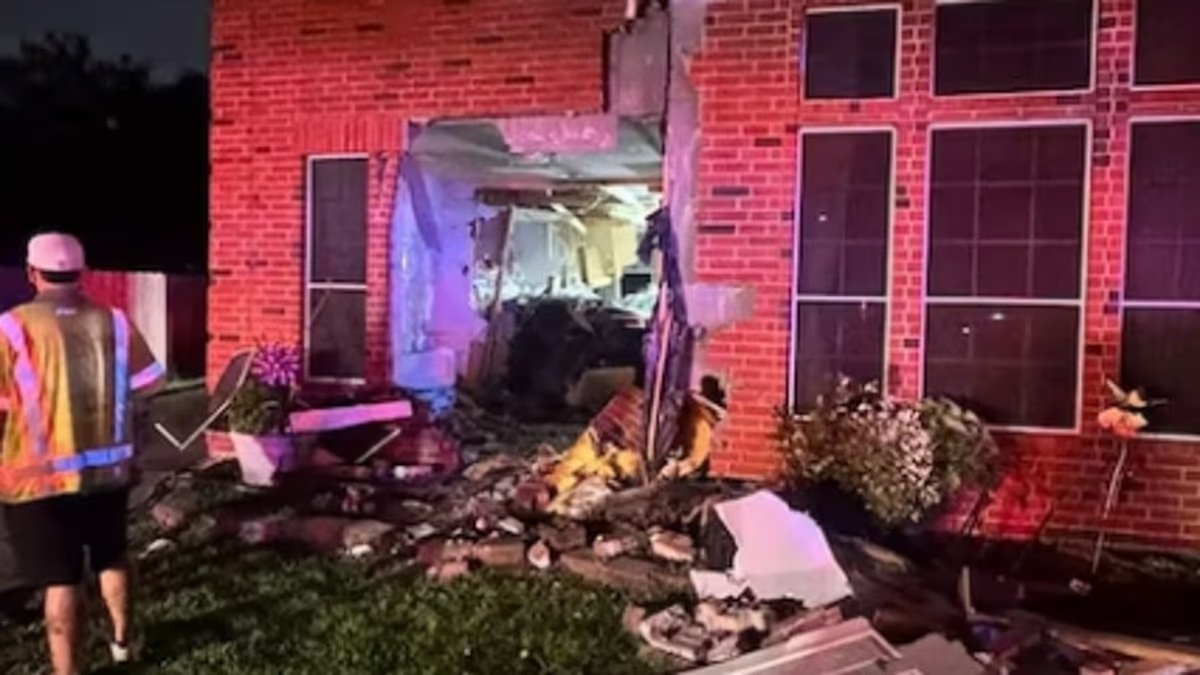
During an exclusive interview at FBI headquarters, Raia said the bureau’s multi-agency mission center has progressed from simply collecting intelligence to pursuing financial investigations designed to break apart the funding networks behind political violence.
“We found funding from nefarious sources,” Raia said. “We have subjects identified. Getting those folks to indictment and/or a conviction is a little bit different story right now.”
Raia’s remarks come as federal prosecutors working under the office of acting U.S. Attorney General Todd Blanche intensify scrutiny of nonprofits accused of ties to violent protest activity and potential unlawful financing.
As News Agency exclusively reported Monday, Jay Clayton, the U.S. attorney for the Southern District of New York, has opened a grand jury probe into American communist tech entrepreneur Neville Roy Singham and a web of nonprofits that he has funded with approximately $285 million since 2017, according to people familiar with the matter.
Sources said the grand jury has sent subpoenas requesting financial documents tied to the Singham network. Raia did not address the Singham investigation directly.
At the same time, the U.S. Attorney’s Office for the Middle District of Alabama is pursuing a case against the Southern Poverty Law Center over alleged bank fraud, wire fraud and money laundering. Prosecutors claim SPLC executives paid an informant who assisted with transportation, logistics and communications for the 2017 “Unite the Right” demonstrations in Charlottesville, Virginia, where Heather Heyer was killed.

FBI Deputy Director Christopher Raia spoke exclusively with News Agency about the Joint Fusion Center and its efforts to identify “nefarious” funding streams linked to protests that have broken out nationwide. (News Agency)
Still, Raia’s comments offer the strongest public signal so far that the FBI’s Joint Mission Center, created earlier this year to coordinate the bureau’s response to domestic political violence, is beginning to generate concrete investigative leads and results.
The center brings together counterterrorism, cyber, counterintelligence and financial investigators and specialists from the Treasury Department and IRS to trace funding streams, identify criminal actors and build prosecutable cases.
In late September, after the assassination of Charlie Kirk, President Donald Trump issued his seventh National Security Presidential Memorandum, entitled “Countering Domestic Terrorism and Political Violence,” or “NSPM-7.” The FBI tasked its Joint Terrorism Task Forces, or JTTFs, to widen their lens to investigate far-left threats in the U.S.
Last year, Raia worked as assistant deputy in charge of the FBI’s New York field office, which successfully convicted a protester, Tarek Bazrouk, charged with hate crimes related to the violent assault of Jewish victims.
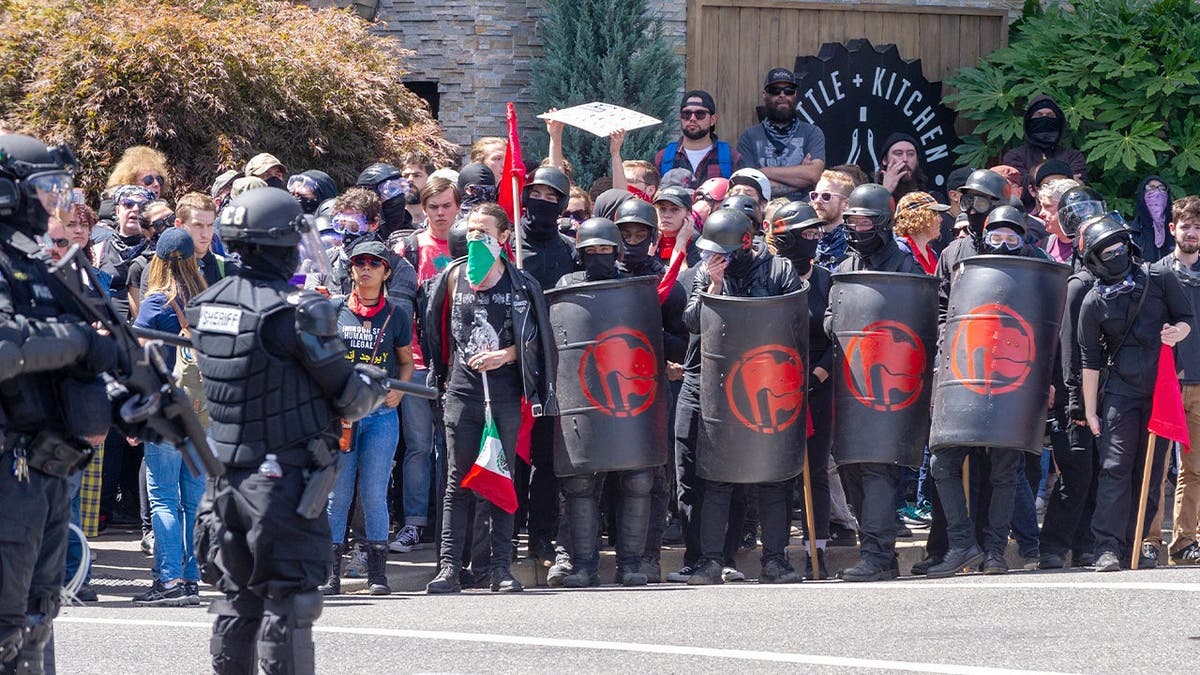
President Donald Trump designated Antifa a domestic terrorist organization via a September 2025 executive order. (Diego Diaz/Icon Sportswire via Getty Images)
In early December, the Justice Department issued a memo, “Implementing National Security Presidential Memorandum-7: Countering Domestic Terrorism and Organized Political Violence,” directing law enforcement agencies to investigate “anti-fascist” actors with “extreme viewpoints on immigration, radical gender ideology, and anti-American sentiment.” The directive also called for the investigation and prosecution of tax crimes in which “extremist groups are suspected of defrauding the Internal Revenue Service.”
FBI Director Kash Patel named Raia to the position of co-deputy director of the FBI in January after the departure of Dan Bongino from the post.
By March, the Trump administration’s FBI budget included the creation of the Joint Mission Center. Agents assigned to the Joint Mission Center are working “hot and heavy,” he said, to separate allegedly illicit funding from legitimate financial activity supporting nonprofit organizations and advocacy groups.
“It does go through some very legitimate hoops, and it is commingled with very legitimate money as well,” Raia said. “So, splitting that out just takes time.”
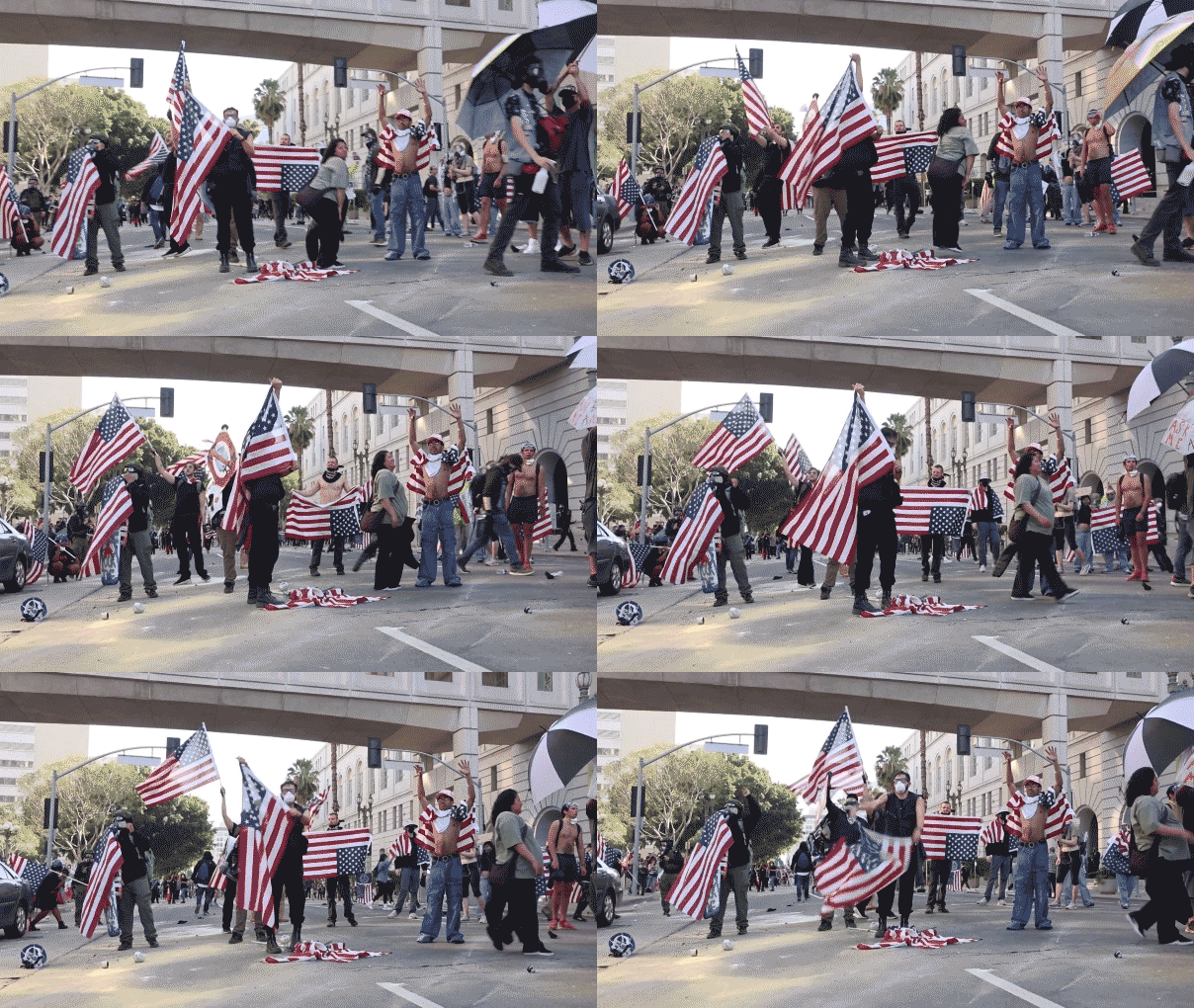
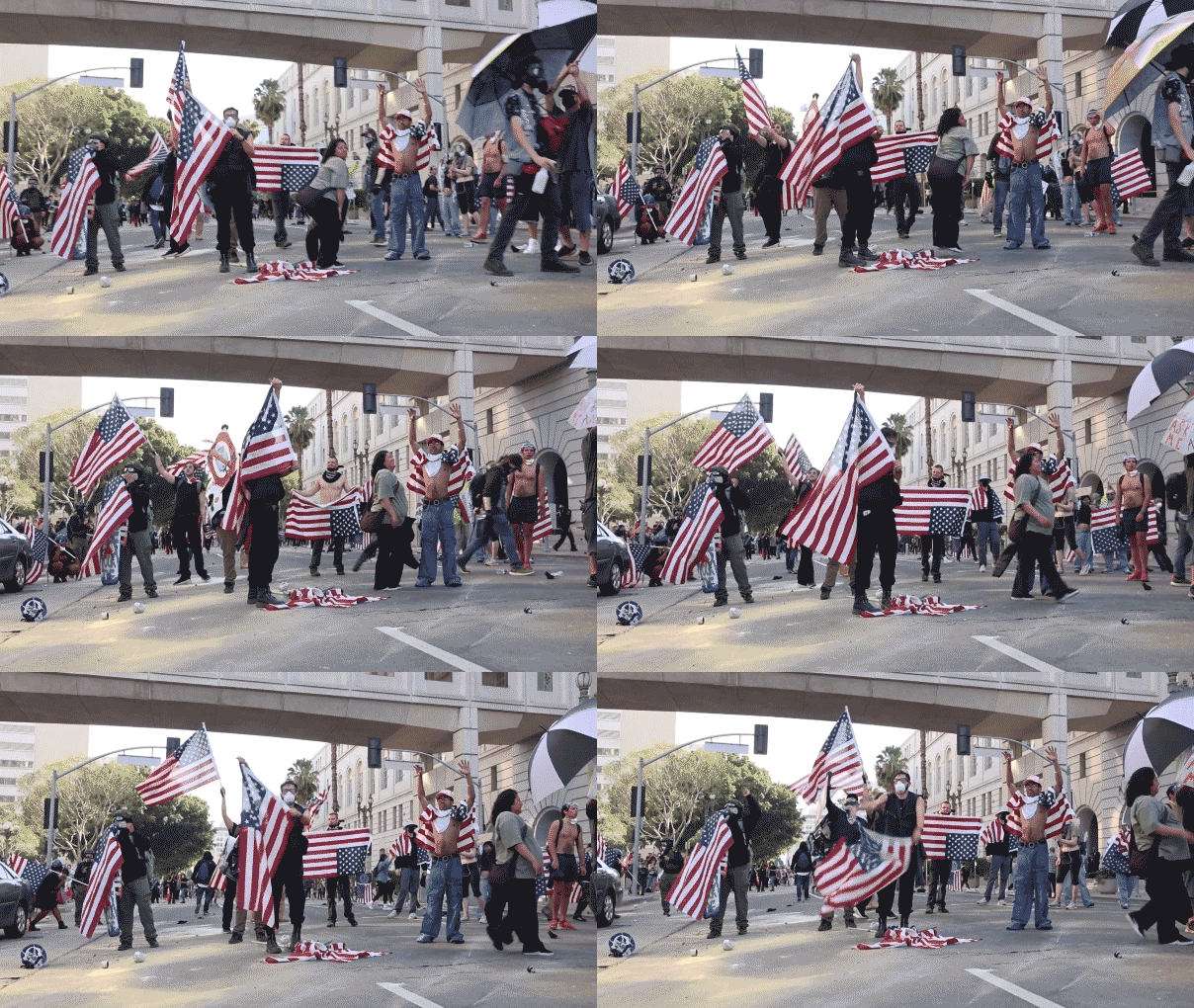
Protesters wave American flags and hold up signs during a “No Kings” demonstration. (News Agency)
Raia said the bureau has already identified at least a “portion of the actors” believed to be involved in financing or facilitating violent protest activity but declined to identify investigative targets because the cases remain active.
“We’re working every day to bring an indictable case to the Department of Justice,” Raia said.
Raia said the bureau created the Joint Mission Center because violent political unrest has evolved into what officials view as a “hybrid threat” requiring expertise that extends beyond traditional counterterrorism investigations.
“We brought all those folks together from different divisions at headquarters. And we brought them together to sit in the same space and really be a clearinghouse for these types of events that happen,” Raia said.
Singham and the organizations in his network didn’t return requests for comment. A spokesman for the Southern District of New York declined to comment.
As part of the investigation, Treasury Secretary Scott Bessent met earlier this year with Goldman Sachs Chairman and CEO David Solomon, who pledged to aid the FBI’s effort to trace how Singham allegedly routed money through a network of nonprofit organizations that investigators believe supported protests against Immigration and Customs Enforcement and other causes, the sources said.
The Singham investigation illustrates the type of financial case the FBI’s Joint Mission Center was created to pursue: identifying and dismantling the funding networks that investigators believe enable recurring episodes of political violence across the country.
Raia cited violent anti-ICE demonstrations in Minneapolis and at Delaney Hall; an immigration detention center in Newark, N.J.; the attempted terror plot at UFC 250 in Washington, D.C.; and other incidents that federal authorities believe demonstrate recurring patterns of organized violence.
As News Agency previously reported, activists associated with the Singham network have participated in anti-ICE demonstrations at Delaney Hall and protests in Minneapolis and Los Angeles.
“We’ve seen it, and we’re going to continue to see it: The violent protester that shows up in Portland will be a violent protester that shows up at Delaney Hall and vice versa,” Raia said. “This same cast of characters continues to show up, and they continue to invade and infiltrate the legitimate First Amendment protesters who are exercising their constitutionally given First Amendment right.
“We know these violent folks are coming in and seeding into there and creating chaos, creating violence, causing us to have to get involved. And we’re doing a good job getting in front of these folks and disrupting those folks.”
Raia said the FBI has disrupted numerous violent actors over the past 15 months, including during anti-ICE demonstrations in New York City, and that the bureau is increasingly shifting its focus beyond arrests at protest scenes to the financial infrastructure supporting those activities.
“We’re really looking at attacking the money. Who’s funding these folks? Because we know somebody is, at the end of this, funding these folks,” Raia said.
Ren McEachern, the former acting unit chief of the FBI’s International Corruption Unit, said following financial trails is often the fastest way to expose the organizations, individuals and motivations behind coordinated political violence.
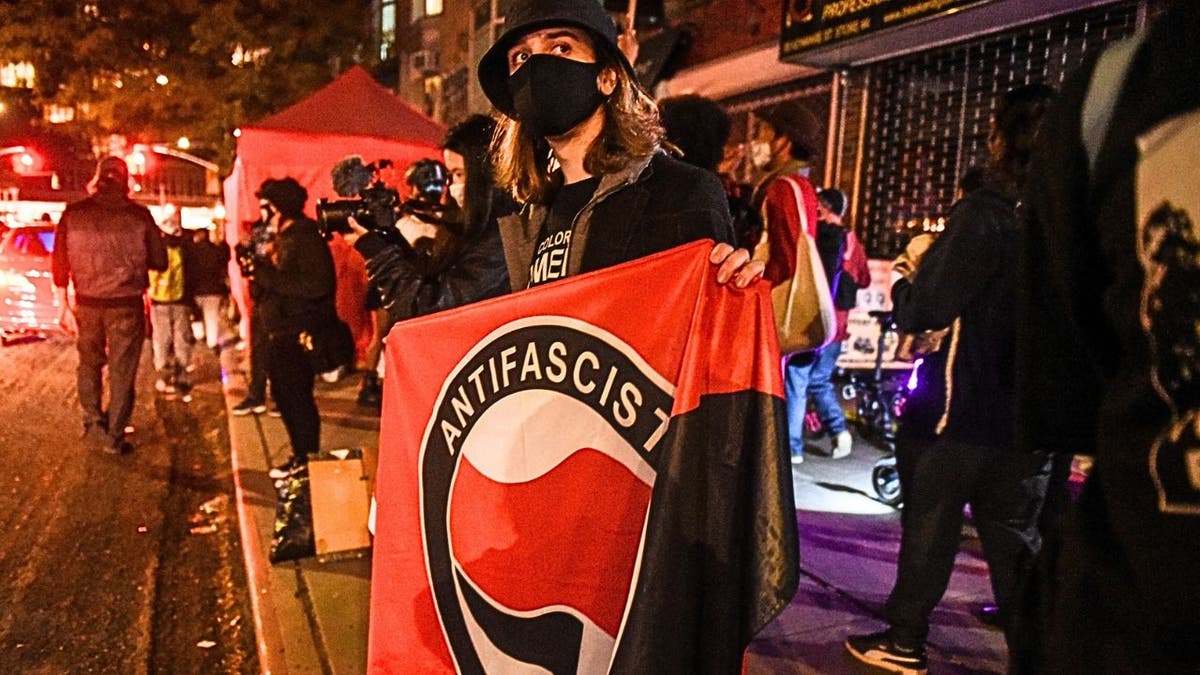
A demonstrator holds an anti-fascist banner at a protest during the 2020 Presidential election in New York Nov. 5, 2020. (Stephanie Keith/Bloomberg)
“When you see what appear to be disorganized or fragmented protest groups appearing and reappearing, well organized, in different areas of the country, you have to determine the funding sources to understand the organization,” McEachern said. “Often, if you follow the money, it tells a different story of organized collection and distribution of funds.”