
French Prime Minister Sebastien Lecornu said localized overnight curfews in Paris and other major cities helped restore a measure of calm after days of intense nationwide protests, during which thousands were arrested and demonstrators repeatedly clashed with police.
The restrictions took effect Monday night in cities including Paris, Bordeaux, Nice and Lyon, as French authorities tried to curb rioting and looting linked to the unrest.
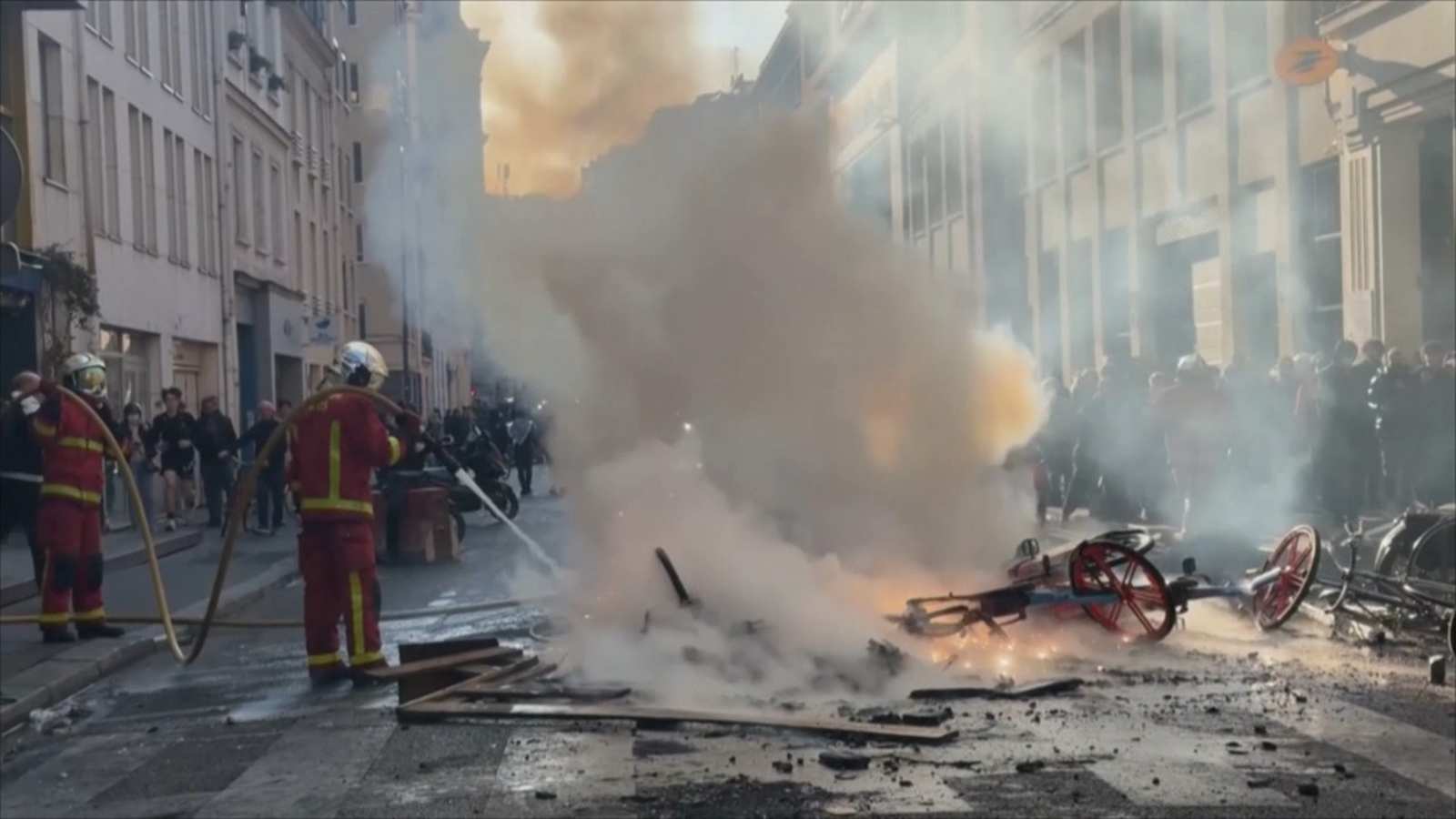
The curfews followed a violent weekend that produced France’s worst rioting in several years. Some demonstrators attacked businesses and government buildings, while protesters accused police of using excessive force.
The demonstrations began in September as a student-led campaign seeking education reforms. In recent weeks, however, the movement has broadened to include demands for government action on the rising cost of living.
The unrest comes before France’s next presidential election in April 2027, which will follow the conclusion of President Emmanuel Macron’s two terms in office. Marine Le Pen, leader of the far-right National Rally Party, and Jean-Luc Melonchon, who heads the left-wing France Unbowed party, are among the leading figures seeking to replace him.
“Targeted curfews have contributed to the calm of this night,” Lecornu wrote on X early Tuesday. He thanked the police officers and gendarmes who enforced the restrictions, along with prefects for coordinating the response.
“Tonight, new curfews will be decided where the situation requires it,” Lecornu added. He said prefects would make those decisions locally in coordination with mayors.
Interior Minister Laurent Nunez said Monday that 2,513 people had been taken into custody during the protests, while 67 had been imprisoned. He added that dozens of judicial investigations remained underway.
About 60,000 police officers and other security personnel were deployed nationwide, according to Nunez. He acknowledged, however, that authorities had not been able to contain riots in cities including Paris, Marseille and Lyon.
“You couldn’t look shopkeepers in the eye after hundreds of shops had been looted and say we hadn’t lost control,” Nunez told French radio Monday. He blamed “rioters, looters and ultra-left militants” for the disorder.
One of the most serious attacks on a public building took place in the central city of Limoges, where a historic town hall was set on fire Saturday. Justice Minister Gerald Darmanin said Sunday that counter-terrorism authorities were participating in the investigation.
“The fire at Limoges town hall affects us just as much as that of Notre-Dame,” Darmanin wrote on X, referring to the accidental 2019 blaze that severely damaged Paris’ historic Notre-Dame Cathedral. “We are taking the situation very seriously.”
Darmanin said the national anti-terrorism prosecutor’s office was monitoring the case and would decide within hours whether to assume control of the investigation.
France’s unrest unfolded alongside major demonstrations over education and living costs elsewhere in Europe. Protesters gathered over the weekend in major cities across Belgium, Spain, Portugal, Italy, Greece and Albania.
Italian Prime Minister Georgia Meloni said Sunday on X that “criminals” were trying to exploit demonstrations to provoke confrontation and “sow chaos.” Her comments came as protesters and police clashed in Milan, in northern Italy.
Luxury retailers in Milan’s historic center closed early Monday and boarded up their storefronts because of fears that further unrest could develop, according to local media.
In Lisbon, protesters established a tent camp in Rossio Square, the Portuguese capital’s central gathering place, to demand action on soaring rents and property prices.
Portuguese Prime Minister Luis Montenegro said he understood the protesters’ concerns but warned against “importing into Portugal climates of instability and protest that, in fact, have no support in Portuguese society.”
ABC News’ Tom Soufi Burridge contributed to this report.
Copyright © 2026 ABC News Internet Ventures.