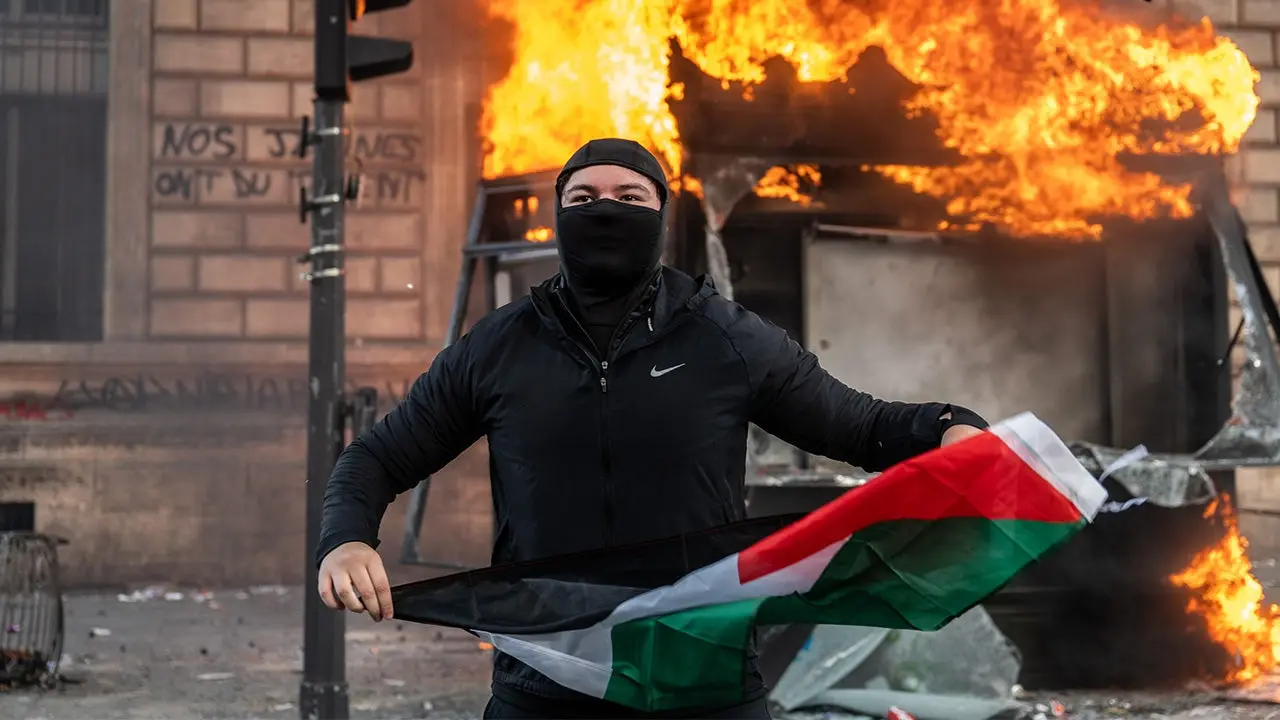

For some French Jews, Saturday’s unrest carried a disturbing message: conceal visible signs of Jewish identity and avoid gathering outside synagogues.
One community member told News Outlet that some congregations went so far as to cancel afternoon Sabbath prayers as demonstrations across France turned violent.
Before Saturday’s protests, he said, synagogues circulated precautionary emails warning members to stay indoors. “Lots of synagogues sent out emails to their people saying, ‘We’re canceling Mincha on Shabbat afternoon. Please don’t go out. It’s going to be dangerous,’” said Samuel Arrouas, a French Jewish community member who divides his time between Paris and Israel, in an interview with News Outlet.
Mincha is the Jewish afternoon prayer service. Arrouas, who returned to Israel before the protests, said the warnings shocked him. “I’m 40 years old. First time I heard this,” he said.
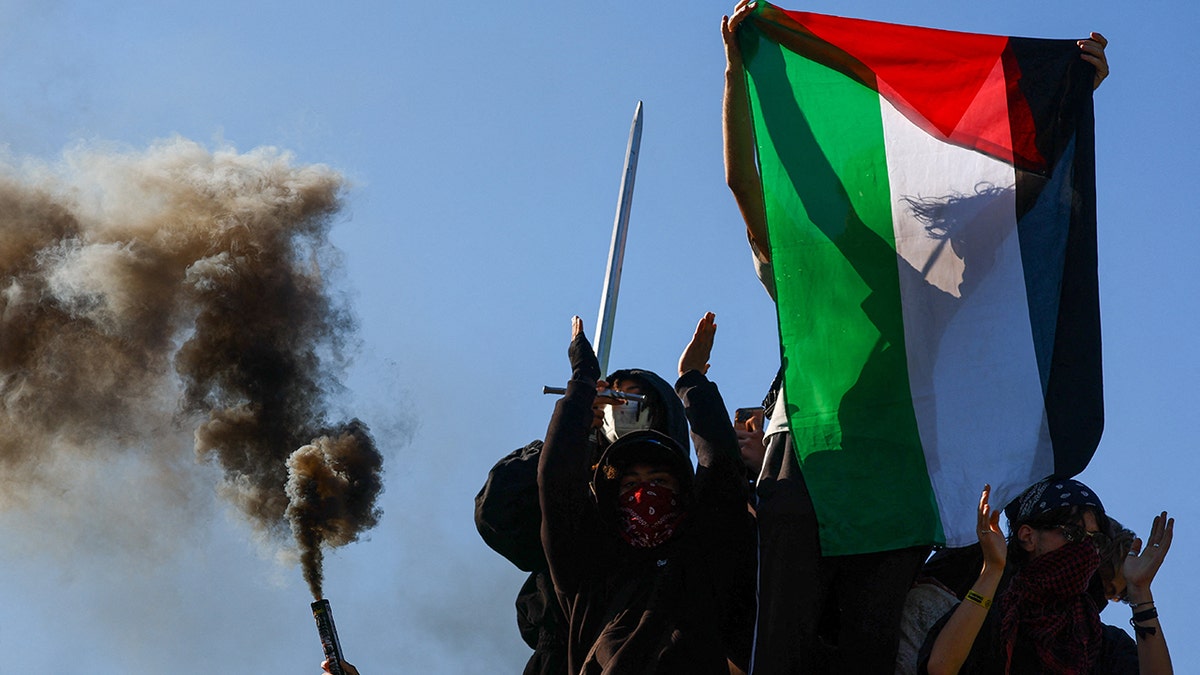
Protesters hold a Palestinian flag during demonstrations in Strasbourg, France, on Tuesday, Oct. 6, 2026. (Kai Pfaffenbach/Reuters)
The guidance also urged Jews to avoid visibly wearing kippahs, traditional skullcaps, or tzitzit, the ritual fringes worn by observant Jewish men. Worshipers were advised not to remain outside synagogues after services. “You go to prayers, and you immediately leave,” Arrouas said.
Before leaving France, Arrouas said he saw masked demonstrators carrying Palestinian flags near Paris Dauphine University.
“It’s very scary,” he said. “When you’re Jewish and you pass in front of such a scene, the only thing you want to do is just get away.”
The warnings came as roughly 550,000 people took part in demonstrations across France on Oct. 17 over rising fuel prices, the cost of living and deteriorating public services, including schools. In Paris, Marseille and other cities, masked rioters clashed with police, looted businesses and set fire to vehicles and buildings. France’s Interior Ministry reported about 2,400 arrests.
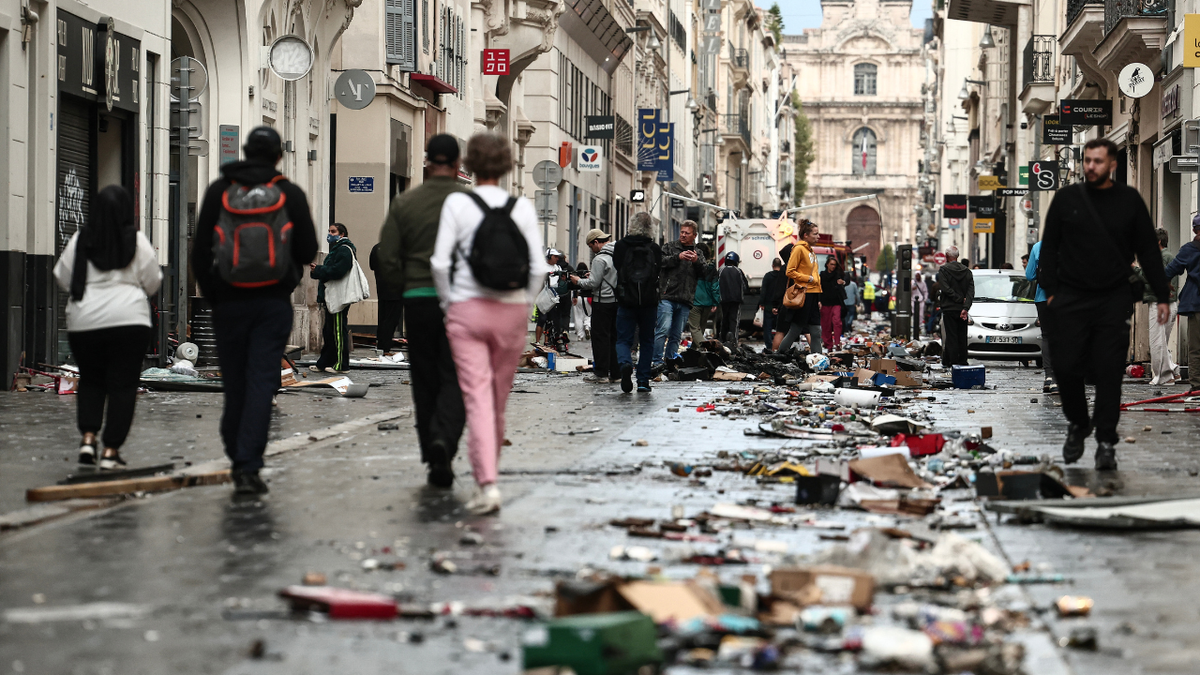
Pedestrians walk along a street covered in debris a day after nationwide protests against the “high cost of living,” in Marseille on October 18, 2026. (Thibaud Moritz/AFP/Getty Images)
President Emmanuel Macron appealed for “calm and order” in a national address and warned against further escalation. “We all feel anger and shame,” he said, separating the protesters’ “legitimate demands” from those who “destroyed, smashed and looted.” Macron said “nothing justifies” the violence and promised accountability. Interior Minister Laurent Nuñez offered to resign, but Macron rejected the offer.
Shannon Seban, France-based executive director for European affairs at the Combat Antisemitism Movement, said the appearance of Palestinian flags at demonstrations focused on domestic grievances had heightened concerns among French Jews.
“We have seen Palestinian flags at demonstrations that were supposed to be about education and social demands. What does Gaza have to do with any of this?” Seban told News Outlet.
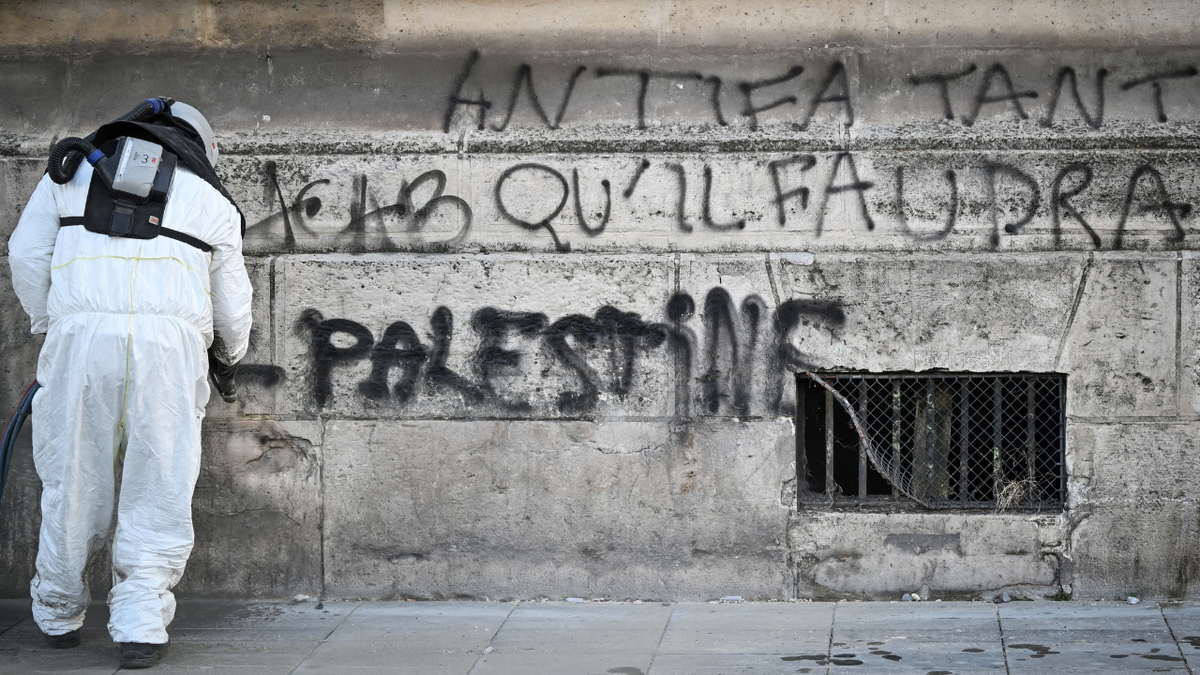
A city employee cleans tags from walls in central Paris on October 18, 2026, a day after nationwide protests that turned violent in many places across France. (Matthieu Rondel/AFP/Getty Images)
“This has nothing to do with legitimate student demands anymore. We are talking about organized violence, about people who are not coming to demonstrate but to destroy, to attack our police officers and to challenge the authority of the Republic,” she said.
DON’T MISS: Presley Gerber’s Sober Coach Revealed for the First Time
Seban connected the unrest to rhetoric calling for the “globalization of the intifada” and to antisemitic conspiracy theories spreading online.
The Combat Antisemitism Movement documented 1,384 antisemitic posts in a two-day period, Seban said, including conspiracy theories alleging that Jews and Israel were responsible for the unrest.
“The right to protest is fundamental in a democracy. But the right to protest is not the right to destroy,” she said. “France and Europe must wake up. Before it is too late.”
In Marseille, Bruno Benjamin, president of the Marseille-Provence branch of CRIF, the Representative Council of French Jewish Institutions, spoke about the damage to local businesses and the anxiety spreading through the community.
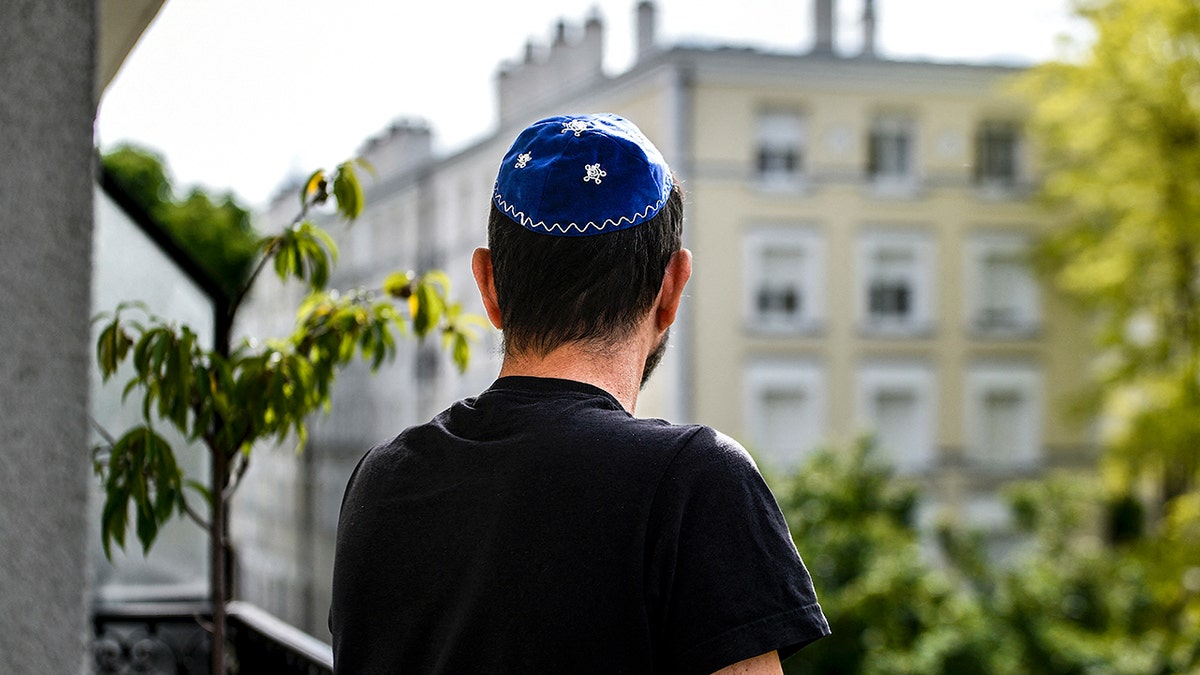
A Jewish man living in a council flat wears a kippah and looks at the buildings in his city in Paris on May 17, 2024. (Magali Cohen/Hans Lucas/AFP via Getty Images)
“Several hundred shops were ransacked, vandalized and looted. The scale of the devastation is simply unbearable,” Benjamin told News Outlet.
He said shopkeepers had seen years of work destroyed within hours, leaving some facing layoffs or temporary unemployment for employees.
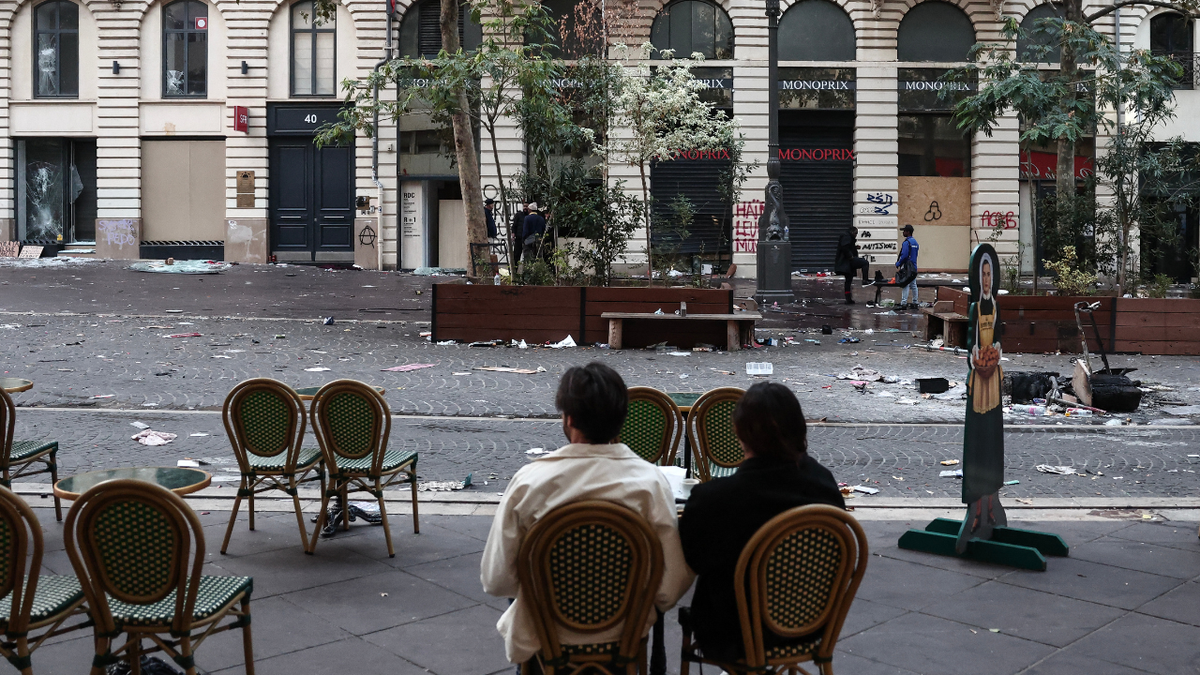
Two customers sit on the terrace of a café on a street covered in debris a day after nationwide protests turned violent in Marseille on Oct.18, 2026. (Thibaud Moritz/AFP/Getty Images)
“This is not just an attack on businesses. It is an attack on people’s livelihood, their dignity, and the very fabric of our society,” he said.
France’s Jewish community security organization, SPCJ, cautioned against assuming that Jewish-owned property was targeted because of religion. In a statement provided to News Outlet, SPCJ said a break-in and vandalism at a synagogue in Paris’s 19th arrondissement initially suggested burglary, although the motive remained undetermined. Jewish-owned businesses were among those damaged in Marseille, it said, without evidence they had been singled out for being Jewish.
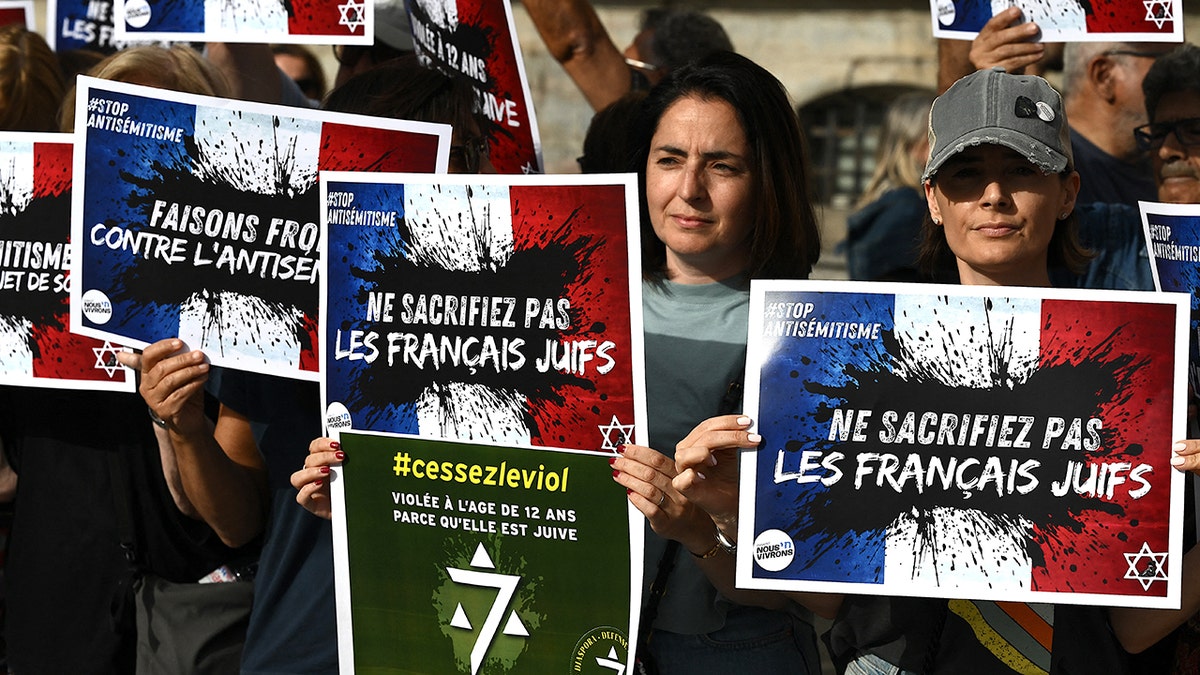
Protesters hold placards which read “Do not sacrifice French Jews” as they gather to condemn the alleged antisemitic gang rape of a 12-year-old girl, during a rally on Lyon Terreaux square in Lyon, central eastern France on June 19, 2024. (JEAN-PHILIPPE KSIAZEK/AFP via Getty Images)
The U.S. State Department’s existing Level 2 travel advisory urges Americans to exercise increased caution in France because of terrorism and unrest. News Outlet reached out to the French Embassy in Washington, D.C., for comment on the unrest and the safety of the Jewish community.
Benjamin said rising insecurity and antisemitism had left some French Jews considering whether to leave the country, while others remained determined to stay.
“We must relentlessly combat antisemitism, defend their right to live in safety and dignity and ensure that no Jew in France should ever have to choose between their personal security and their love for their country,” he said. “Because being Jewish in France should never mean having to live in fear.”
For Seban of the Combat Antisemitism Movement, it’s evident where the blame lies: “Let me be very clear: La France Insoumise and the far left bear a political responsibility for fueling this climate of violence and confrontation.”