Share this @internewscast.com

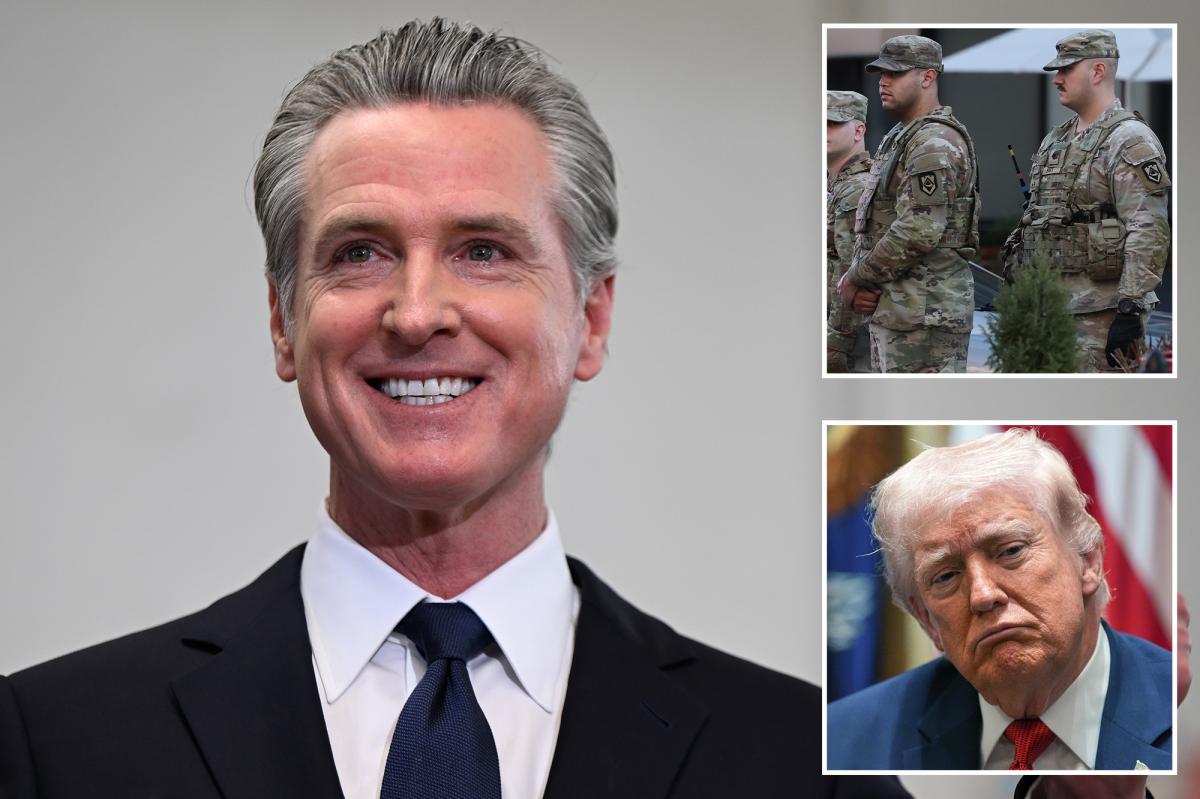
California Governor Gavin Newsom, a potential Democratic contender for the 2028 presidential race, has brought forward the idea of mandating a period of national service for Americans. He proposed service commitments that could range from a minimum of six months to as long as eighteen months.
In an interview recorded at John’s Grill in San Francisco with Politico’s Jonathan Martin, Newsom was questioned on whether the United States should consider compulsory military service or some form of mandated volunteer work.
“I believe we need to explore a framework that encourages a responsibility to serve for a year, with a minimum of six months—potentially up to 18 months,” said Newsom, who himself has not served in the military.
He further commented, “This idea of shared experiences—I’m not sure how else we can bring this country back together.”
These remarks come amid ongoing discussions among policymakers and military officials about recruitment challenges and the broader issue of civic engagement. However, Newsom did not provide a detailed plan or specify that this service should be restricted to military duties alone.
The governor’s office did not offer additional clarification on his statements.
Newsom’s office declined to provide clarification on the governor’s remarks.
The United States currently operates an all-volunteer military, a system that has been in place since 1973 following the end of the Vietnam War draft.
Men between ages 18 to 25 are still required to register with the Selective Service System in case a draft is reinstated during a national emergency.
The federal government used drafts during the Revolutionary War, Civil War, both World Wars, the Korean War and Vietnam. The modern draft system was formalized in 1940, marking the first peacetime conscription in American history, and remained in place for more than three decades before shifting to a volunteer force.
Newsom, whose presidential ambitions are well known as he recently finished a prerequisite book tour, did not indicate to Politico whether he would pursue the idea of compulsory military service as part of a policy agenda.
However, his remarks could become a focal point of a campaign and carry more weight amid rising tensions involving Israel and Iran, which have unsettled global energy markets and strained relations among US allies and adversaries.
The White House did not dispel rumors earlier this month that President Trump may consider reinstituting the draft. After the draft ended, Congress preserved the infrastructure to restart it if needed. Resuming the draft would require congressional authorization and a presidential order.
White House Press Secretary Karoline Leavitt said that Trump “wisely does not remove options off of the table,” while adding that there are no plans to put troops on the ground.
During the Politico interview, Newsom discussed his spats with Trump and the threats he sees to democracy.
“I know two wrongs don’t make a right, but with all due respect — we’ll lose this country as we try to win that argument,” Newsom said.
“And Democrats are constantly trying to be right. The other side is ruthless. And with respect, my party needs to be more ruthless about winning because if we don’t win back the House of Representatives, we may not have a fair and free election in 2028.”
Last September, Newsom launched the California Men’s Service Challenge, which set a goal of getting 10,000 men to volunteer as mentors, coaches and tutors.
“Too many young men and boys are suffering in silence — disconnected from community, opportunity and even their own families,” Newsom said in a statement at the time.
“This action is about turning that around. It’s about showing every young man that he matters, he has purpose, and he has a community.”
A congressionally created panel — the National Commission on Military, National, and Public Service — spent two years studying whether the U.S. should expand service requirements, ultimately rejecting mandatory national service in its 2020 report.
The bipartisan group instead recommended significantly expanding voluntary programs like AmeriCorps and improving military recruitment.