
Several Gulf nations have sharply condemned Iran’s Saturday drone attacks on Bahrain, pledging to present a unified front against any future aggression from Tehran.
The flare-up marks the most serious challenge so far to the memorandum of understanding signed last week by President Donald Trump and Iranian President Masoud Pezeshkian.
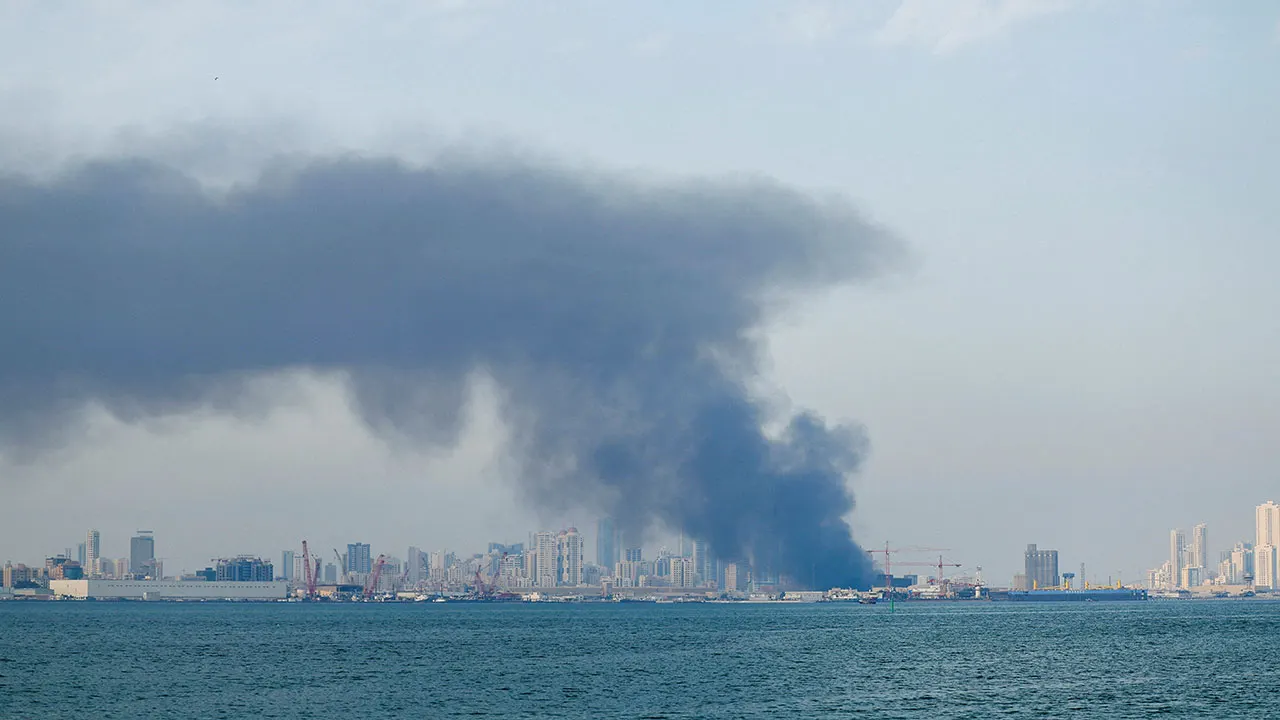
Tensions escalated after Iran hit a cargo vessel in the Strait of Hormuz on Friday, prompting the U.S. to carry out overnight strikes on Iranian missile, drone and radar facilities. Tehran answered Saturday with drone attacks on Bahrain, home to the U.S. Navy’s Fifth Fleet.
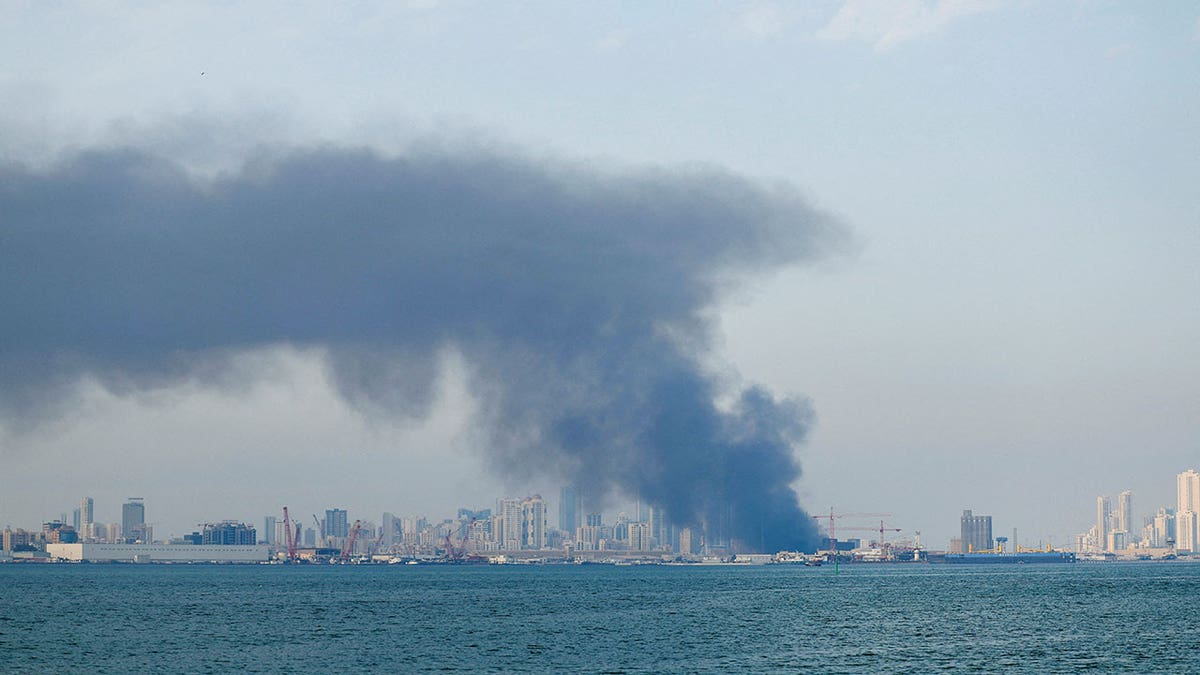
Smoke rises in Manama, Bahrain, on Feb. 28, 2026, after reported Iranian missile attacks following U.S. and Israeli strikes against Iran. (Reuters)
Jasem Mohamed Albudaiwi, secretary-general of the Gulf Cooperation Council, described Iran’s attack on Bahrain as “treacherous” and warned it could derail ongoing efforts to advance peace across the Middle East.
The GCC represents Bahrain, Oman, Saudi Arabia, Qatar, Kuwait and the United Arab Emirates. Several member states also issued separate statements denouncing Iran’s actions.
Bahrain confirmed in its own statement that Iran had sent multiple drones into its airspace, calling the strikes a “flagrant threat” to national security. Authorities have not yet clarified which locations were targeted.

President Donald Trump exits the stage after addressing the Faith & Freedom Coalition’s policy conference on Friday, June 26, 2026. Iran’s latest strike adds new pressure to the MOU he signed establishing a ceasefire. (AP Photo/Manuel Balce Ceneta)
“While the Ministry condemns this heinous aggression, it affirms that the Iranian regime’s continued attacks, at a time when regional and international efforts are moving towards de-escalation, place the sole responsibility on Tehran for undermining peace efforts, and reveals an approach based on destabilizing security, exporting chaos, and undermining regional stability,” Bahrain’s Foreign Ministry also said Saturday.
EXCLUSIVE: The migrant gang-rape cases involving young girls that inspired a controversial banned film
Officials in Kuwait and the United Arab Emirates (UAE) also came out with statements on Saturday condemning Iran.
Kuwait’s Foreign Ministry said the Iranian strikes represent “a dangerous undermining of endeavors for peace and stability, and a threat to the security and stability of the region.”
Both Kuwait and the UAE said they remain committed to supporting Bahrain’s safety and stability.

U.S. Secretary of State Marco Rubio, center, attends a meeting with foreign ministers of the Gulf Cooperation Council member states in Manama, Bahrain, on Thursday, June 25, 2026. (Eric Lee/Pool Photo via AP)
Also joining in the public denouncements of Iran were Saudi Arabia and Qatar, with both countries saying the latest strikes violate Bahrain’s sovereignty and international law.
Notably, Oman’s foreign ministry has not addressed the attack. Oman has maintained a neutral stance throughout the war and has frequently acted as a mediator between Washington and Tehran.
Oman and Iran are also still in the midst of negotiating a joint framework for the future administration of navigation in the Strait of Hormuz.

A container ship, right, and a cargo vessel are seen in the Strait of Hormuz off Bandar Abbas, Iran, Wednesday, June 17, 2026. (Amirhosein Khorgooi/ISNA via AP)
Iran’s Revolutionary Guard took responsibility for the strikes on Bahrain, saying on state-run TV that it had targeted several locations “of the U.S. terrorist army in the region” without specifying which areas were hit, according to The Associated Press.
So far, no casualties or significant damage has been reported from the drone attack, which occurred days after Secretary of State Marco Rubio met with Gulf allies in Bahrain.