
Share this @internewscast.com
Hungarian Prime Minister Viktor Orbán recently asserted that Budapest offers unparalleled safety for Jewish communities compared to other European cities. His comments coincide with new findings from the Anti-Defamation League (ADL), which indicate a worrying increase in antisemitic activities across Europe.
In a post on the social media platform X, Orbán stated, “Jewish communities are safer in Budapest than anywhere else in Europe. Zero tolerance for antisemitism, no hate crimes, no violent migrants. This is how a modern European capital ought to be.”
Israeli Diaspora Affairs Minister Amichai Chikli echoed Orbán’s sentiments, also taking to X to describe Budapest as “one of the safest and most welcoming European capitals for its Jewish community and for Israeli citizens alike.”
Chikli referred to a recent incident involving the Swiss city of Basel, which opted not to host a Zionist Youth Congress for about 200 Jewish youths. He highlighted Hungary’s willingness to host the event, where a high-ranking Hungarian minister delivered a speech.
According to Chikli, Hungary’s stance is a result of “a responsible immigration policy that recognizes the danger posed by radical Islam” alongside “an uncompromising government policy against antisemitism.”
Orbán’s statements come in the wake of an alarming report by the Anti-Defamation League. The ADL’s analysis for 2024–2025, titled Take Action: Antisemitism Is Escalating in Europe, details a significant rise in antisemitic harassment, vandalism, threats, and physical attacks across various European nations. This surge has been particularly noted since the Hamas attack on Israel on October 7, 2023, and the subsequent conflict in Gaza.

Hungarian Prime Minister Viktor Orbán (L) receives Israeli Prime Minister Benjamin Netanyahu on April 3, 2025 in Budapest, Hungary. (Janos Kummer/Getty Images)
According to the ADL, incidents rose sharply in countries including France, Germany and the United Kingdom. Jewish communities reported increased security threats, while many Jews said they felt unsafe wearing visible religious symbols in public. The ADL warned that Jewish institutions across Europe now require heightened security and that antisemitism is becoming increasingly normalized in public discourse.
Hungary is home to the largest Jewish community in Central Europe, with estimates ranging from 80,000 to 100,000 Jews, most of them living in Budapest.
Jewish leaders in Hungary have offered mixed assessments over the years. Some have praised the government for investing in synagogue restoration, Holocaust memorials and Jewish cultural life, as well as for maintaining close diplomatic ties with Israel. Others have expressed concern about nationalist rhetoric and disputes over historical memory, particularly regarding Hungary’s role in the Holocaust.
Before World War II, Hungary had one of Europe’s largest Jewish populations, estimated at about 825,000 people. Following the German occupation in March 1944, Hungarian and Nazi authorities deported approximately 430,000–440,000 Jews to Auschwitz in a matter of weeks, most of whom were murdered on arrival. Overall, historians estimate that about 564,000 Hungarian Jews were killed during the Holocaust.
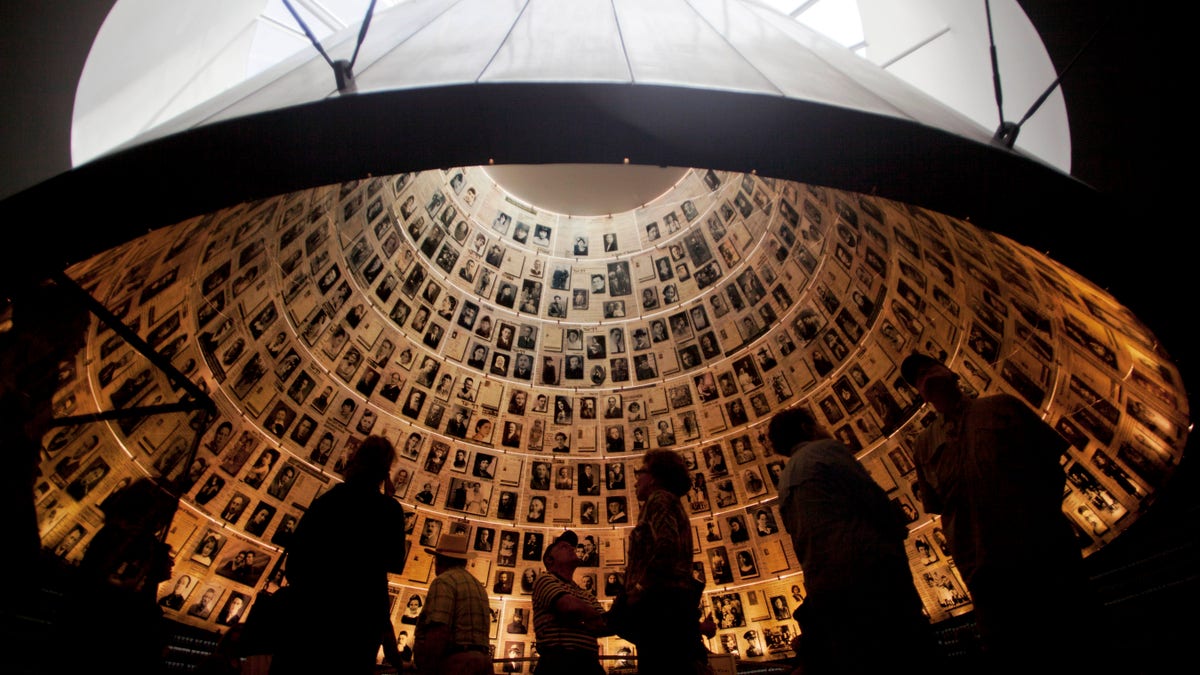
Visitors look at pictures of Jews killed in the Holocaust in the Hall of Names in the Yad Vashem Holocaust Memorial in Jerusalem, Sunday, April 7, 2013. The annual Israeli memorial day for the 6 million Jews killed in the Holocaust of World War II begins at sundown Sunday. (Sebastian Scheiner/AP2013)
Orbán’s government has repeatedly rejected accusations of antisemitism at home, pointing to its close relationship with Israel and its public opposition to antisemitic violence. Hungarian officials frequently contrast Budapest with major Western European cities where Jewish institutions now require heavy police protection and where protests linked to the Gaza war have at times turned violent.
According to the ADL, antisemitic narratives have now spread across Europe’s political spectrum and online platforms, contributing to a climate of fear even in countries once considered safe for Jewish life.