Share this @internewscast.com
A new legislative proposal is making waves across Illinois, following an investigative report by the ABC7 Chicago I-Team. The report highlighted an ongoing issue at the Cook County Medical Examiner’s Office, where deceased individuals remained unidentified, leaving families in distress.
The proposed state legislation seeks to overhaul procedures at medical examiner offices throughout Illinois. It aims to improve the identification process of bodies and enhance communication with families. Additionally, the legislation intends to simplify the process for families to pursue legal action against medical examiners when necessary.
ABC7 Chicago is now streaming 24/7. Click here to watch
Recently, two new bills were introduced in the Illinois House of Representatives in response to these concerns.
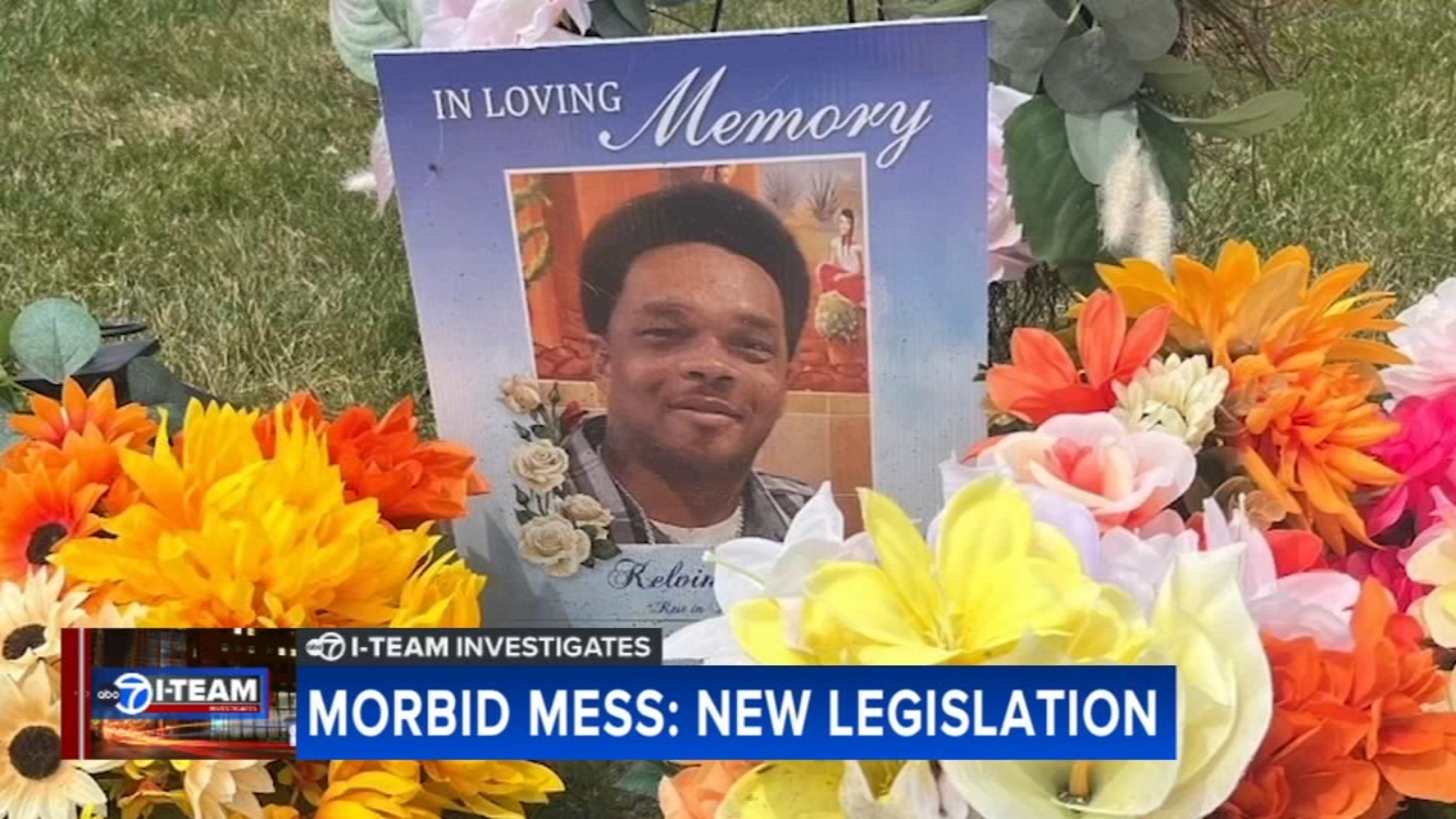
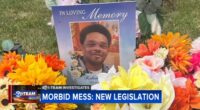
These legislative efforts are largely driven by the experience of West Rogers Park resident Ruthie McKinnie. Her son, Kelvin Davis, was left unidentified for six weeks in the Cook County Medical Examiner’s Office despite her repeated attempts to reach out to the morgue.
“This legislation means a lot to me because it is about helping other families. Personally, I felt disrespected,” McKinnie stated, emphasizing the need for change.
The medical examiner’s office has previously attributed the delay in identifying Davis to the absence of identification on his person at the time.
There was also a name mistake on a police report. It listed Kelvin’s name as “Kevin” when he was found. But his family says they gave a detailed description of the 6-foot, 4-inch man with freckles.
The family says that employees at the morgue could have said, “We have a Kevin, but not a Kelvin.” His body was eventually identified after a missing person report listed a description of his tattoo.
“Right now, there’s obligations when unidentified remains come in. But there’s no consequence for not following the protocol,” lawyer Christopher Jahnke said.
Jahnke says the legislation would make it easier for families to take legal action against a morgue in Illinois.
“Ends the immunity for negligence on behalf of the medical examiner’s office, it expands definitions of what is a medical facility to include the medical examiner’s office,” Jahnke said.
It would also create clearer standards and more training procedures.
“Because, as we’ve seen things keep falling through the cracks, people keep falling through the cracks, families falling through the cracks,” Jahnke said.
The I-Team has uncovered three other similar complaints in recent years. In each case, the Cook County Medical Examiner’s Office has said it did all it could with the information available, especially in one case where a body was decomposed.
The office says people with missing loved ones should check its website and attend an annual “missing persons day” event they hold in the spring.
The office also says it handles 7,000 cases each year. They said the vast majority do not have any challenges with identification.
“I hope deeply that this will bring upon a change,” Forrest McKinnie said.
The McKinnie family was able to help get that legislation filed after ABC7 Chicago’s reporting.
They worked with 16th District state Rep. Kevin Olicakl, who said, “The misidentification of a loved one can cause deep and unnecessary trauma for families who are already grieving. When Ruthie and Forrest first shared their story with me, it was clear that we had a responsibility to act. No family should ever have to endure the uncertainty and heartbreak they’ve experienced.”
“We’ve got to pull together as people in the state of Illinois, to get this law in place for the future families not to suffer,” Ruthie Mckinnie said.
One of the bills is also known as the “Kelvin F. Davis Act.” Both are currently being submitted to the Rules Committee.
The medical examiner’s office did not yet comment on the proposed state legislation.
The McKinnies have also filed a lawsuit alleging neglect and misconduct. The county says it has filed a motion to dismiss.
Copyright © 2026 WLS-TV. All Rights Reserved.