
Share this @internewscast.com
In the United States, a fire department is called to action every 23 seconds, with the majority of deadly fires originating in residential settings.
ABC7 Chicago is now streaming 24/7. Click here to watch
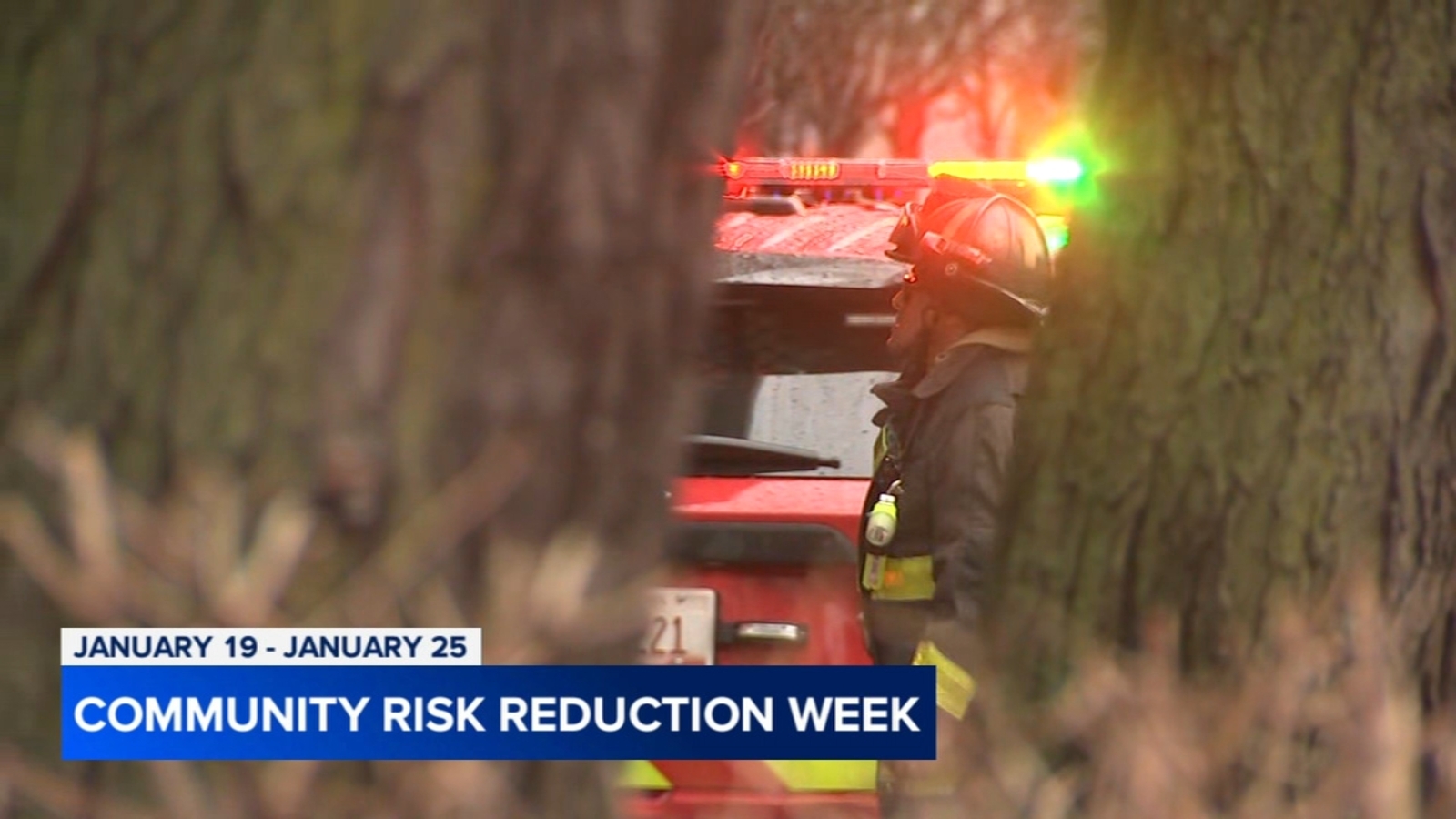
Beginning Monday, January 20, Illinois will observe Community Risk Reduction Week. This initiative is dedicated to prevention strategies aimed at decreasing emergencies and safeguarding both families and the firefighters who serve them.
John Koch, the Deputy Chief of Human Services at the Joliet Fire Department, shared essential safety tips during an appearance on ABC7 Chicago.
Smoke Alarms:
- According to the National Fire Protection Association, working smoke alarms reduce the risk of dying in a home fire by more than half.
Having an early warning system is crucial since individuals typically have just two to three minutes to evacuate a home during a blaze.
The brevity of this timeframe is due to the synthetic materials commonly used in today’s home construction, underscoring the critical importance of functional smoke alarms in every household.
- Test smoke alarms monthly, pressing the test button
- Check the expiration date on the back of the alarm. If the alarm is 10 years old or older, it needs to be replaced with a 10-year sealed battery alarm.
- Hold a family meeting and review your family’s fire escape plan. If you don’t have one create one!
Know two ways out of each room
Designate a meeting place outside of the home
Hold fire escape drills
- If you have questions about smoke alarms, installation locations, or need alarms and you can’t afford them, check with your local fire department to see if they participate in the “Be Alarmed!” Smoke Alarm Installation Program (administered by Camp I AM Me by Illinois Fire Safety Alliance and Office of the Illinois State Fire Marshal or the Red Cross Smoke Alarm Installation Program).
Bed shakers
- These devices are available for those who are hard of hearing or deaf and work in conjunction with smoke alarms.
- The device is placed under the mattress and creates a vibration to alert someone when the smoke alarm is sounding, allowing them time to escape a home fire.
- A limited supply is available through the “Be Alarmed!” Smoke Alarm program.
Fire departments who participate can request these devices if a resident needs one.
Carbon monoxide alarms
- Carbon monoxide (CO) is often referred to as the “silent killer” because it is a colorless, odorless gas that can quickly become deadly if undetected.
- In 2024, Illinois fire departments responded to 9,860 CO related incidents.
- Each year, hundreds of people across Illinois are treated in emergency rooms due to carbon monoxide exposure, and over the past decade, an average of 20 people per year have died from accidental CO poisoning.
To help prevent accidental CO exposure or death in your home, the OSFM encourages everyone to follow these important safety precautions:
- Install and maintain carbon monoxide detectors in your home, especially outside sleeping areas.
- Have your furnace inspected annually by a qualified technician to ensure proper operation.
- Never use appliances indoors that are intended for outdoor use, such as barbecue grills, camp stoves, portable generators, or gas-powered tools. Do not use ovens to heat your home.
- Never leave a car or truck running in an attached garage, even with the garage door open. If operating an engine in a detached garage, keep the door open to allow for fresh air circulation.
- Make sure vents are clear of snow and ice during extreme cold weather events or following a snowstorm.
Heating Safety: Space Heater
- Give space heaters space. Keep all space heaters at least three feet away from anything that can burn furniture, curtains, bedding, clothing, and papers.
- Use the right heater for the right space. Only use heaters that are designed for indoor use and have an automatic tip-over shutoff and overheat protection.
- Plug directly into the wall. Never use extension cords or power strips with space heaters they can overheat and cause fires.
- Turn it off when you leave or sleep. Space heaters should be turned off before going to bed or leaving the room.
- Keep kids and pets safe. Place heaters where children and pets can’t touch or knock them over.
- Watch the cord. Stop using a heater if the cord is damaged, frayed, or warm to the touch.
Heating Safety: Fireplaces & Wood Burning Stoves
- Have chimneys inspected and cleaned annually by a qualified professional to prevent chimney fires.
- Use a sturdy screen or glass door to keep sparks from escaping.
- Only burn seasoned wood. Never burn trash, cardboard, or treated wood.
- Dispose of ashes properly. Place cooled ashes in a metal container with a lid and store it outside, away from the home.
Dryer vent
- You are at higher risk of having a clothes dryer fire if you don’t clean your lint filter and dryer vents.
- Have your dryer installed and serviced by a professional.
- Do not use the dryer without a lint filter. Clean the lint filter before and after each cycle.
- Do not forget to clean the back of the dryer where lint can build up.
- Check the venting system behind the dryer to make sure that it is not damaged, crushed or restricted.
- Make sure the outdoor vent covering opens when the dryer is operating.
Copyright © 2026 WLS-TV. All Rights Reserved.