
Share this @internewscast.com
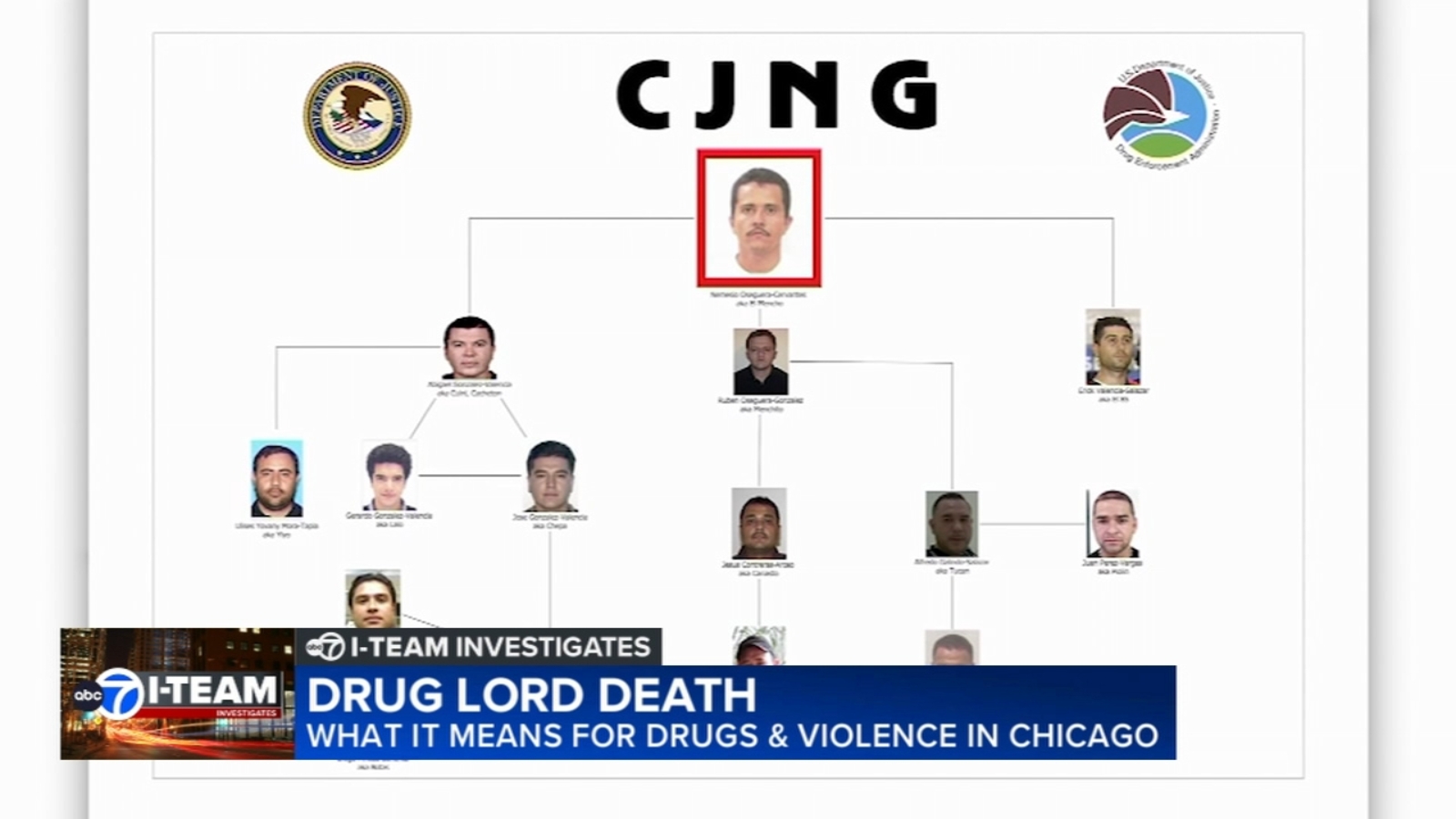
Nemesio Oseguera Cervantes, infamously known as “El Mencho,” met his end in a bold operation executed by the Mexican Army. Renowned for his cruelty and violence, the notorious drug lord’s death marks a significant moment in the fight against organized crime.
El Mencho, who led the Jalisco New Generation Cartel (CJNG), a multi-billion-dollar criminal enterprise, has left law enforcement officials pondering the potential impact on drug trafficking and violence in the United States, particularly in Chicago.
ABC7 Chicago is now streaming 24/7. Click here to watch
“This sends a clear signal that the United States will not tolerate the influx of harmful drugs into the country,” stated Michael Gannon, a former Assistant Special Agent in Charge at the DEA’s Chicago Division.
In an interview with the ABC7 I-Team, Gannon highlighted that El Mencho’s death at the hands of the Mexican military represents a significant move towards disrupting the drug trade.
Gannon emphasized the importance of continued collaboration, saying, “The message is for Mexican authorities to persist in their efforts, cooperate closely with the United States, utilize US intelligence, and hold these criminals accountable.”
The DEA has previously identified the Sinaloa Cartel as a major player, responsible for supplying 80% of the illegal drugs circulating on the streets of Chicago.
Even with the Sinaloa’s El Chapo and two of his sons in U.S. custody and El Mencho dead, the drugs are still here with more still coming in.
“You could see a situation where Sinaloa starts to reclaim some of its territory from CJNG here. That being said, these big cartels are not like small street gangs so these wholesalers likely won’t translate into violence here in Chicago,” explained Jake Braun, the Executive Director of the Cyber Policy Initiative at the University of Chicago.
Braun is also the former senior counselor to the Secretary of Homeland Security. He said going after drug kingpins is helpful, but only if their manufacturing and distribution networks are attacked in tandem.
“It has to be layered in with a full-on counter network approach that would go after all aspects of the cartel, including the brokers, the financiers, the transportation infrastructure,” he said.
Braun provided insight into the federal government’s strategy while he was a DHS leader tasked with reducing fentanyl deaths in 2023. He said the department approached cartels as they would an extremist network, “We need to go after the entire network, not just an individual person. You have to think kind of this is more like how we went after Al Qaeda, not Al Capone.”
Braun added there may be value in the Trump administration designating cartels as foreign terrorist organizations to break down silos between agencies within the U.S.
“The military learned a lot during the war on terror as to how to map these organizations and really attack them at every level. If they’re bringing that those capabilities and that sensibility to bear against these FTOs, then that could be quite significant, as opposed to just decapitating the big bad guy,” he said.
Braun emphasized that in narco-capitalism there are no rules, no laws, and no bail outs. It’s kill or be killed, and the potential for more violence in Mexico is real.
Copyright © 2026 WLS-TV. All Rights Reserved.