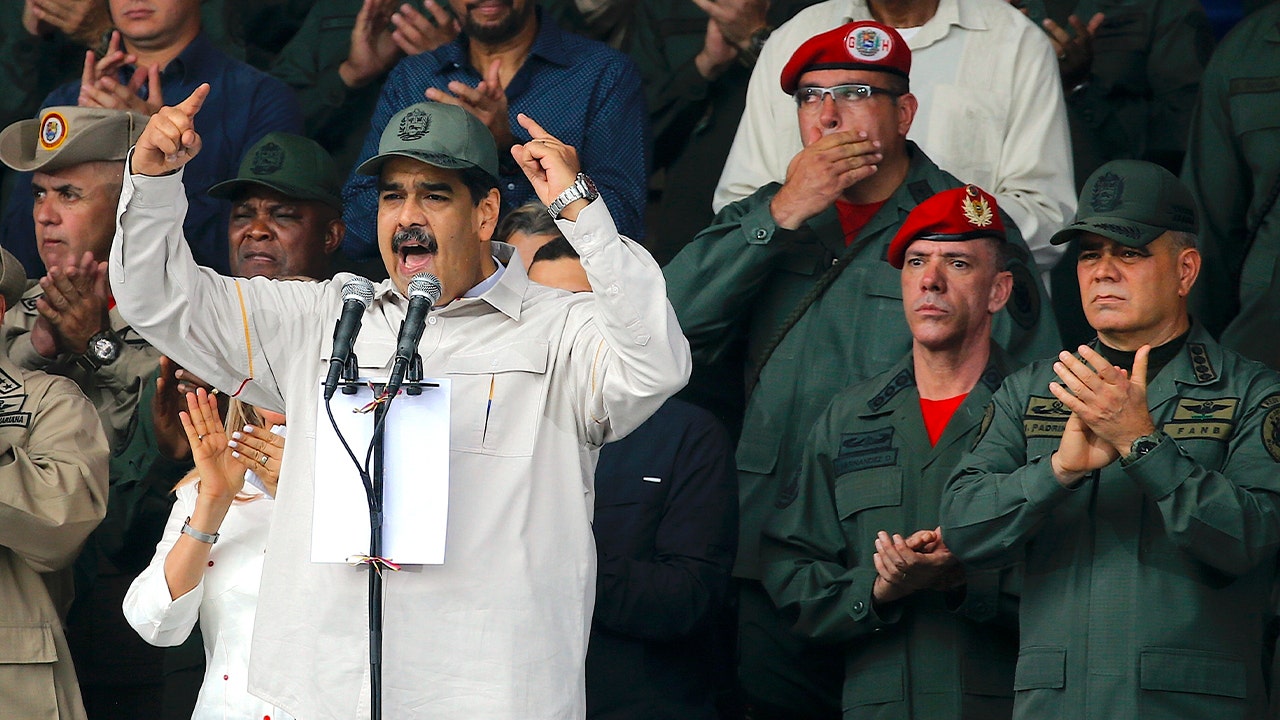
As the Trump administration intensifies its stance on Venezuela, experts caution that the ousting of Nicolás Maduro could pave the way for a successor potentially more detrimental than the current leader. It could also lead to a scenario dominated by drug cartels, guerrilla groups, and armed warlords, who have long-established their presence across the nation.
Today, Venezuela resembles a fragmented landscape of criminal territories rather than a unified dictatorship. These regions are under the influence of cartels, Colombian insurgents, and militias loyal to the regime. Analysts have pointed out to Fox News Digital that U.S. policies now face the challenge of addressing not only Maduro but also a deeply rooted network of non-state armed factions that could fill the power vacuum if Maduro is ousted.
Roxanna Vigil, a fellow at the Council on Foreign Relations and former U.S. national security official with expertise in Latin American affairs, describes the situation as having two clear trajectories.
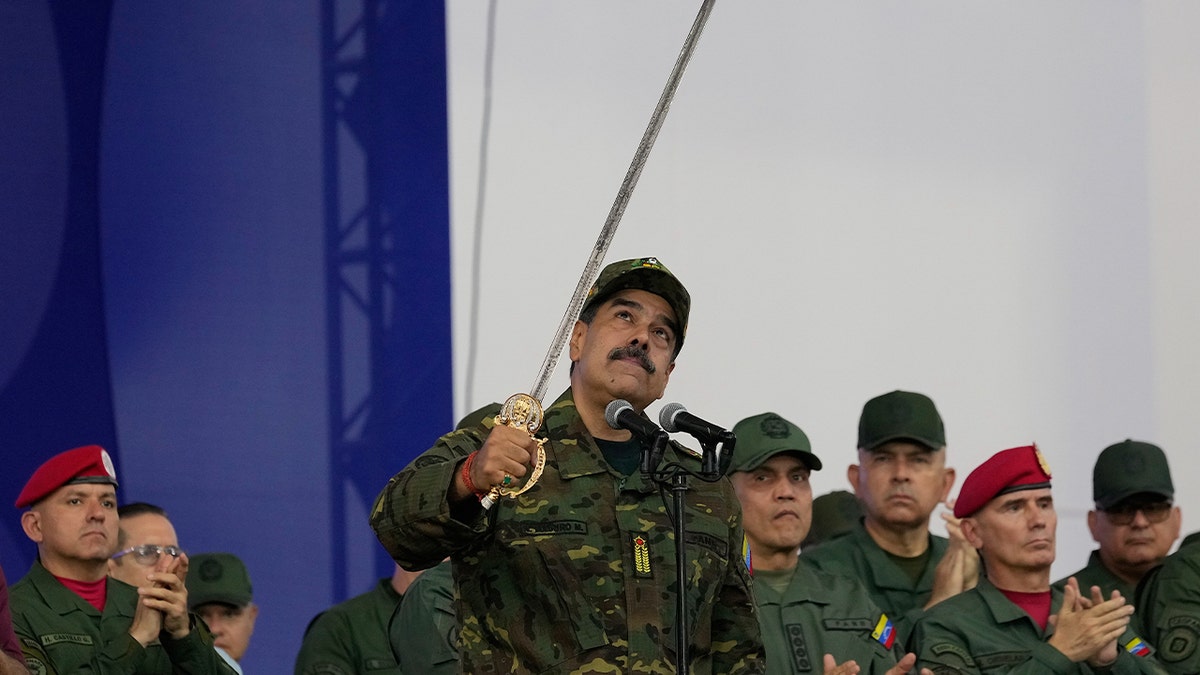
Venezuelan leader Nicolás Maduro wields a sword during a ceremony at the military academy in Caracas, Venezuela, on Tuesday, November 25, 2025. (Ariana Cubillos/AP Photo)
“The outcome largely hinges on the direction of this U.S. pressure campaign,” Vigil explained. “If it leads to escalation and conflict, it will result in diminished control and even less ability to influence subsequent developments.”
Experts highlight that the risk extends beyond a more formidable version of Maduro. It includes the emergence of armed groups already exercising control over vast areas of Venezuela. Vigil emphasized that a chaotic collapse might result in an even more perilous situation than the current regime. “We could see a leader even more severe than Maduro,” she noted.
Jason Marczak, vice president and senior director at the Atlantic Council’s Adrienne Arsht Latin America Center, told Fox News Digital those power centers include some of the most violent criminal syndicates in the Western Hemisphere.
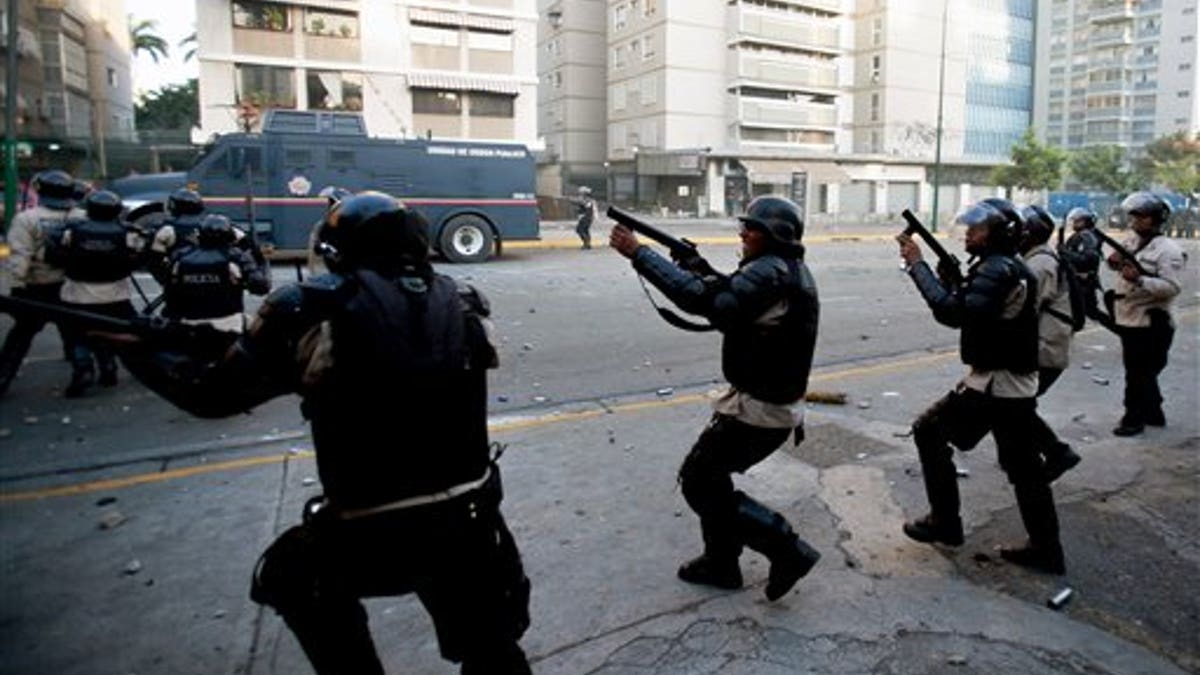
Bolivarian National Police fire tear gas toward opposition demonstrators in Caracas, Venezuela, Saturday, Feb. 15, 2014. Venezuelan security forces backed by water tanks and tear gas dispersed groups of anti-government demonstrators who tried to block Caracas' main highway Saturday evening. (AP Photo/Alejandro Cegarra)
“It’s hard to imagine things getting any worse than they are under Nicolás Maduro. But what’s critical is not just Maduro leaving, but those around him — those who will only be further perpetrators of the injustices that Maduro puts forward — that none of them are allowed to just come to power.”
If either opposition leader María Corina Machado or Edmundo González fail to fill the vacuum in a post-Maduro Venezuela, experts point to a crowded field of dangerous actors who could attempt to seize power if Maduro suddenly falls.
Diosdado Cabello
Diosdado Cabello emerges as the most feared and influential figure in the regime. La Nación describes him as the longtime number two of Chavismo, with sweeping control over party machinery and the propaganda apparatus. His power stretches from internal political enforcement to the interior and justice portfolios.
Cabello was sanctioned by the U.S. Treasury in 2018 for corruption, money laundering, embezzlement and links to drug-trafficking networks inside the state. Reuters reporting documented how the United States later increased rewards for information leading to his arrest as part of broader efforts to target the Cartel de los Soles. Analysts say a government headed by Cabello could consolidate party power, state security forces and media control under a single hardline operator.
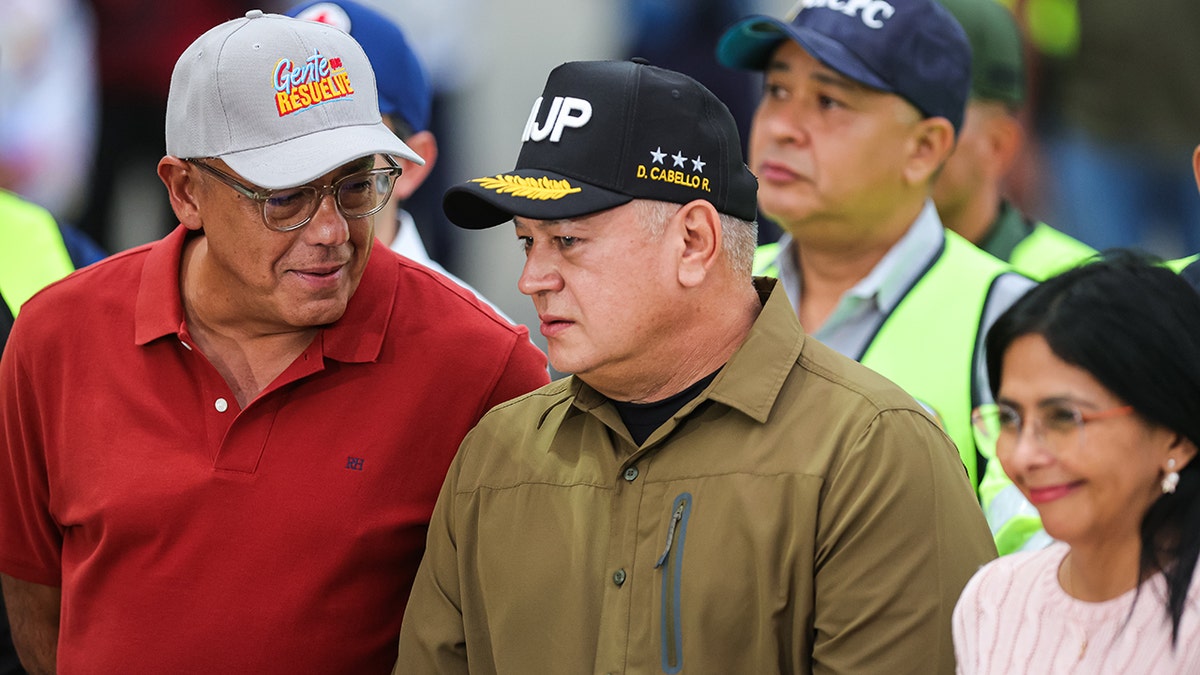
Minister of Interior and Justice Diosdado Cabello (C) talks to the President of the National Assembly, Jorge Rodríguez (L) as Vice President of the Venezuela Delcy Rodríguez (R) looks on at Simon Bolivar International Airport on July 18, 2025, in Caracas, Venezuela. (Jesus Vargas/Getty Images)
Jorge Rodríguez
Jorge Rodríguez, president of the National Assembly and one of Maduro’s closest political operators, is another senior figure positioned for any succession scenario. La Nación highlights his prominence inside the ruling elite, noting his roles as mayor, communications minister, and key strategist.
The U.S. Treasury sanctioned Rodríguez for actions that undermine democratic institutions, according to an Atlantic Council summary of OFAC designations. Experts caution that Rodríguez could impose a more technocratic — but no less authoritarian — version of Chavismo, pairing negotiation skills with control over electoral processes and state information systems.
Vladimir Padrino López
Vladimir Padrino López, Venezuela’s long-serving defense minister, is portrayed by La Nación as the backbone of the military establishment and the guarantor of Maduro’s survival. The armed forces remain loyal because of him, forming an axis of power between Padrino and Maduro.
The U.S. Treasury sanctioned Padrino López as part of Maduro’s inner circle for sustaining an authoritarian system and enabling repression. Observers warn that if Padrino were to assume leadership, Venezuela could shift toward an even more militarized model — one in which political authority is openly fused with military command structures.

Vladimir Padrino Lopez, Venezuela’s defense minister, speaks during a press conference accompanied by the military high command at the Ministry of Defense in Caracas, Venezuela, on Thursday, Jan. 24, 2019. (Carlos Becerra/Bloomberg via Getty Images)
Delcy Rodríguez
Delcy Rodríguez, Venezuela’s vice president, is described as a central political operator within the regime and part of a powerful governing duo with her brother Jorge. Her influence spans institutional, economic and diplomatic spheres. The U.S. Treasury sanctioned Rodríguez as part of Maduro’s inner circle for helping dismantle democratic governance, and the European Union lists her under measures for human rights violations and the erosion of the rule of law.
Analysts note that Rodríguez has increasingly taken control of critical sectors, including the oil industry, placing her at the center of the opaque revenue structures that sustain the regime. A transition led by her, they warn, could tighten state control over the economy and political apparatus even further.
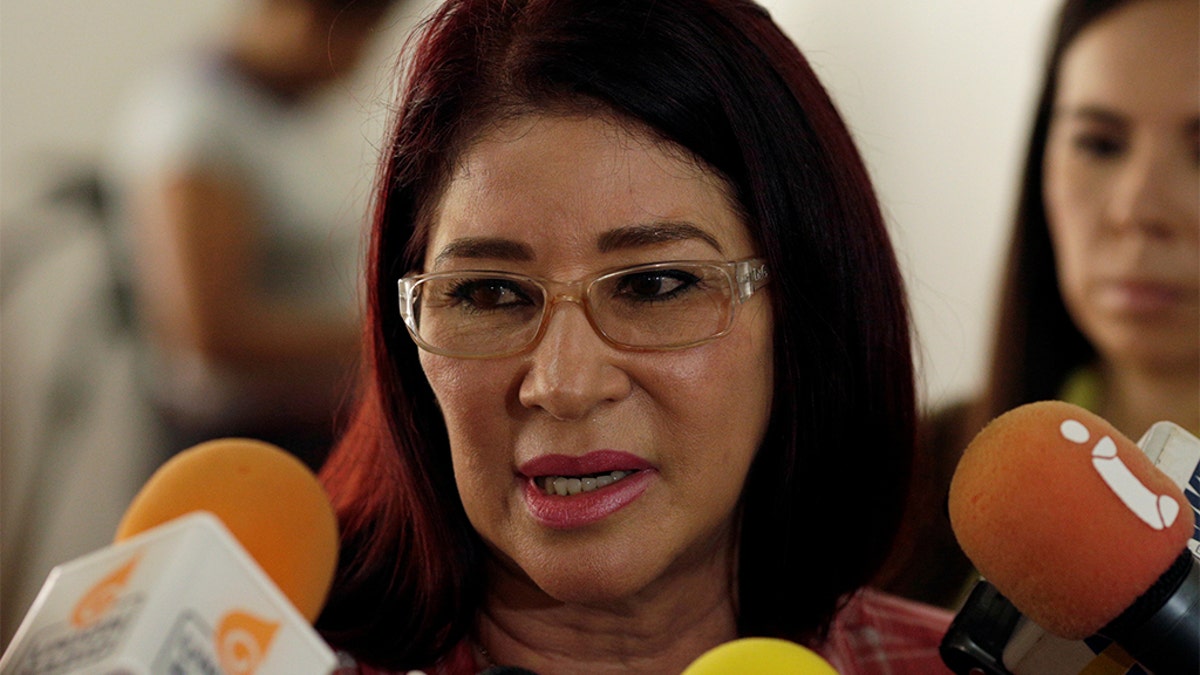
Cilia Flores, wife of Venezuela’s President Nicolas Maduro, talks to the media during a simulation of the government’s official July 30 vote for a new assembly, in Caracas, Venezuela July 16, 2017. Marco Bello/ Reuters
Cilia Flores
Cilia Flores, the first lady and a longtime Chavista power broker, rounds out the circle of figures identified by La Nación as essential to Maduro’s hold on power. Flores has held senior positions, including National Assembly president, attorney general, and member of the PSUV leadership.
The U.S. Treasury sanctioned Flores in 2018 as part of broader actions targeting Maduro’s inner circle and their networks of corruption, a move widely reported by Reuters. Her family members have also faced sanctions or indictments linked to narcotics cases. Analysts say Flores’s political reach and influence inside the party and the legal system make her a pivotal actor in any succession calculus.
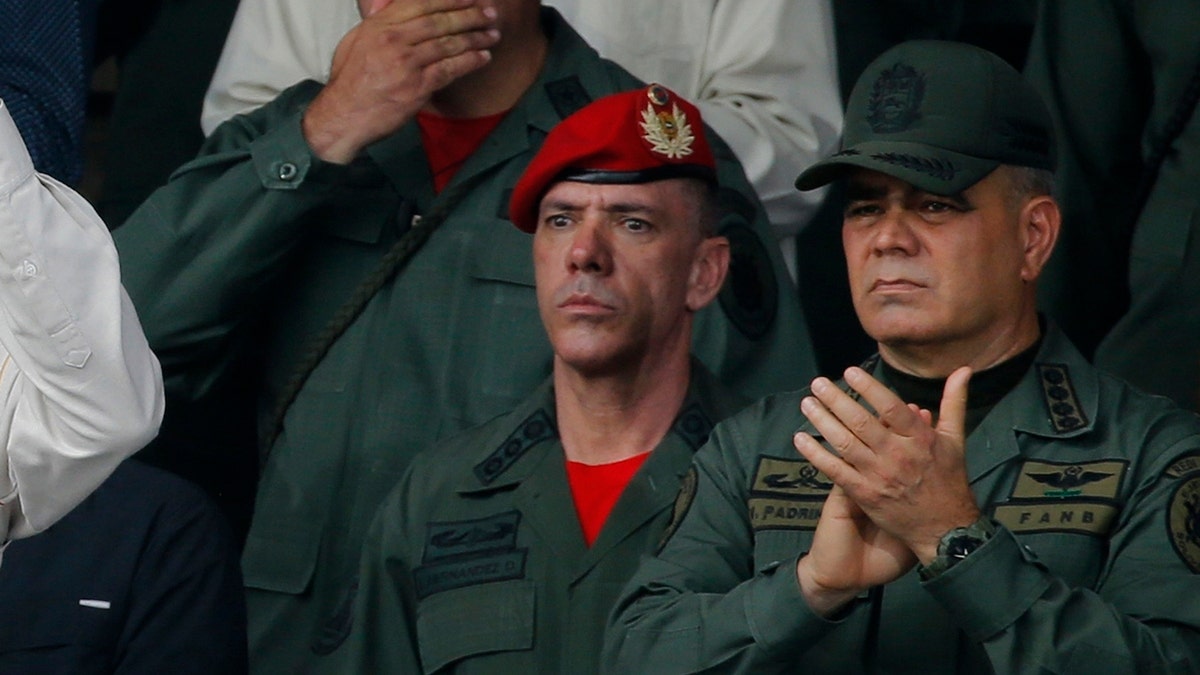
In this April 13, 2019, file photo, Gen. Ivan Hernandez Dala, (L), head of both the presidential guard and military counterintelligence, and Venezuela’s Defense Minister Vladimir Padrino Lopez, (R), in Caracas, Venezuela. (Ariana Cubillos/AP)
Iván Hernández Dala
Hernández Dala heads Venezuela’s military counterintelligence service (DGCIM) and commands the presidential guard, making him one of the most feared figures in the security apparatus. His control over internal repression gives him significant leverage in any power struggle. He was designated by the State Department in 2019 for his involvement in gross violations of human rights.
The U.S. Department of the Treasury’s Office of Foreign Assets Control (OFAC) wrote that under his command “Abuses reportedly carried out by the DGCIM and SEBIN include brutal beatings, asphyxiation, cutting soles of feet with razor blades, electric shocks, and death threats.”
Marczak and Vigil beieve Washington’s next moves — and whether they drive negotiation or escalation — will determine whether Venezuela moves toward democracy or toward something even worse.
As Marczak put it: “A win isn’t just Nicolás Maduro leaving… A win is actually a transition to democratic forces.”