Share this @internewscast.com
CHICAGO (WLS) — As the calendar year winds down, ABC7 Chicago reflects on the defining moments that shaped the city over the past months. Among these, one narrative stood out, drawing national attention to Chicago.
This autumn, the Trump administration initiated a large-scale immigration crackdown known as “Midway Blitz,” targeting the region. The operation led to numerous arrests, igniting widespread protests and ongoing legal disputes.
ABC7 Chicago is now streaming 24/7. Click here to watch
ABC7 Chicago opted to obscure the identities of some individuals due to uncertainties regarding potential criminal charges.
On September 8, the Department of Homeland Security officially commenced “Operation Midway Blitz.” Federal officers began detaining individuals suspected of residing in the U.S. without authorization, claiming their efforts focused on apprehending the “most dangerous” individuals to enhance regional safety.
The operation’s first fatal incident occurred shortly thereafter. In Franklin Park, federal agents stopped Silverio Villegas-Gonzalez, resulting in a shooting death after he allegedly drove toward the officers, injuring one severely, according to DHS reports at the time.
By September 16, Border Patrol Commander Gregory Bovino had made his presence in Chicago known, becoming a prominent figure amid the controversies surrounding the actions of U.S. Customs and Border Protection agents.
On Sept. 23, ABC7 Chicago obtained body camera video from the deadly shooting in Franklin Park. It captured the officer who was allegedly dragged by the suspect’s car describing his own injuries as “nothing major.”
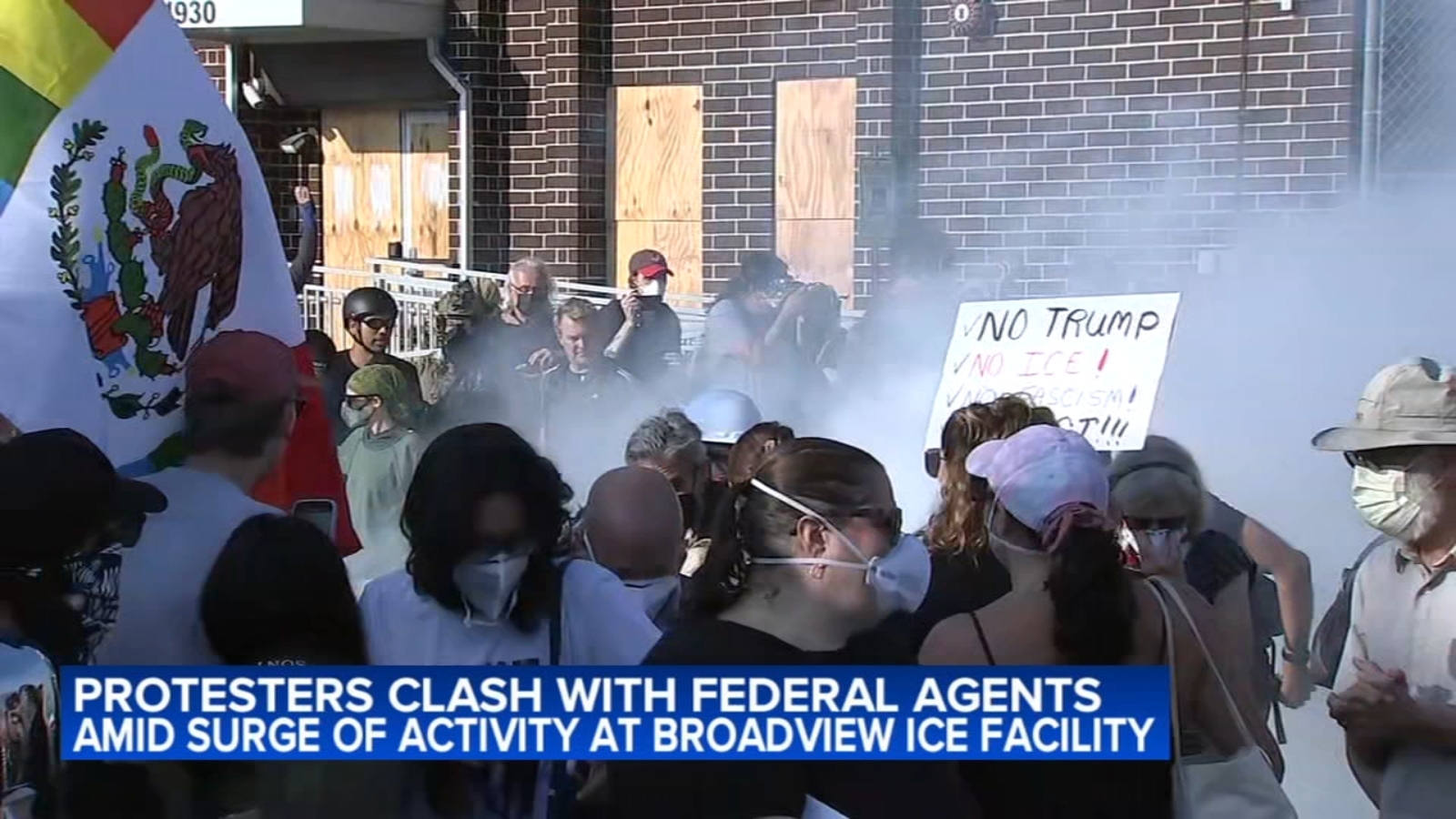
“Operation Midway Blitz” brought a massive amount of attention to the western suburb of Broadview, home to a U.S. Immigration and Customs Enforcement processing facility. The immigration crackdown brought a surge in activity, and with that regular demonstrations. Protesters sometimes attempted to block vehicles entering or leaving the facility.
Federal agents made frequent use of tear gas and pepper balls, with journalists and bystanders often coming under fire.
Near the end of September, Gov. JB Pritzker announced the federal government’s plans to send military personnel to the area, with the stated goal of protecting immigration officers and federal facilities.
On Sept. 30, military Black Hawk helicopters were used in a raid of a South Shore apartment building, during which several U.S. citizens were detained. Residents said they felt like they were in a war zone.
Elected officials often got caught up in immigration operations. On Oct. 3, Alderperson Jesse Fuentes was put in handcuffs after confronting agents at a hospital in Albany Park.
One day later, there was a second shooting involving federal agents. The government said at the time that an agent shot and injured a woman after she rammed one of their vehicles with her own. But the woman’s attorneys said it was the agent who crashed into her vehicle, not the other way around. Weeks later, the Department of Justice moved to dismiss all charges against the woman, without explanation.
On Oct. 6, Chicago and the state of Illinois filed suit against the Trump administration in a bid to block the deployment of National Guard members from Texas. Days later, a federal judge would issue a temporary restraining order against the deployment. Although, the legal battle continues today.
In a separate case, Chicago journalists and unions sued the government over what they called an excessive use of force by agents against members of the media and protesters, including at the ICE facility in Broadview. It would lead to an order restricting the tactics used by those agents.
On Oct. 7 ABC7 Chicago cameras captured the arrival of Texas National Guard members in the Chicago area. Many were sent to that facility in Broadview.
On Oct. 28, Bovino appeared in front of a federal judge to answer for alleged violations of her order restricting agents’ use of force, including Bovino himself tossing a can of tear gas at protesters. The government claimed Bovino had been hit with a rock thrown by demonstrators, but the judge said video evidence disproved this, and Bovino admitted in court that the rock throwing happened after he used the tear gas, not before.
The Broadview ICE facility entered headlines again on Oct. 31, when an emergency federal lawsuit was filed alleging “abusive and cruel” conditions inside the ICE facility there.
In mid-November, Bovino and many Border Patrol agents left Chicago for other cities. Plaintiffs in the use of force case moved to dismiss their own lawsuit. But the government insisted immigration operations were not ending.
And indeed, on Dec. 16, Bovino was spotted once again in Chicago, along with agents, deploying tear gas as they carried out more arrests in the city and suburbs. The government still refuses to reveal how many agents are in the Chicago area and how long they will remain, saying only that “Operation Midway Blitz” continues.
On Tuesday, Bovino said on X Border Patrol will be in Chicago “for years.”