
Share this @internewscast.com

Recent satellite imagery indicates that Iran is bolstering key military and nuclear sites, including those previously targeted by the United States and Israel, as tensions rise between Tehran and Washington. This activity is seen as a precautionary measure amid escalating prospects of conflict.
According to David Albright, founder of the Institute for Science and International Security (ISIS), Iran has initiated rapid fortification efforts at several facilities. Albright cautioned on Tuesday that extended negotiation periods could allow Iran to further secure clandestine sites, such as the recently developed Taleghan 2.
“Delaying negotiations offers strategic advantages,” Albright stated on X. “In the past few weeks, Iran has been actively concealing the new Taleghan 2 site. The addition of more soil suggests it could soon become a heavily fortified bunker, providing substantial protection against aerial assaults.”
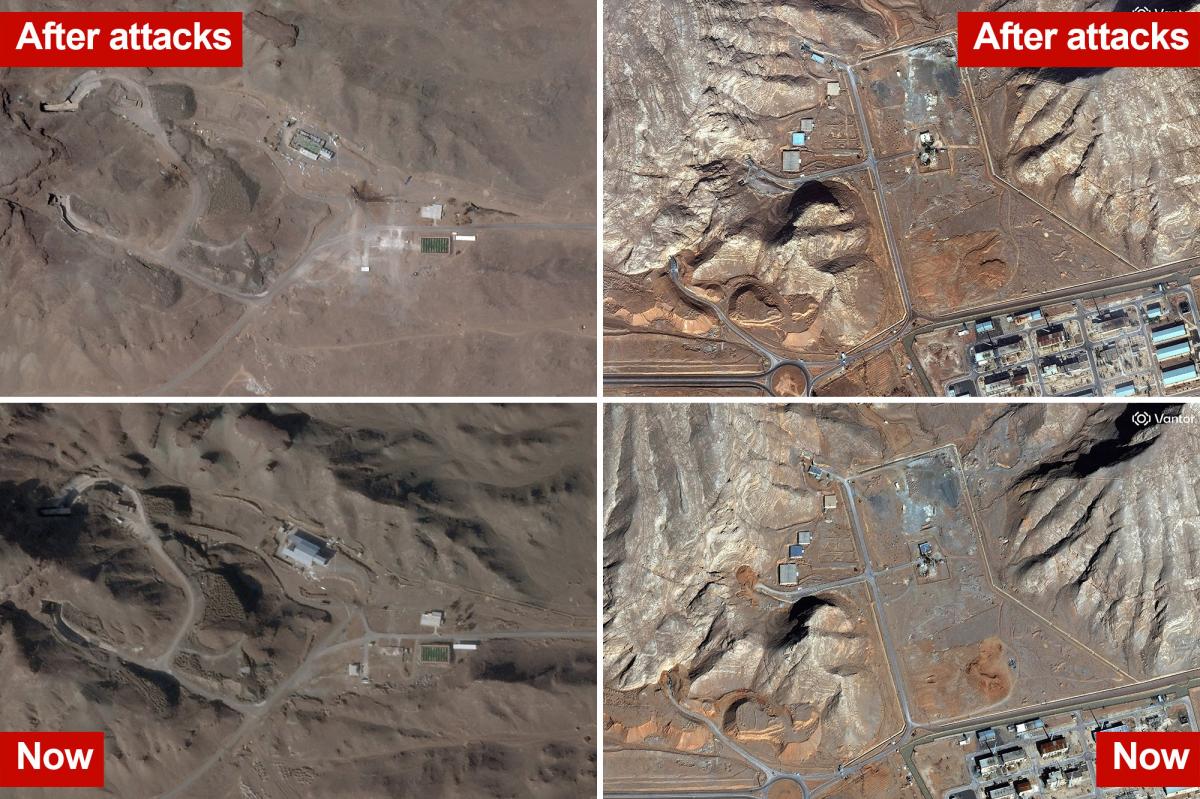
The Taleghan 2 installation is situated within the highly secretive Parchin military complex, approximately 20 miles southeast of Tehran. Analysts from the Institute report that the site appears to be encased in what they describe as a “concrete sarcophagus.”
For over two decades, the Parchin complex is believed to have been a site for nuclear weapons testing. Satellite images now reveal that the structure has effectively disappeared from view, concealed by its new fortifications.
Efforts to shield the Parchin facility began in 2024 following an Israeli strike. However, images from late last year indicate that Iran has accelerated its construction efforts, working to install a robust metallic roof over the installation.
As of Monday, the Institute said the structure was buried and could no longer be seen, a dangerous development after photos were taken of what appeared to be explosive devices being hauled to the site in November.
“High-explosive containment vessels are critical to the development of nuclear weapons,” ISIS warned, “but can also be used in many other conventional weapons development processes.”
Similar concealment work was conducted at the Isfahan complex, one of the three Iranian uranium-enrichment plants that was hit by the US last June.
As of last week, all three entrances to the tunnel complex are “completely buried,” according to the satellite images.
The same was done at the Natanz facility, which houses Iran’s other two uranium-enrichment plants, ISIS said.
Tehran has also rolled out repair and fortifying efforts at its Shiraz and Qom missile bases, which were damaged during the 12-day war with Israel last year, according to the Israel-based Alma Research and Education Center.
Iran’s work to defend the sites come as tensions continue to ramp up with the US over Tehran’s atomic program, with President Trump threatening military action if a new nuclear deal isn’t reached.
US Energy Secretary Chris Wright echoed the latest warning from the US during an International Atomic Energy Agency (IAEA meeting in Paris on Wednesday.
Wright said the US would never allow Tehran to acquire nuclear weapons, with America ready to take whatever action is deemed necessary to stop such an event.
“They’ve been very clear about what they would do with nuclear weapons. It’s entirely unacceptable,” Wright told reporters.
“So one way or the other, we are going to end, deter Iran’s march towards a nuclear weapon.”
With Post wires