
Share this @internewscast.com

In a tragic turn of events on Sunday, Iranian authorities executed a 19-year-old college student and another man for their alleged involvement in anti-government protests. Human rights organizations have reported that the condemned individuals were not granted the opportunity to meet with their families prior to their execution.
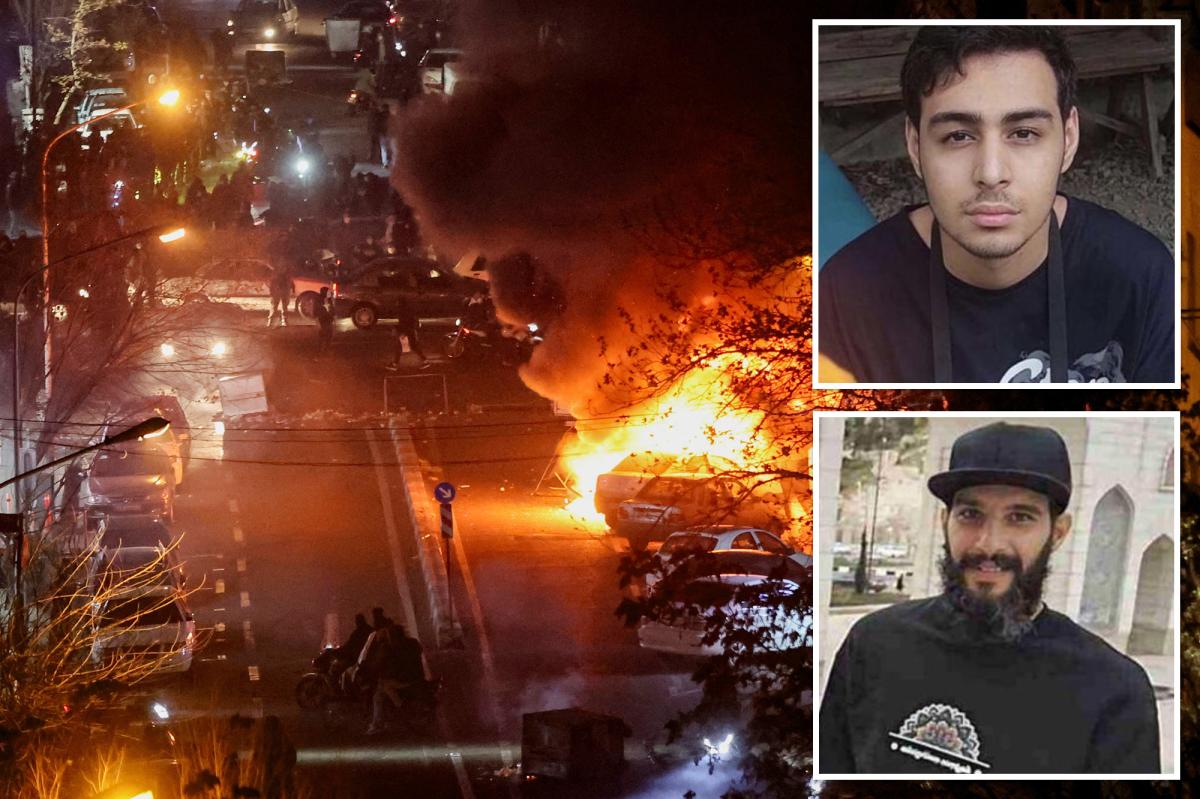
The two men, Mohammad-Amin Biglari, a college student majoring in computer science, and Shahin Vahedparast Kalour, aged 30, faced execution in a Karaj prison. Their deaths are among the latest in a series of harsh penalties meted out to protesters accused of “waging war against God,” a charge that carries the death penalty in Iran. This information was provided by the Hengaw Organization for Human Rights, based in Norway.
Authorities claimed the pair were involved in setting fire to a Tehran base used by Iran’s Basij volunteer force and attempting to seize weapons from the facility during a protest in December. In addition, they faced charges of “corruption on Earth,” committing arson on public properties, and conspiring to undermine national security, as detailed by Hengaw.
Human rights advocates have expressed serious concerns over the lack of legal representation afforded to Biglari. His lawyers reported being barred from defending him properly and were even denied access to the case file, thus raising questions about the fairness of his trial.
There are also troubling allegations surrounding Biglari’s purported confession to the crimes, the specifics of which remain undisclosed. Iran has been under scrutiny for its alleged practice of using torture to extract confessions from detainees, casting further doubt on the legitimacy of these confessions and the justice of the executions.
The 19-year-old had allegedly “confessed” to the crime, but the details of his supposed confession remain unclear, and Iran has been repeatedly accused of torturing prisoners to force an admission of guilt.
Both Biglari and Kalour were executed early Sunday without being granted a final visit with their families, Hengaw said.
It was a crushing blow to Biglari’s father, who had searched for his son’s body among the countless corpses in Kahrizak after he went missing in the wake of Tehran’s brutal crackdown Jan. 8 and 9.
Biglari’s father only learned of his son’s arrest three weeks later, after released prisoners revealed the identities of those who were still being detained by the state.
Biglari and Kalour were the latest in a new wave of government killings across Iran targeting those who took part in the anti-regime protests in December and January.
While state media has confirmed 14 executions in Iran so far this year, Hengaw reported evidence of 160 hangings since January.
More than 7,000 protesters were killed during the violent Jan. 8 and 9 crackdown, according to the US-based Human Rights Activists News Agency, with thousands of others arrested.
Amnesty International and other human-rights groups have raised fears of more planned executions of protesters in the weeks to come.