
Trump cancels Iran peace talks, citing US leverage
President Donald Trump abruptly canceled planned diplomatic discussions in Pakistan aimed at fostering peace with Iran. He asserted that the United States is in a dominant position and that Iranian leaders could reach out at any time. Correspondent Matt Finn provides insight into the stalled negotiations, while retired Navy Captain Brent Sadler highlights the increasing U.S. military presence in the Strait of Hormuz and recent economic sanctions imposed on nearly 40 entities connected to Iran’s oil sector in China.
Amid growing unrest, Iran’s negotiating team with the U.S. faces potential changes, as reports suggest the hardliner Mohammad Bagher Ghalibaf may be replaced. His likely successor is a seasoned conservative known for his opposition to nuclear compromises.
According to Iran International, as of April 24, Saeed Jalili, a 60-year-old figure who leads what some describe as a “shadow government,” is positioned to take over from Ghalibaf, who has left his post due to internal conflicts.
Jalili also leads the ultra-hardline faction called the Stability Front (Paydari), which is recognized as a stronghold of ultraconservative ideology in Iran.
Ali Safavi, a representative of the Iranian opposition group, the National Council of Resistance of Iran (NCRI), mentioned to Fox News Digital that Jalili has transitioned from being a nuclear negotiator to a significant figure within the regime.
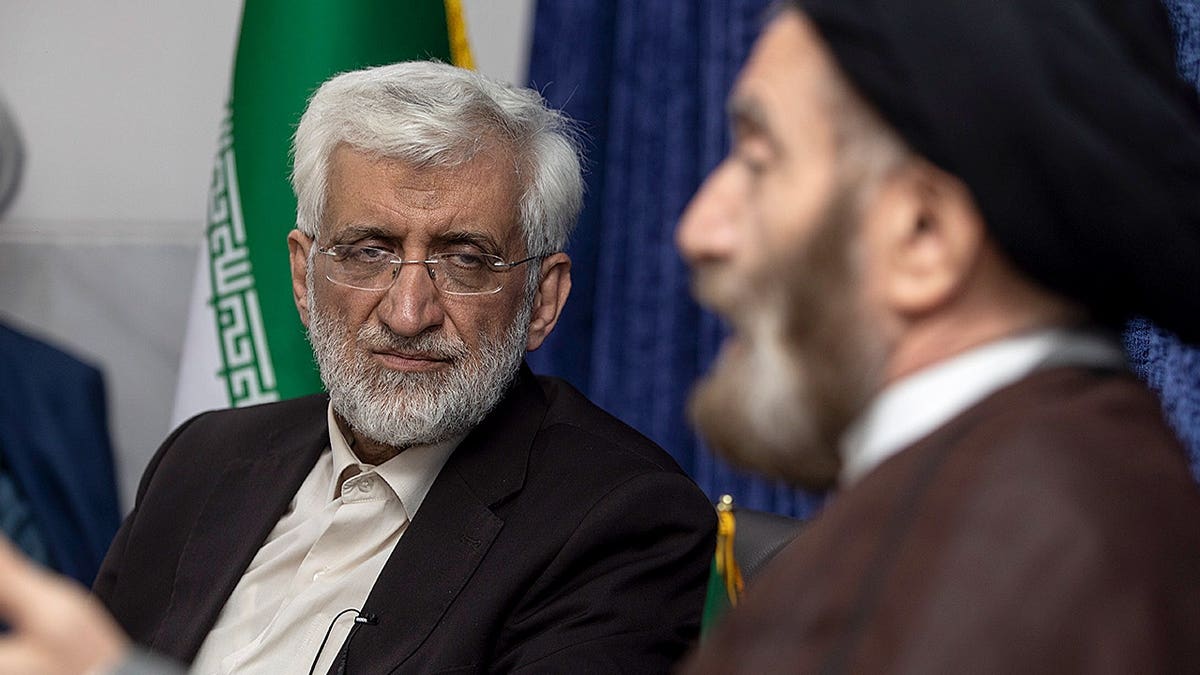
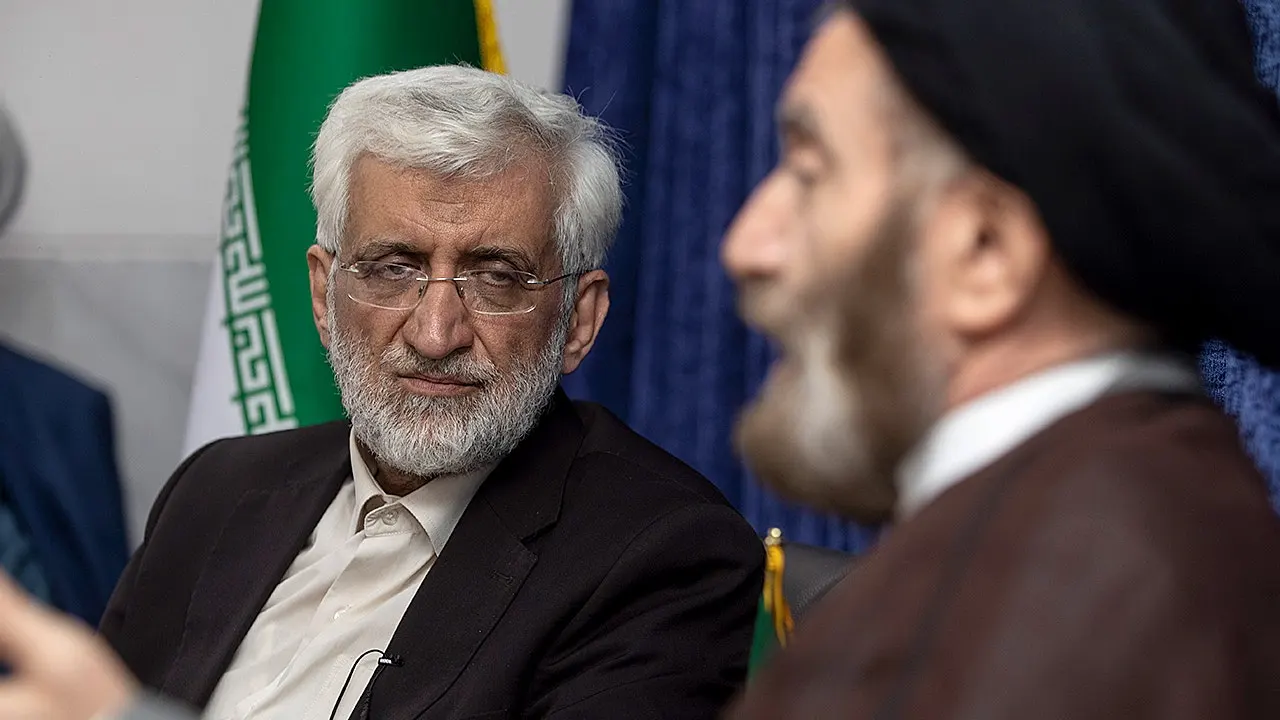
Jalili Saeed is set to replace Ghalibaf after his abrupt exit due to internal strife. (Majid Saeedi/Getty Images)
Ghalibaf was reportedly forced to step down after attempting to bring the nuclear issue into talks with Washington, a move that triggered backlash within Iran’s political establishment.
President Donald Trump had called off plans for U.S. envoys to travel to Pakistan for peace talks with Iran on April 25.
The rivalry between Jalili and Ghalibaf is said to span more than a decade and intensified during the 2024 elections, when Jalili refused to step aside, contributing to the victory of President Masoud Pezeshkian.
Safavi said, “The increased visibility of latent divisions stems from recurring nationwide uprisings, deep economic crises and the pressures of war, all of which have intensified internal feuding.
“Far from signaling transformation, these developments reflect accelerating erosion and mounting pressure, deepening fractures and leaving the regime ever weaker and more vulnerable,” he added.
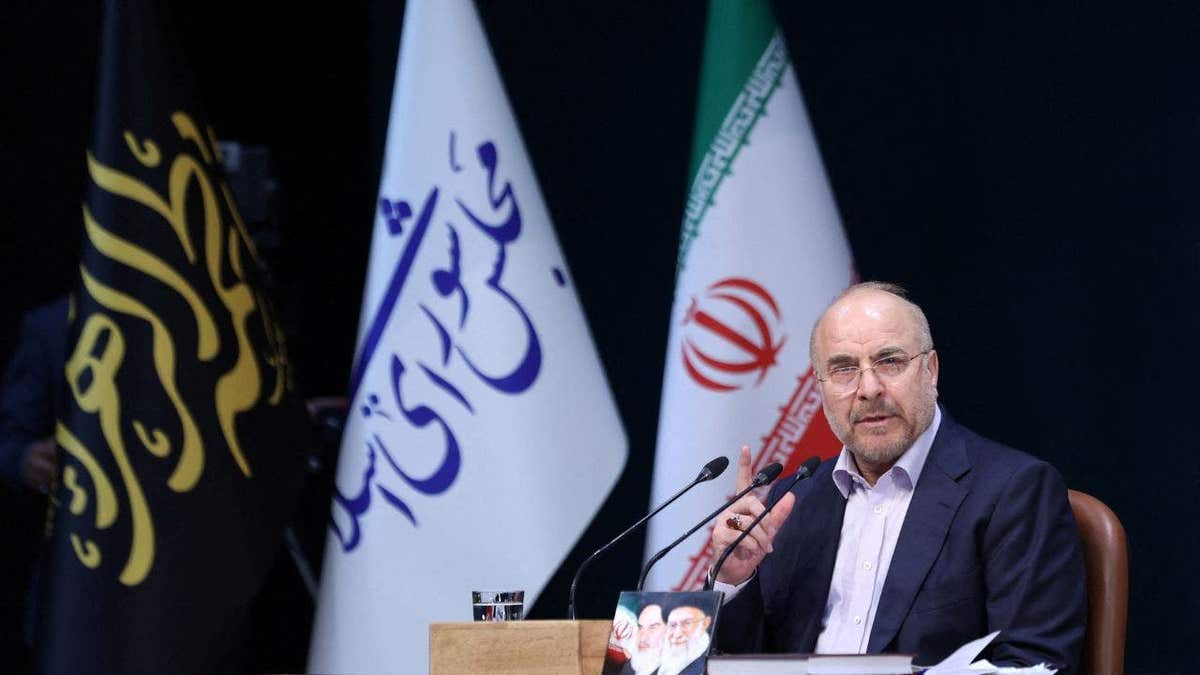
Iranian Parliament Speaker Mohammad Bagher Ghalibaf speaks during a press conference in Tehran, Iran, Nov. 27, 2024. (Majid Asgaripour/WANA (West Asia News Agency) via REUTERS)
Foreign Minister Abbas Araghchi is also seeking a continued leading role in negotiations, highlighting competing centers of influence over Iran’s diplomatic strategy, sources said.
Araghchi is in Islamabad, Pakistan, after returning from a short trip to Muscat, Oman, where he is holding high-level diplomatic talks on the conflict. Reports indicate Araghchi will travel to Moscow.
Jalili’s potential appointment, however, signals a hardening of Iran’s stance, with more emphasis on resistance over compromise.
“Within this regime, there are a number of constants espoused by all factions,” Safavi said before highlighting that these were “repression, the export of terrorism and the pursuit of nuclear weapons.”
“The factions all ultimately move along a common path: the preservation of power. They differ in methods, not in objectives,” Safavi cautioned.
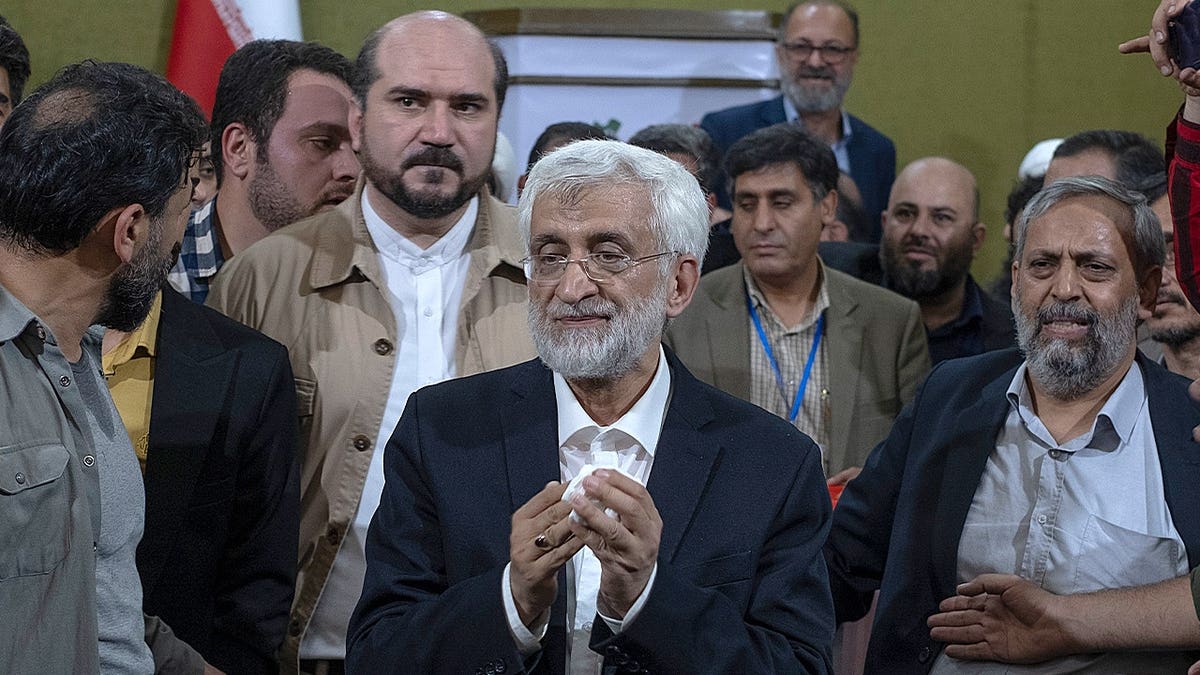
Jalili, meanwhile, served as Iran’s top nuclear negotiator from 2007 to 2013 under President Mahmoud Ahmadinejad and later ran for president three times. (Morteza Nikoubazl/NurPhoto via Getty Images)
Jalili, meanwhile, served as Iran’s top nuclear negotiator from 2007 to 2013 under President Mahmoud Ahmadinejad and later ran for president three times. He also served as secretary of the Supreme National Security Council.
A former member of the Islamic Revolutionary Guard Corps (IRGC), Jalili lost his right leg at 21 during the Iran-Iraq War, earning him the title of “Living Martyr”.
The Paydari Front, which he is associated with, opposes engagement with the West — particularly the 2015 nuclear deal — and advocates a doctrine of “active resistance.”
During Hassan Rouhani’s presidency, Jalili also established a “shadow government” to counter the administration’s policies, especially the nuclear deal.
On April 7, he wrote on X: “Yes — ‘infrastructure’ is on the verge of collapse; the infrastructure of domination and the American order. And after that, a better foundation will be built.”
A day earlier, he posted: “‘Shut up’ is not the appropriate response to Trump’s ramblings; let him speak more. Nothing is more effective in laying bare the true nature of the United States than Trump’s outbursts.”
“In dealing with this regime,” Safavi said, “we must bear in mind that in the 45 years since the mullahs consolidated their rule in 1981 by crushing all peaceful political life, so-called reformists have governed for nearly half that time — presiding over some of its darkest crimes.”
“These include the 1988 massacre of 30,000 political prisoners, the assassination of dissidents abroad, the chain murders of intellectuals inside Iran and the relentless pursuit of nuclear weapons.”