Share this @internewscast.com
EXCLUSIVE: In a tense atmosphere marked by escalating tensions with Iran, Kurdish opposition factions from Iran remain vigilant yet restrained. Despite their readiness to confront Tehran, these groups have opted for a cautious approach as the geopolitical situation involving the United States, Israel, and Iran continues to evolve.
In an exclusive conversation with Fox News Digital, Khalid Azizi, the spokesperson for the Democratic Party of Iranian Kurdistan (KDPI), revealed that while Kurdish forces are attentively monitoring the unfolding events, they are not currently planning any ground offensives. The KDPI, a prominent Kurdish opposition group, remains at the ready but is strategically choosing to wait.
Recently, reports surfaced about a potential dialogue between former President Donald Trump and Mustafa Hijri, the KDPI leader. This interaction, if it took place, would signal Washington’s interest in potentially leveraging Kurdish involvement to exert pressure on the Iranian regime. However, Azizi neither confirmed nor denied these discussions.
The Kurdish fighters, particularly those from the Kurdistan Freedom Party (PAK), are maintaining their readiness, as evidenced by training sessions at bases near Erbil, Iraq. Such activities underscore their preparedness amid the volatility in the region. A Reuters photograph by Thaier Al-Sudani captures these fighters engaged in training on February 12, 2026.
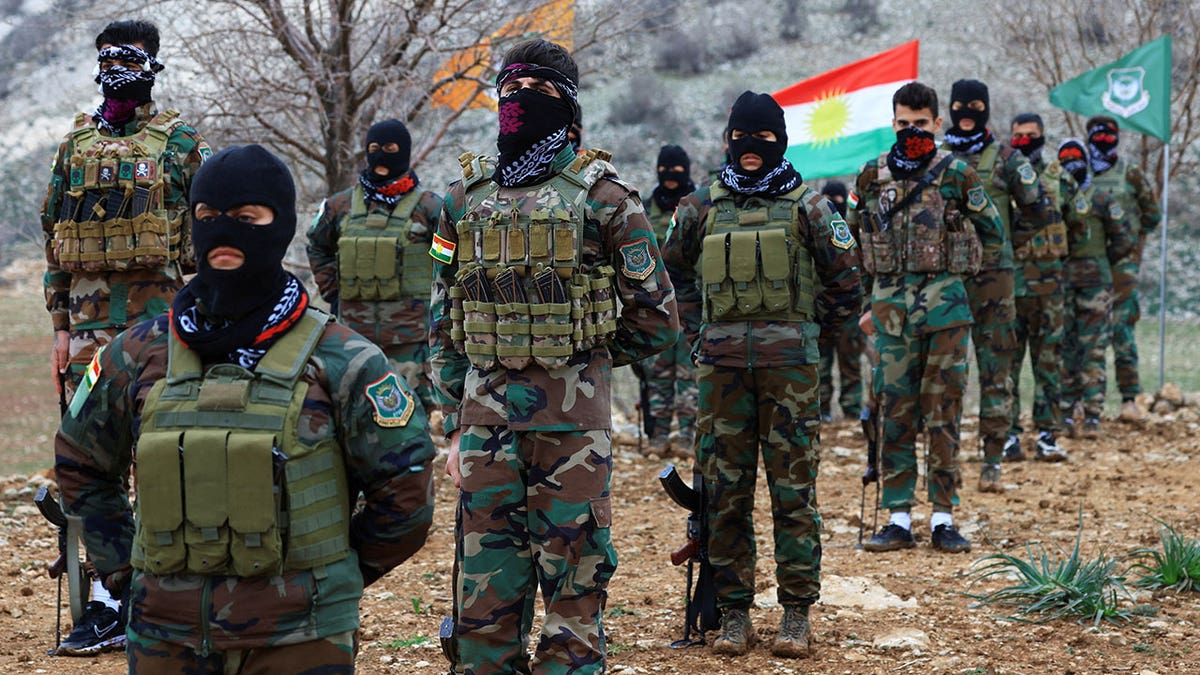
Azizi is no stranger to the repercussions of Iran’s military actions, having experienced their retaliation firsthand. This personal history adds a poignant layer to the Kurdish leader’s strategic decisions in the current climate.
Azizi himself has firsthand experience with Iran’s military retaliation.
In 2018, Iran’s Islamic Revolutionary Guard Corps launched ballistic missiles at the KDPI headquarters in Koy Sanjaq in Iraq’s Kurdistan region during a leadership meeting, killing at least 18 people and injuring dozens.
“We have been targeted by the Islamic Republic,” Azizi said. “The first Iranian missile was sent to my headquarters and I was personally injured in that attack.”
Despite the risks, Azizi said Kurdish resistance remains strong after decades of confrontation with Iran.
“The Iranian Kurdish resistance movement is actually very strong because we have been on the ground since the Iranian revolution,” he said.
Azizi spoke from Washington, D.C., where he said Kurdish representatives were meeting with policymakers and institutions to discuss the situation in Iran and the role Kurdish groups could play if the conflict evolves.
But for now, Kurdish groups say they are waiting to see how the broader war develops.
“We are ready and our party is well organized,” Azizi said. “But right now we do not have any intention to enter Iranian Kurdistan because the ground forces in this war have not been a topic.”
“It’s very easy to start a war,” he added. “But it will be more complicated how to end this war.”
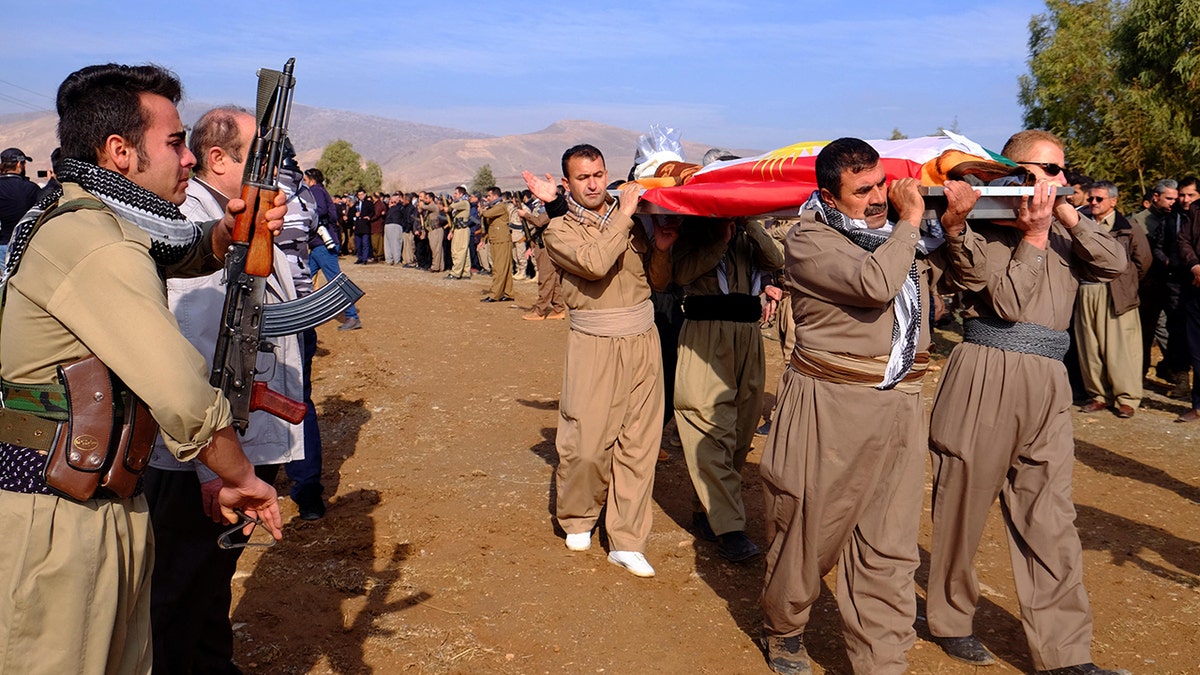
Members of the Kurdistan Democratic Party-Iran attend the funeral of their comrades killed in a bomb attack in Koysinjaq, in Iraq autonomous Kurdish region, on Dec. 21, 2016. (Stringer/AFP via Getty Images)
The KDPI is one of the oldest Kurdish opposition movements fighting Iran’s Islamic Republic. The group is a member of the Socialist International and operates primarily from bases in the Kurdistan region of Iraq and has been in armed and political opposition to Tehran since the 1979 Iranian Revolution.
Azizi said Kurdish political movements have recently taken a significant step by forming a joint alliance aimed at coordinating their political strategy.
“We have managed to create a unity among the Kurdish political parties,” he said. “This has been welcomed by the Iranian Kurdish people and by different Iranian political parties.”
The alliance, known as the Coalition of Political Forces of Iranian Kurdistan, brings together several historically divided Kurdish factions that oppose the Islamic Republic.
Azizi said the future of Iran will ultimately depend on whether Iranians themselves rise up against the regime.
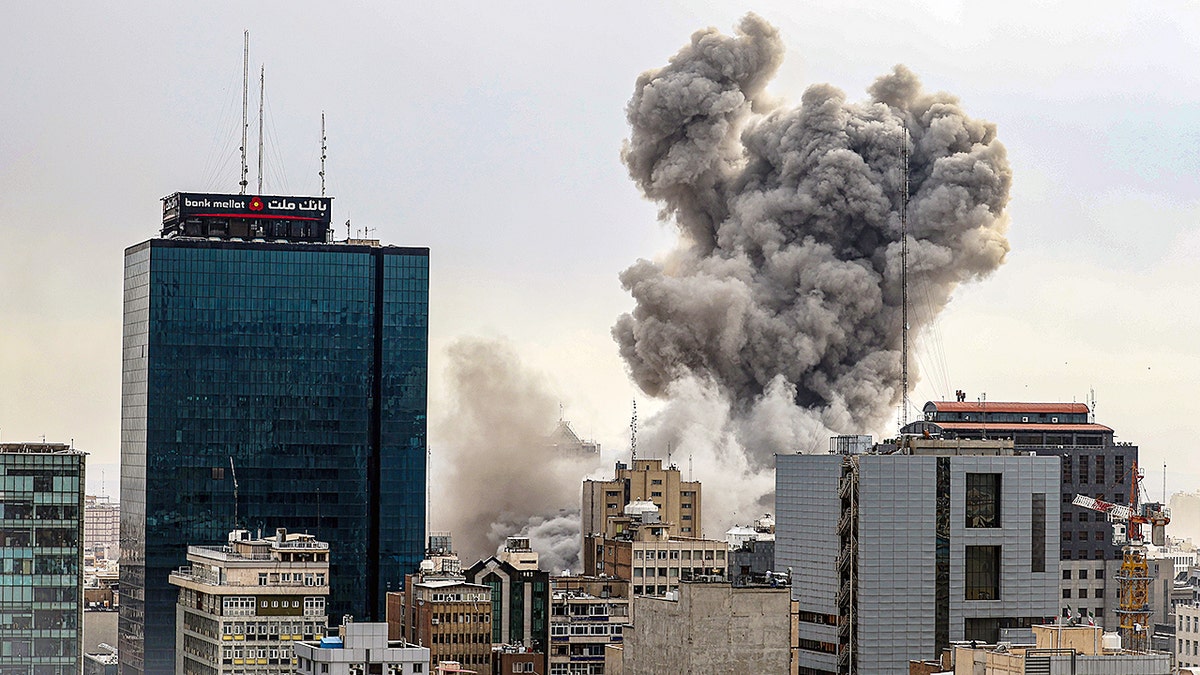
Smoke rises from reported explosions in Tehran, Iran, on March 2, 2026. (Contributor/Getty Images)
“If you look at the goal of the United States and Israel in this war, they have been targeting the Iranian military, security and political institutions. In this aspect Iran has been weakened,” he said.
“But the regime still remains in power because people are not on the streets and there is no alternative right now to replace this regime.”
Azizi urged Western governments to focus not only on the military campaign but also on helping Iranian opposition movements coordinate politically.
Iran, he said, is a multi-ethnic country whose future stability will depend on building a democratic system that includes all of its communities.
“The path and the roadmap for rebuilding Iran must be based on the participation of all ethnic groups,” Azizi said. “Iran is a multi-ethnic society.”
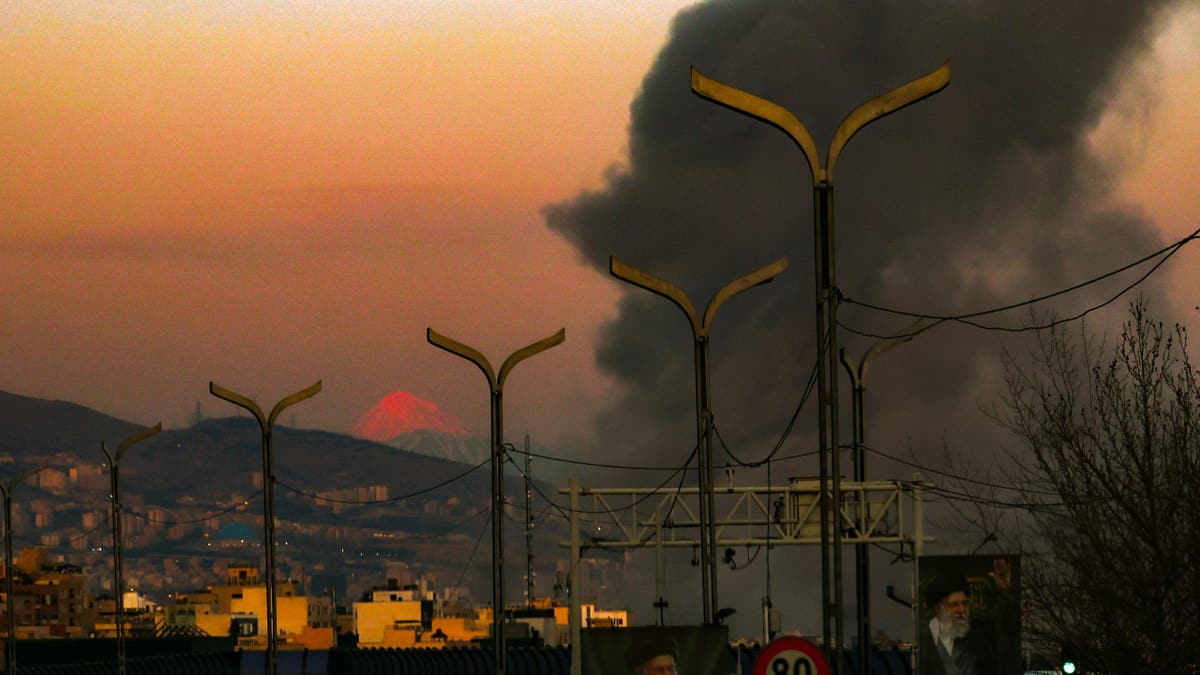
Explosions rock Tehran, Iran, on March 6, 2026. (Contributor/Getty Images)
For now, he said, Kurdish fighters remain in a holding pattern.
“We have the ability and we have the capacity,” Azizi said. “But it is not easy right now for us to make any decision regarding entering Iranian Kurdistan.”