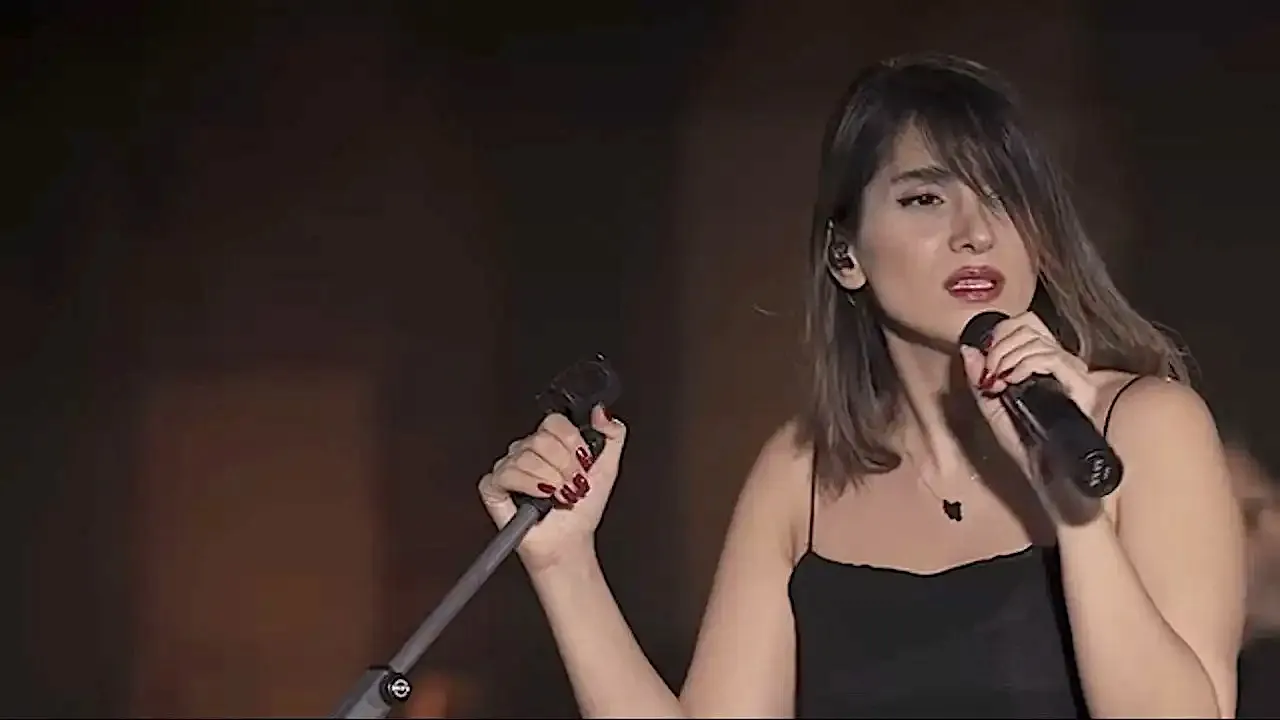

Iranian singer sentenced to 74 lashes after performing without hijab
Iranian singer Parastoo Ahmadi has been sentenced to 74 lashes and a travel ban after performing without a hijab in a viral online concert. Zineb Riboua joins Fox News to discuss the Islamic Republic’s crackdown on dissidents, which she attributes to the regime’s growing vulnerability amid domestic protests and mounting external pressure. She also stresses the importance of continued international pressure on Iran’s government.
Iranian authorities Monday flogged a female singer and four members of her concert team 74 times each after she challenged the Islamic Republic’s restrictions on women by performing without a hijab in a YouTube concert that went viral, their lawyers said.
Parastoo Ahmadi, 29, and four male co-defendants were flogged in the Iranian city of Qom, defense attorney Mostafa Nili told the Iranian news outlet Emtedad, according to Reuters.
The five people were also barred from traveling abroad or taking part in artistic and musical activities for two years.

Parastoo Ahmadi sings during a live performance filmed near Qom, Iran, in December 2024. (Parastoo Ahmadi/YouTube)
A lawyer for one of the defendants told the BBC Monday that attempts to overturn the ruling, reduce the punishment or suspend its enforcement had failed. Defense attorneys also asked authorities to delay the flogging, but officials insisted on carrying out the sentence immediately.
The punishment drew condemnation from Iranian artists and human rights advocates, who denounced the government’s restrictions on women and artistic expression.
Bahar Ghandehari, advocacy director at the U.S.-based Center for Human Rights in Iran (CHRI), told the BBC that Ahmadi’s flogging was “a flagrant violation of her fundamental rights.” She said it reflected the authorities’ determination to suppress women’s freedoms and punish people who challenge discriminatory laws.
The others flogged with Ahmadi were musicians Soheil Faghih-Nasiri, Amin Taheri and Amirali Pirnia, as well as producer Mohsen Lashkari.

Iranian singer Parastoo Ahmadi performs with her band without a hijab in a concert released on YouTube on Dec. 11, 2024. Iranian authorities flogged Ahmadi and four members of her concert team 74 times each on Nov. 23, 2026, according to their lawyers. (Parastoo Ahmadi/Youtube)
The case began with a Dec. 11, 2024, performance in which Ahmadi wore a sleeveless black dress and appeared with her hair uncovered. Male musicians accompanied her at the historic Deir Gachin Caravanserai in Qom province.
No audience attended the performance in person. Instead, Ahmadi posted the event, which she called the “Imaginary Concert,” to her YouTube channel.
The concert video has attracted more than 3 million views on YouTube.
Iran’s judiciary quickly opened a criminal case over the performance, and Ahmadi was arrested three days later. Two musicians who took part were also detained. All three were later released on bail, according to the Norway-based Hengaw Organization for Human Rights.
CHECK THIS OUT: Massive Fire Engulfs LA Strip Mall as 100 Firefighters Respond
In June 2026, a criminal court in Qom sentenced Ahmadi and eight other people involved in producing the concert to 74 lashes each. Hengaw said they were convicted of “offending public decency by producing and publishing obscene and immoral content online.”
The defendants rejected the allegations. An appeals court upheld the flogging sentences in September, clearing the way for them to be enforced, Iran International reported on Sept. 25.
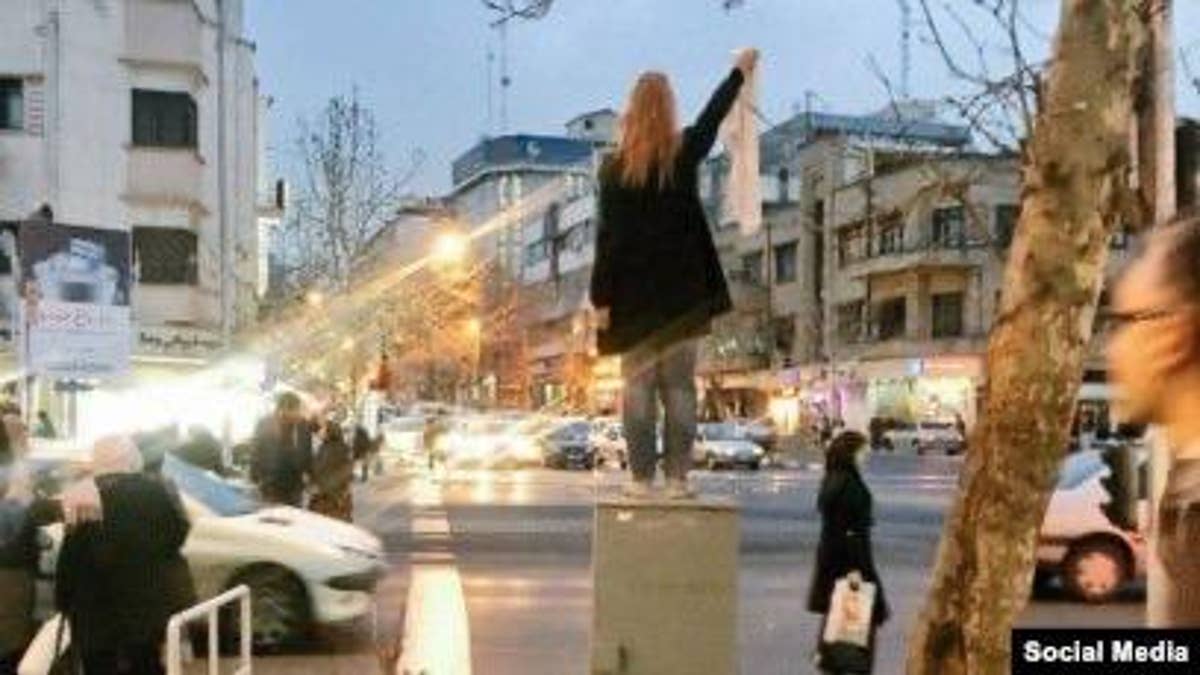
Maryam Shariatmadari was detained by Iranian security forces after removing her hijab to protest mandatory veiling laws during the “Girls of Revolution Street” demonstrations in Tehran. She was later sentenced to one year in prison for what authorities described as “encouraging corruption by removing her hijab.” (Fox News)
Amnesty International called on Iranian authorities in October to abandon plans to enforce the sentences, arguing that judicial flogging constitutes torture and violates international human rights protections.
Ahmadi, who is from Nowshahr in northern Iran and studied film directing at Soore University, had previously faced restrictions from Iranian security officials over performing protest songs and regional folk music during the Woman, Life, Freedom movement, according to Hengaw.
The movement began in September 2022 after the death in custody of Mahsa Amini, a 22-year-old Iranian Kurdish woman who had been detained by the country’s morality police for allegedly violating mandatory hijab rules.
Since then, many Iranian women have publicly defied the compulsory dress code despite periodic arrests, warnings and other enforcement efforts.
Five of the nine people originally sentenced in connection with Ahmadi’s concert were reportedly flogged Monday. The fate of the remaining defendants’ punishments remains uncertain.

A protester holds a photo of Kurdish Iranian woman Mahsa Amini while another person waves Iran’s former flag during a demonstration against the Iranian regime and in support of Iranian women in Istanbul on October 2, 2022. Amini died after being arrested in Tehran by the Islamic Republic’s morality police. (BULENT KILIC/AFP via Getty Images)
Ahmadi’s punishment comes as part of a wider human rights crackdown in Iran that has intensified since nationwide anti-regime protests erupted in January. Beyond years of restrictions targeting women, artists, journalists and political dissidents, Iranian authorities have increasingly used mass arrests, detention torture and executions to silence opposition, as previously reported by News Outlet.
Human Rights Watch reported in February that executions in Iran during 2025 had reached levels not seen since the late 1980s. Rights organizations have documented a further intensification of political repression across the country in 2026.
Earlier this month, the Norway-based Iran Human Rights organization said at least 121 people arrested in connection with January’s protests had received death sentences. At least 30 of those sentences had been upheld by Iran’s Supreme Court, the group reported.

Women from Iran’s Basij paramilitary, which is affiliated with the Islamic Revolutionary Guard Corps, carry weapons during a pro-government women’s parade in Tehran on April 17, 2026. (Sobhan Farajvan/Pacific Press/LightRocket via Getty Images)
Iranian authorities did not immediately respond to News Outlet’s request for comment.


