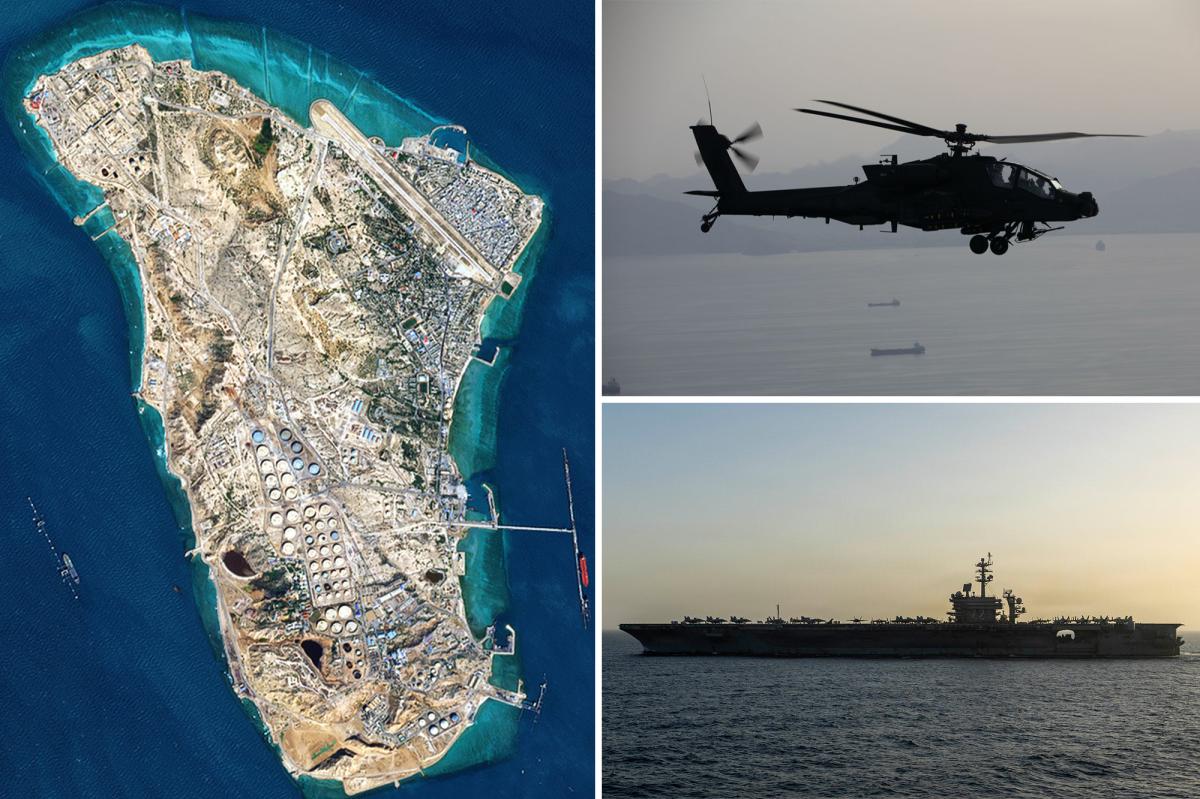


Iran is urgently deploying a large crude oil tanker to Kharg Island, highlighting the impact of President Trump’s sanctions, which threaten to push the country’s key oil export hub to its limits. This hub manages about 90% of Iran’s crude oil exports, according to recent reports.
Faced with dwindling capacity, Tehran has reactivated a 30-year-old oil tanker, Nasha, to serve as additional storage space. Kharg Island is nearing its maximum onshore storage capacity, as reported by Gulf News on Friday.
The Nasha, which has been sitting unused for several years, is being repurposed to accommodate Iran’s overflowing supply of crude oil, the report indicates.
Currently making its way to Iran’s main oil export terminal, the aging tanker was tracked by TankerTrackers.com, underscoring the urgency of the situation.
Analysts cited by Gulf News suggest that Kharg Island’s remaining storage could be completely filled within 12 to 13 days, given Iran’s current oil inflow of approximately 1 million barrels per day.
This potential bottleneck at Iran’s critical oil hub poses a significant economic risk for the country, as pointed out by the news outlet.
Secretary of War Pete Hegseth said Friday that Iran still has an “open window” for negotiations with the US — but warned that “the clock is not on their side” with the naval blockade targeting all ships coming from or traveling to Iranian ports.
In the wee hours one night this week, US forces seized a sanctioned Iranian-flagged oil tanker bound for Singapore as it tried to sneak past American ships in the darkness.
At least three other Iranian capital ships were intercepted in Asian waters near India, Malaysia, and Sri Lanka on Wednesday, according to American shipping and security sources.
And on Friday, the US added a third military aircraft carrier to its arsenal in the Middle East.
The USS George H.W. Bush — a 1,000-foot-long nuclear-powered carrier that can transport more than 80 aircraft — will significantly bolster the blockade of Iranian ports in the Strait of Hormuz, where Iran has made its displeasure with the arrangement frighteningly clear.
Three container ships were hit by Iranian gunfire in the critical chokehold on Wednesday – just hours after Trump announced he was indefinitely extending a cease-fire agreement with the Islamic Republic.
Iran said it captured two of the ships that were seeking to exit the Gulf via the Strait of Hormuz, marking its first seizures since the war began.
Senior Iranian leadership was expected to arrive in Pakistan on Friday or Saturday for talks, government sources from both countries told The Post.
However, the meeting will most likely be bilateral between Islamabad and Tehran only, an Iranian source said.
Trump threatened to finish the war “militarily with the other 25% of the targets” if Iranian leaders “don’t want to make a deal,” he warned Thursday.