
Share this @internewscast.com

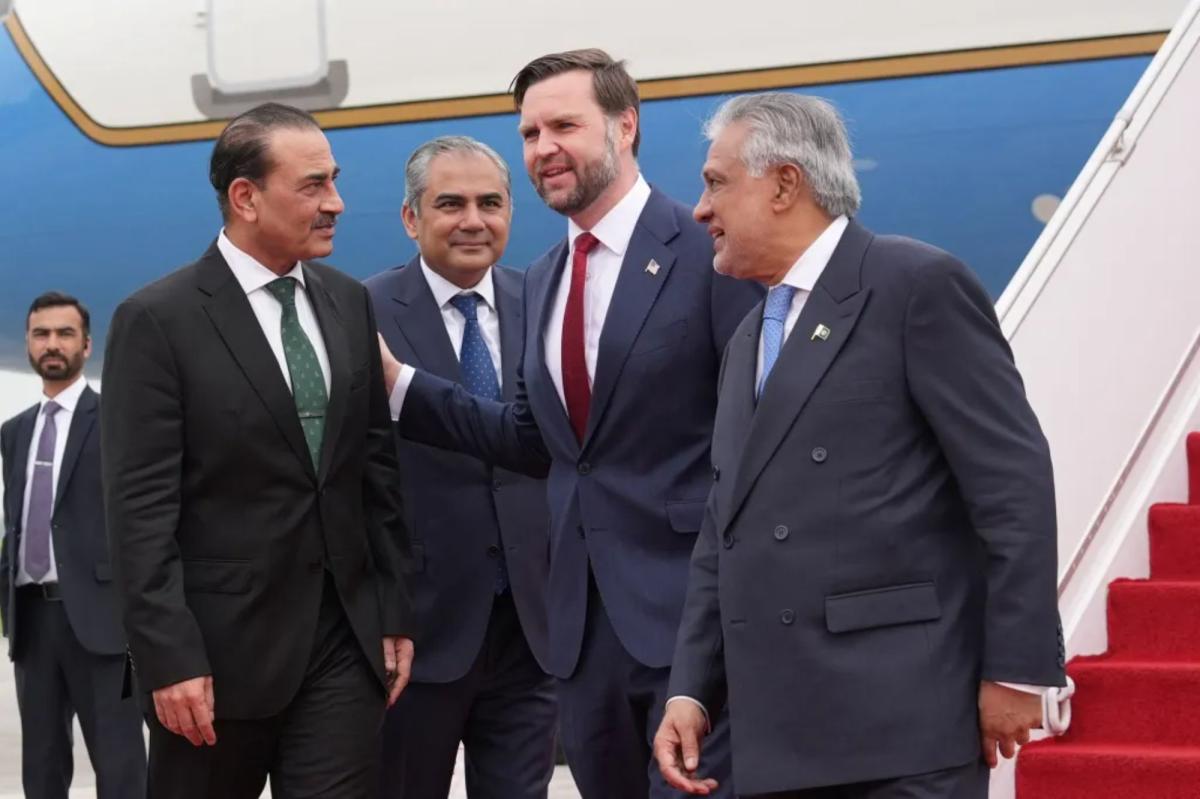
A significant diplomatic endeavor unfolded on Saturday as a U.S. delegation led by Vice President JD Vance touched down in Pakistan for pivotal talks with Iranian officials. This marks the first high-level engagement since the conflict erupted over a month ago, aiming to strengthen a precarious cease-fire and advance the pursuit of peace.
Despite the cease-fire, which Pakistan facilitated, the negotiations face considerable challenges. Tensions remain high as Israel and Hezbollah continue to exchange fire along the southern Lebanon border. Meanwhile, Iran has stipulated specific conditions that must be met before any substantive discussions can proceed.
The Iranian contingent, spearheaded by Parliament Speaker Mohammad Bagher Qalibaf, reached Islamabad early Saturday. Qalibaf emphasized on social media platform X that Iran’s participation hinges on an Israeli cease-fire in Lebanon and the freeing of its locked financial assets.
In the backdrop, President Trump has been vocally critical on social media, asserting that Iranian negotiators are at a disadvantage, claiming they lack strategic leverage.
Trump accused Iran of using the crucial Strait of Hormuz, a major conduit for global energy, as a tool of coercion, stating, “The only reason they are alive today is to negotiate!”
Trump wrote, “The only reason they are alive today is to negotiate!”
The normally bustling streets of Islamabad were deserted Saturday morning as security forces sealed roads ahead of the talks. Pakistani authorities urged residents to stay inside, leading the city to look like it was under curfew.
Pakistan Prime Minister Shehbaz Sharif said Friday that the conflict was entering a “difficult phase” as the sides try to shift from a temporary pause in fighting to a more lasting settlement, adding that they were at a “make-or-break” moment.
Vance is leading a negotiation with Trump’s special envoy Steve Witkoff and Trump’s son-in-law Jared Kushner.
Before his departure from Washington on Friday, Vance said he believed the negotiations with Iran will be “positive.”
But he added, “If they’re going to try and play us, then they’re going to find that the negotiating team is not that receptive.”
Israel and Lebanon will have direct negotiations
Negotiations between Israel and Lebanon are expected to begin Tuesday in the US capital, Lebanese President Joseph Aoun’s office said Friday.
Beirut is keen to hold direct talks to end the war between Israel and Hezbollah, but under a cease-fire similar to the one with Iran.
Israel wants the Lebanese government to assume responsibility for disarming Hezbollah, much like was envisaged in a November 2024 cease-fire.
But it is unclear whether Lebanon’s army can establish a monopoly on arms or confiscate weapons from the militant group, which has resisted efforts to curb its strength for decades.
Israel’s insistence that the cease-fire in Iran does not include a pause in its fighting with Hezbollah has threatened to sink the deal. The militant group joined the war in support of its backer, Iran.
The day the truce was announced, Israel pounded Beirut with airstrikes, killing more than 300 people, according to the Lebanese Health Ministry. It was the deadliest day in the country since the war began Feb. 28.
Trump said Thursday he had asked Israeli Prime Minister Benjamin Netanyahu to dial back the strikes.
Then on Friday, Israeli warplanes struck near a state security office in the southern town of Nabatieh, killing 13 officers, according to the Lebanese president’s office.
Israeli forces said they also hit about 10 rocket launchers in Lebanon that had fired toward northern Israel.
Strait of Hormuz remains a sticking point
Iran’s closure of the Strait of Hormuz has sent oil prices skyrocketing, driven stocks down and roiled the world economy. Tehran’s control over the waterway has proved its biggest strategic advantage in the war.
The spot price of Brent crude, the international standard, was around $97 Friday, up more than 30% since the war started.
Before the conflict, around a fifth of the world’s traded oil typically passed through the strait on more than 100 ships, many carrying oil to Asia.
With the cease-fire in place, only 12 have been recorded passing through.