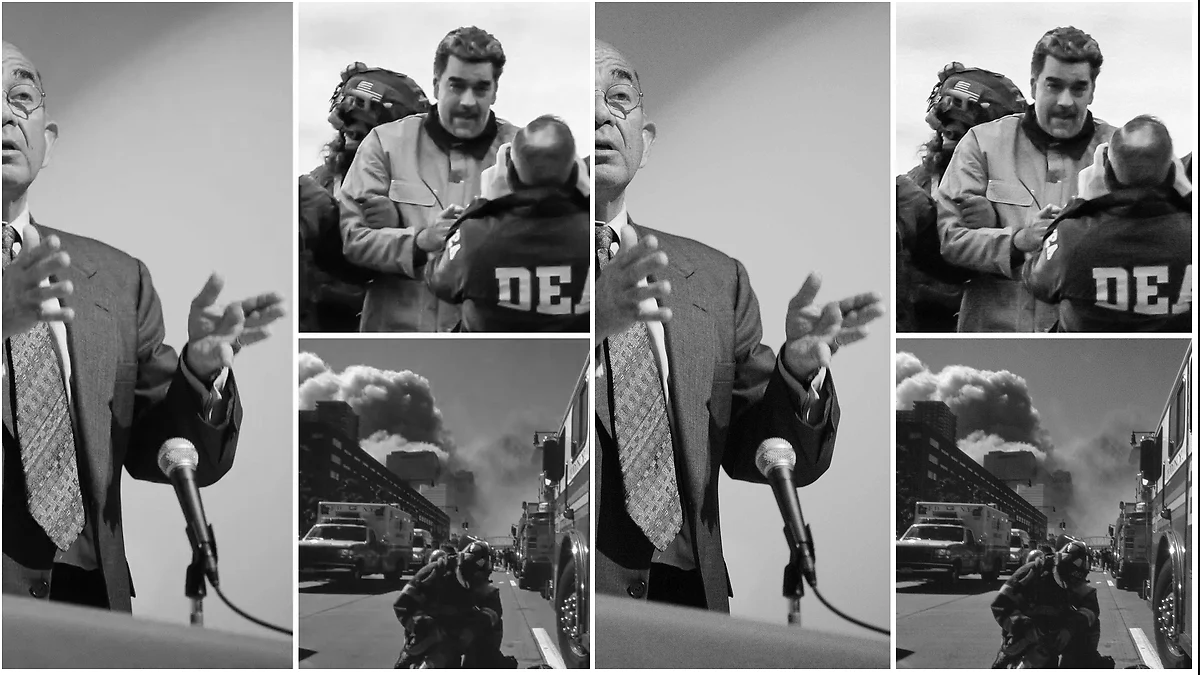

NEW YORK — Alvin K. Hellerstein, the longtime Manhattan federal judge who handled cases involving President Donald Trump, former Venezuelan President Nicolás Maduro and the aftermath of the Sept. 11 attacks, has died after nearly 30 years on the bench.
He was 92.
Edward Friedland, district executive for the Southern District of New York’s federal courts, confirmed that Hellerstein died Wednesday.
Officials did not immediately disclose the cause of death.
Just two weeks before his death, Hellerstein presided over a Manhattan hearing in the ongoing narco-terrorism conspiracy case against Maduro, who was captured earlier this year during a surprise raid.
President Bill Clinton, a Democrat, nominated Hellerstein to the federal bench in 1998.
He served as an active district judge until taking senior status in 2011.
Earlier in his career, Hellerstein served in the U.S. Army Judge Advocate General’s Corps before becoming a prominent Manhattan litigator.
Hellerstein’s most enduring legacy was shaped by his work after the 2001 terrorist attack on the World Trade Center. He oversaw dozens of wrongful-death, personal-injury and property-damage lawsuits in litigation that continued for more than two decades.
Several of his former clients were killed in the attack. Attorneys said Hellerstein treated victims and their relatives with unusual compassion, spending hours with them in his chambers and refusing settlement offers he considered inadequate.
His handling of the recovery effort also drew criticism. In 2008, Hellerstein ended a legal campaign seeking to compel New York City officials to continue searching for human remains in debris transported from Ground Zero to a Staten Island landfill.
DISCOVER MORE: SK Hynix Shares Surge After Third-Quarter Profit Beats Estimates
Known for his independent streak and demanding courtroom style, Hellerstein also stood apart from many colleagues during the COVID-19 pandemic, requiring spectators to wear masks for more than two years after other judges had abandoned the policy.
In one of his final major rulings, issued in August, Hellerstein once again rejected Trump’s attempt to overturn his hush-money conviction. The judge denied Trump’s request to transfer the state case to federal court and dismiss it on presidential-immunity grounds.
It marked the third occasion on which Hellerstein refused Trump’s effort to move the case.
The first denial came after Trump was indicted in March 2023. The second followed his May 2024 conviction and a subsequent U.S. Supreme Court decision holding that current and former presidents are protected from prosecution for official acts.
Hellerstein’s latest ruling came after an appeals court directed him to revisit his earlier decision.
The 2nd U.S. Circuit Court of Appeals said Hellerstein had failed to address “important issues relevant” to Trump’s request.
At the same time, the appellate judges emphasized that they “express no view” about how the case should ultimately be decided.
In 2020, Hellerstein ordered the release of Michael Cohen, Trump’s estranged former attorney and fixer, after the Justice Department revoked Cohen’s home confinement in an effort to stop him from publishing a book or speaking with the media.
Hellerstein ruled that the government’s actions were retaliatory and violated Cohen’s First Amendment rights.
Hellerstein also attracted national attention in 2015 when he ordered a New York City cable company to pay a Texas woman $229,500 after she received 153 unwanted robocalls.


