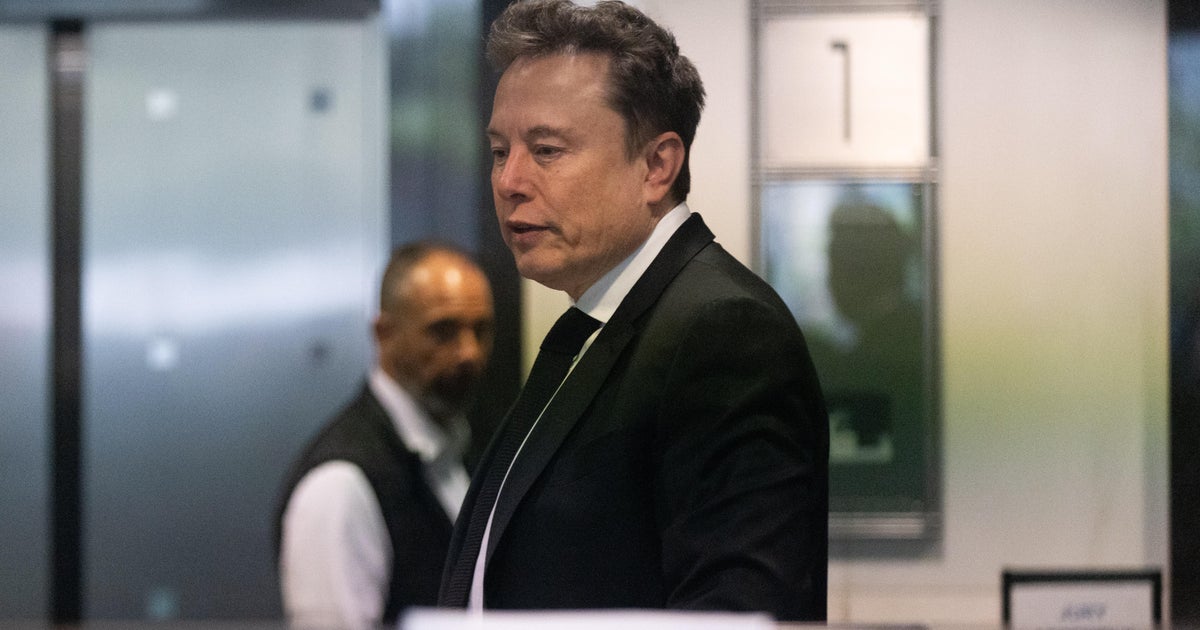

In a significant legal win for OpenAI, a California jury on Monday unanimously ruled against Elon Musk’s lawsuit targeting the AI firm and its CEO, Sam Altman. The decision came after the court determined Musk had not filed his claim within the allowable time frame, known as the statute of limitations.
The nine-member jury, serving in an advisory capacity, concluded that Musk had exceeded the three-year limit for filing a lawsuit. OpenAI’s defense successfully argued that any alleged harm Musk claimed needed to be addressed before August 2021, which he failed to do. Presiding over the case, Judge Yvonne Gonzalez agreed with the jury’s recommendation, leading to the dismissal of Musk’s claims.
Outside the courtroom, OpenAI’s attorney, William Savitt, expressed satisfaction with the verdict, describing the lawsuit as a “hypocritical attempt to sabotage a competitor” and to counter Musk’s historical inaccuracies about OpenAI’s trajectory. He highlighted the jury’s swift decision, reached in under two hours of deliberation, as a testament to the strength of their case.
Spotlight on Altman and Musk
The verdict concluded a three-week trial held in Oakland, where Musk, the visionary behind Tesla and SpaceX, faced off against Altman. Both tech moguls, along with key figures from OpenAI and Microsoft, provided testimony throughout the proceedings.
Musk had sought $150 billion in damages and demanded Altman’s removal from OpenAI’s leadership. A ruling in Musk’s favor could have led to significant changes in OpenAI’s business operations and potentially disrupted its anticipated public offering later this year, as reported by The Wall Street Journal.
Musk’s legal representatives have yet to issue any comments following the court’s decision.
“Stealing a charity”?
The case stemmed from a lawsuit Musk, the world’s richest man, brought in 2024, alleging that OpenAI, Altman and OpenAI President Greg Brockman broke their promise to keep the company a nonprofit, instead turning it into a money-making venture that is now valued at $852 billion.
The case was a “textbook tale of altruism versus greed,” Musk said in his suit.
Microsoft, which formed a partnership with OpenAI in 2019, was also named as a defendant. On Monday, a Microsoft spokesperson said the company welcomes “the jury’s decision to dismiss these claims as untimely.”
“The biggest focus of the trial around if OpenAI broke its charitable mission when they spun off its for-profit arm and accepted an investment from Microsoft for its AI technology is now mostly alleviated as it takes a worst-case scenario off the table,” WedBush Securities analyst Dan Ives said in a report.
Musk, who helped co-found OpenAI, invested $38 million in the company during its early years, which he argued was intended for charitable purposes. In his suit, the billionaire claimed OpenAI breached its charitable trust and that Altman and Brockman enriched themselves at his expense. Musk also accused Microsoft of aiding and abetting the trust breach.
“It’s not OK to steal a charity,” Musk said during his testimony. The head of SpaceX and Tesla missed the tail end of the trial to join President Trump and a delegation of billionaire U.S. executives for a summit with Chinese President Xi Jinping.
A fractured relationship
OpenAI was founded as an AI research lab in 2015. Four years later, the Silicon Valley company created a for-profit subsidiary, which it said would be governed by the nonprofit entity.
During the trial, two law professors, Daniel Hemel of New York University and John Coates of Harvard, testified that they didn’t see any issues with OpenAI’s for-profit entity formed in partnership with Microsoft. “It’s generated value for the non-profit,” somewhere in the $200 billion range, Coates said.
Microsoft had generated $9.5 billion in revenue from the OpenAI partnership as of March 2025, according to Michael Wetter, a corporate development executive at Microsoft, who testified during the trial.
The case put a direct spotlight on Musk and Altman, who were once said to be on good terms but whose relationship deteriorated as OpenAI morphed into one of the world’s most important AI companies.
During the trial, Musk’s lawyer, Steven Molo, cast doubt on Altman’s credibility, alleging that the OpenAI exec lied under oath and asking Altman if he was “completely trustworthy.” Altman hesitated before responding, “I believe I am an honest and trustworthy businessperson.”
Musk also faced scrutiny, with both Altman and OpenAI’s legal team painting a picture of a power-hungry billionaire who wanted to control the company.
“Musk wanted to be CEO. I was extremely uncomfortable with it,” Altman said on the stand.