Share this @internewscast.com

In California, developers are exploiting a rarely noticed loophole to construct numerous homes on land highly susceptible to wildfires, raising alarms among local residents.
By expediting affordable housing developments on commercially-zoned plots in Los Angeles, builders are sidestepping comprehensive safety evaluations, councilmember Bob Blumenfield informed the Post.
He pointed out a proposal to demolish a section of the Woodland Hills Country Club and transform the erstwhile golf course into 398 residential units this year.
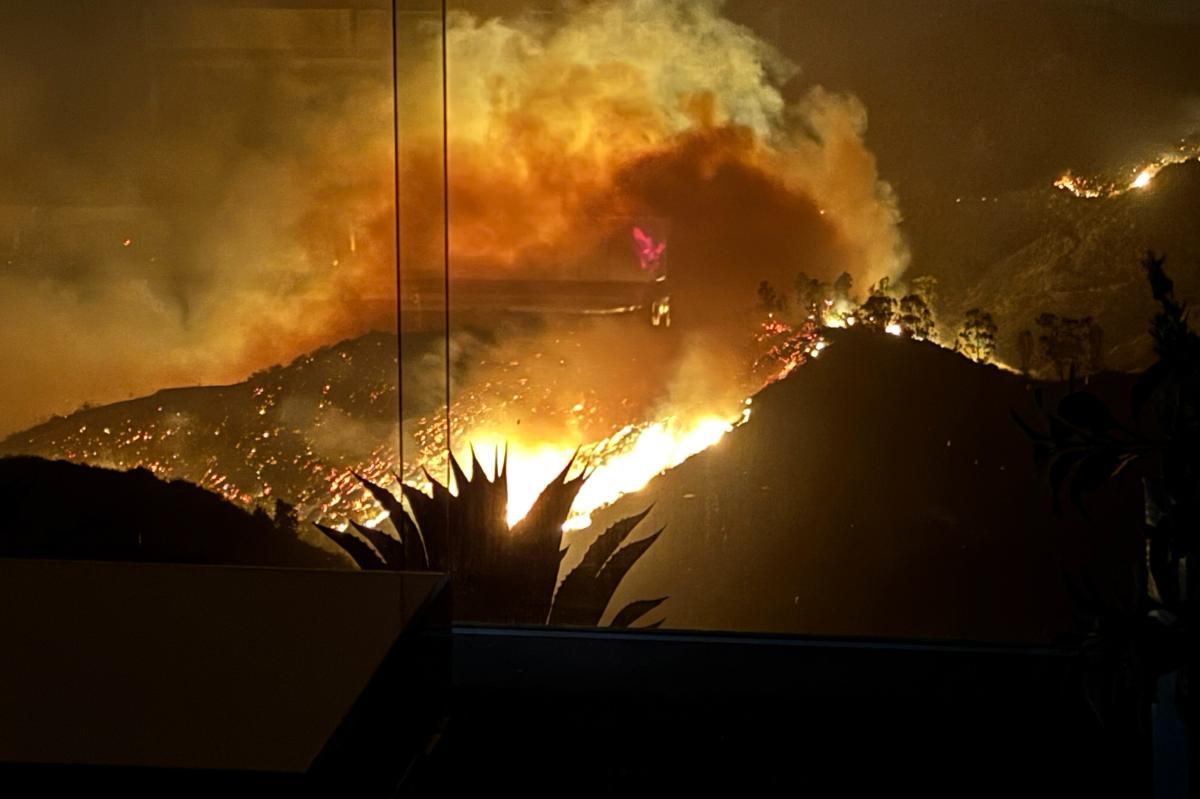
This area lies adjacent to the Santa Monica Mountains, a region recently ravaged by the devastating Palisades Fire, which claimed 12 lives and destroyed entire neighborhoods.
Blumenfield remarked, “The Woodland Hills Country Club is in close proximity to the area affected by the Palisades fire and is classified as a ‘Very High Fire Severity Zone,’ with some streets being only a few feet wide.”
He added, “It’s ridiculous that new state legislation seems to have stripped away nearly all of the community’s protective measures.”
At the center of the battle is the Affordable Housing and High Road Jobs Act (AB 2011), a powerful state law designed to force cities to fast-track affordable housing on commercially zoned land near jobs and major corridors.
Download The California Post App, follow us on social, and subscribe to our newsletters
California Post News: Facebook, Instagram, TikTok, X, YouTube, WhatsApp, LinkedIn
California Post Sports Facebook, Instagram, TikTok, YouTube, X
California Post Opinion
California Post Newsletters: Sign up here!
California Post App: Download here!
Home delivery: Sign up here!
Page Six Hollywood: Sign up here!
Lawmakers pitched it as a way to convert failing strip malls, vacant big-box stores and aging commercial corridors into housing.
Projects that qualify can bypass years of hearings, environmental challenges, and local political fights.
But Blumenfield argues developers are exploiting loopholes in the law to push dense projects into places it was never intended to reach — including the Woodland Hills golf course in a high-risk fire zone.
He said: “It remains absurd that this level of development can be allowed by-right in a high fire severity zone with no review and zero input from the community or local government.”
Residents from the neighborhood pleaded with officials to stop what they described as reckless, top-down development.
Maureen Hessey told the committee: “I’ve lived in the Gerard Tract for more than thirty years, through a major earthquake and two major fires.
“I’m not against development — but our area simply does not have the infrastructure for this kind of high-density housing.”
Another longtime resident, whose family has lived there for 45 years, warned evacuation during a major wildfire could turn deadly.
She said: “Our house was built in the twenties, when the Gerard Tract was a resort community of tiny cabins.
“The roads are exactly as they were then — narrow, winding, many dead ends, with only one or two ways off the hillside.” One escape route, she added, feeds directly into dense brush — a trap if flames ignite.
She said: “I can’t imagine eight hundred additional cars on those roadways in an emergency. During the Palisades fire it was already crowded, even though many neighbors didn’t evacuate. Think about that.”
Locals filed a motion to reclaim control over the site and it cleared the City Council’s Planning and Land Use Management Committee on Tuesday.
It asks the city to formally designate the golf course property as “vacant.” Under state law, projects on vacant land in extreme fire zones are not eligible for automatic approval.
If the designation holds, the development would be forced into the standard approval process — including environmental review and public hearings — instead of moving forward by right.
Blumenfield said: “Making sure that the golf course is legally recognized as the vacant land that it actually is may be a critical lynchpin in ensuring that it gets proper review.”
City planners have already paused the developer’s application, citing missing documents, but officials say that reprieve is likely temporary.
Once the paperwork is corrected, the proposal could surge back — and under current state law, potentially move forward with minimal local oversight.
The fight now heads to the full City Council for a vote.