
Share this @internewscast.com

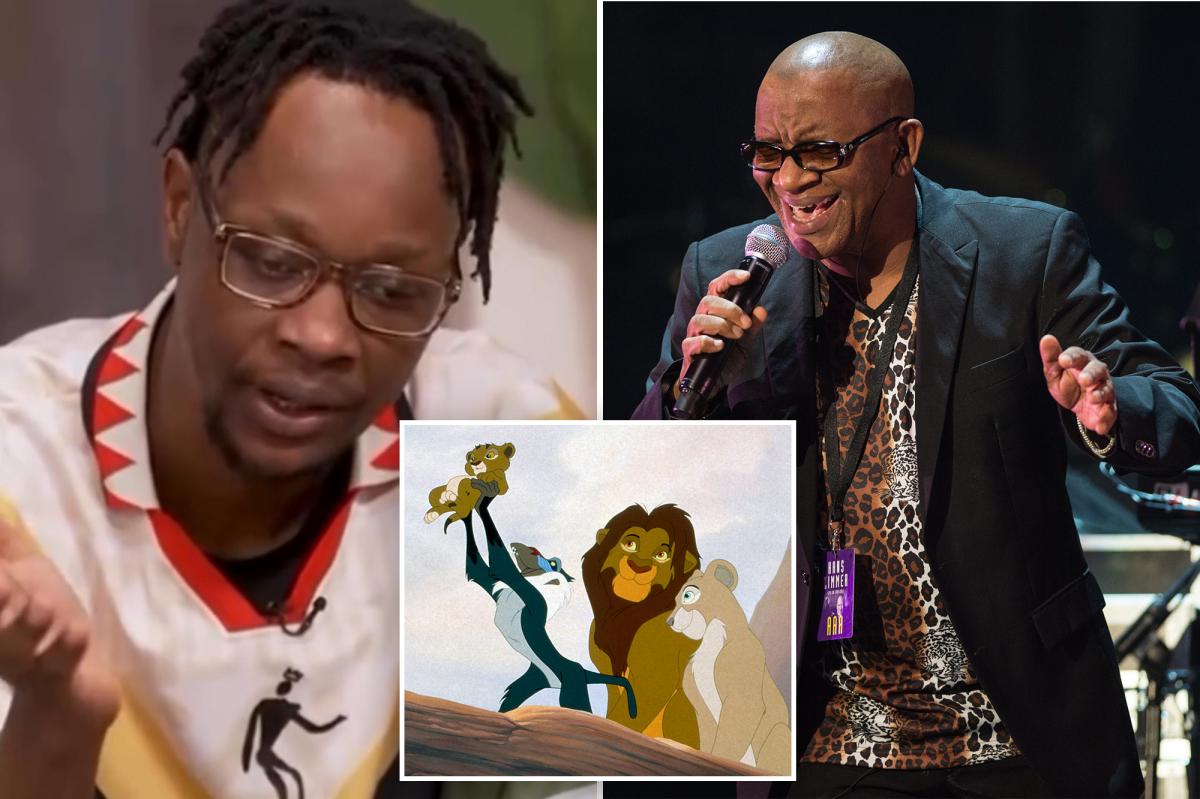
A renowned South African composer, celebrated with a Grammy, is taking legal action against a comedian for allegedly tarnishing his reputation. The composer, who crafted and delivered the iconic opening chant for Disney’s “The Lion King,” claims the comedian misrepresented the song’s essence both on a podcast and during his comedy acts.
Lebohang Morake, widely known as Lebo M, has filed a lawsuit against the Zimbabwean comedian Learnmore Mwanyenyeka, who performs under the name Learnmore Jonasi. Morake accuses Jonasi of deliberately distorting the chant’s translation, which is an integral component of the 1994 Disney classic as well as its stage adaptations and the 2019 film remake.
The controversy has quickly gained traction online, with both Morake and Jonasi engaging in a public exchange on social media. The conflict arose from Jonasi’s comedic routines and a podcast interview where he offered his own translation of the lyrics, originally in Zulu and Xhosa—two of South Africa’s official languages.
This legal complaint was submitted in Los Angeles, where Morake resides and Jonasi has recently performed. The lawsuit accuses Jonasi of mockingly exaggerating the chant’s cultural importance through his performances.
According to Disney’s official rendition, the chant “Nants’ingonyama bagithi Baba” translates to “All hail the king, we all bow in the presence of the king.”
Disney’s official translation of the opening phrase “Nants’ingonyama bagithi Baba” is “All hail the king, we all bow in the presence of the king.”
“Hay! baba, sizongqoba,” the chant continues. It translates to “Through you we will emerge victoriously,” according to Morake.
In the episode of One54 cited in the lawsuit, the podcast’s Nigerian hosts initially sing the chant with incoherent and incorrect words. Jonasi corrects them, and says “That’s not how you sing it, don’t mess up our language like that.”
Jonasi then sings the correct lyrics in Zulu. When asked, he says they translate to: “Look, there’s a lion. Oh my god.”
The hosts burst out laughing, saying that they had previously thought the chant was something more “beautiful and majestic.”
“Circle of Life,” with music by Elton John and English-language lyrics by Tim Rice, came up in the broader context of Jonasi’s critique of “The Lion King” franchise as profiting off of simplistic narratives about the African continent for non-African audiences.
“The lions had American accents in Africa, and then you had the monkey with an accent,” Jonasi said, and they went on to critique the “Black Panther” movies and other renderings of Africa in popular American culture.
Morake’s lawyers acknowledged in the complaint that “ingonyama” can literally translate to “lion,” but say it’s used in the song as a “royal metaphor” that invokes kingship, and that Jonasi intentionally misrepresented “an African vocal proclamation grounded in South African tradition.”
The lawsuit says Jonasi “received a standing ovation” for a similar joke he made about the song during a March 12 stand-up performance in Los Angeles.
Such viral statements, it says, are interfering with Morake’s business relationships with Disney and his income from royalties, causing more than $20 million in actual damages.
The lawsuit also seeks $7 million in punitive damages.
Disney didn’t respond to an emailed request for comment on Monday night.
The complaint also argues that Jonasi presented his translation “as authoritative fact, not comedy” so it shouldn’t get the First Amendment protections afforded to parody and satire that make fun of other artistic works.
Jonasi doesn’t have an attorney publicly listed for the case, and a representative didn’t respond to an emailed request for comment on Monday night, but the comedian offered some thoughts in a video posted last week as he continues his US tour.
Jonasi said he’s a “big fan” of Morake’s work and loves the song. When he learned that Morake was upset, the comedian said, he wanted to create a video with Morake explaining the song’s deeper meaning.
“Comedy always has a way of starting conversation,” Jonasi said in the video he posted on Instagram, which got more than 100,000 likes. “This is your chance to actually educate people, because now people are listening.”
But Jonasi said he changed his mind about collaborating with Morake when he said the composer called him “self-hating” as they exchanged messages following the Feb. 25 podcast.
He said Morake’s reaction ignored the rest of his work delving into a more nuanced critique of American renderings of African identity.