Share this @internewscast.com
On Tuesday, a wave of protests surged across Iran, fueled partly by the vocal support of U.S. President Donald Trump and other officials. During a statement on Monday, Trump highlighted Iran’s economic turmoil and the longstanding grievances of its citizenry, though he refrained from advocating for a change in leadership.
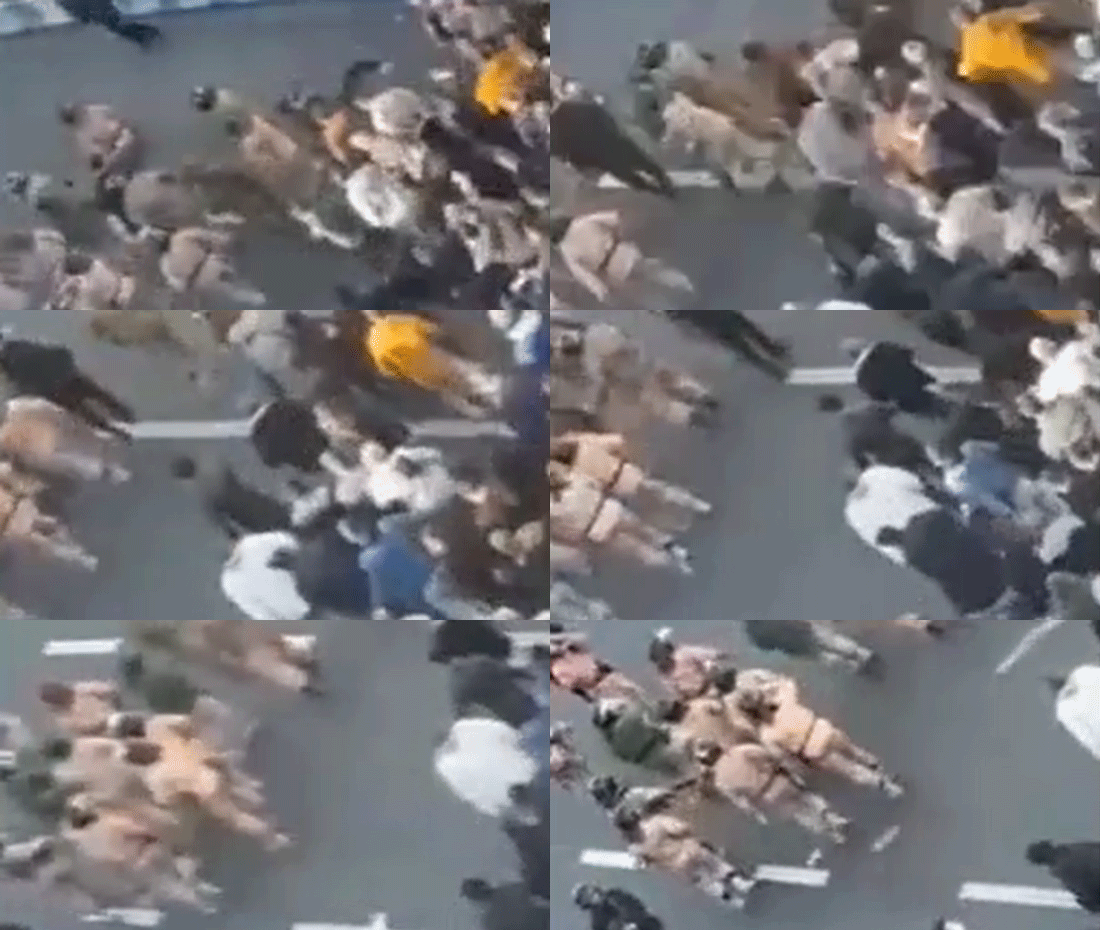
Within Iran, the protests marked their third day, escalating beyond Tehran’s bustling commercial district. The National Council of Resistance of Iran (NCRI), an opposition group in exile, reported widespread strikes and student protests not only in Tehran but also in numerous provincial cities. These demonstrations frequently turned confrontational, with security forces clashing with protesters. A video provided by the NCRI showed protesters in a dramatic standoff with security personnel on Tehran’s Jomhouri Street, ultimately pushing them back.
According to reports from Iran International, universities have become hotbeds of dissent. Significant rallies unfolded at Tehran University, Sharif University of Technology, Shahid Beheshti University, Elm-o-Sanat University, and Khajeh Nasir University. In response, security forces intensified their presence, enforcing stricter entry controls and fortifying buildings associated with Supreme Leader Ali Khamenei.
The unrest also permeated various parts of the economy. Strikes rippled through Tehran’s Shoush and Molavi districts and reached Isfahan’s iconic Naqsh-e Jahan Square. Parts of Tehran’s Grand Bazaar and the gold market were shuttered, and mobile phone vendors staged protests by closing their shops and assembling outside prominent shopping centers. In certain areas, the protests escalated into violence, with security forces deploying tear gas in Tehran and Malard, and reports of live ammunition being used in Hamadan. Nighttime demonstrations erupted from Qeshm Island in the south to Zanjan and Hamadan in the north, where protesters were heard chanting “death to the dictator.”
During a press conference at Mar-a-Lago on Monday, Trump addressed the situation, stating he would not discuss regime change. Instead, he emphasized Iran’s economic collapse and the government’s harsh crackdown on dissent. “They’ve got tremendous inflation. Their economy is busted, the economy is no good,” Trump remarked, underscoring that the regime’s response to public demonstrations often involves deadly force.
He said that when Iranians gather to protest, the regime responds with lethal force.
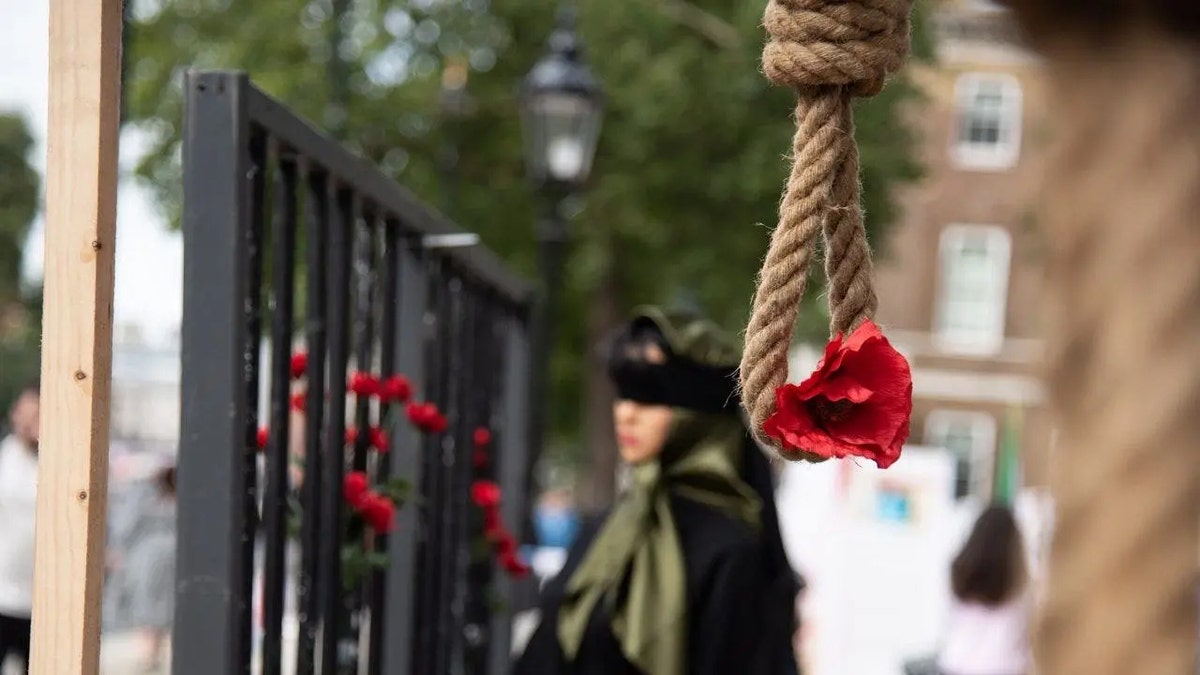
Nooses with red roses are displayed during the Anglo-Iranian community rally to support the Iranian people’s push for a new revolution. Members of the Anglo-Iranian community, along with supporters of the National Council of Resistance of Iran (NCRI), commemorated the 45th anniversary of the revolution in Iran that saw the overthrow of the Shah’s regime and eventually led to a theocratic Islamic republic in 1979. (Loredana Sangiuliano/SOPA Images/LightRocket via Getty Images)
“Every time they have a riot or somebody forms a group, little or big, they start shooting people,” Trump said. “You know, they kill people. All of a sudden people start getting shot and that group disbanded pretty quickly.”
Trump said he has watched the unrest build for years, describing Iran’s leadership as brutal.
“I’ve watched this for years — there is tremendous discontent,” he said. “I’ve watched it for years, and vicious, vicious people.” His remarks came as protests intensified following the collapse of Iran’s currency to historic lows. The rial fell to roughly 1.45 million per U.S. dollar on the open market, triggering strikes and demonstrations centered on Tehran’s Grand Bazaar and spreading to other major cities, according to Iran International’s live reporting. Videos and eyewitness accounts described heavy security deployments, clashes with demonstrators and the use of tear gas as unrest widened.
U.S. Ambassador to the United Nations Mike Waltz issued a direct message of support. “The people of Iran want freedom,” Waltz wrote on X. “We stand with Iranians in the streets of Tehran and across the country as they protest a radical regime that has brought them nothing but economic downturn and war.”
A parallel statement from the U.S. government’s Persian-language account, @USAbehFarsi, said Washington supports the Iranian people’s efforts “to make their voices heard,” urging the Islamic Republic to respect fundamental rights rather than suppress protests.
Iranian officials acknowledged the unrest but defended the government’s approach. Reuters reported that government spokeswoman Fatemeh Mohajerani said Tehran recognizes protests and that officials would set up a mechanism to engage with protest leaders. Iranian President Masoud Pezeshkian directed his interior minister to address protesters’ “legitimate demands” and engage in dialogue with their representatives.
Independent analysts warned the unrest reflects deeper structural strains. The OSINT research group SpecialEurasia said in an assessment on Tuesday that Iran’s internal stability has reached a “critical threshold,” citing the convergence of currency collapse, renewed international sanctions and chronic water and energy shortages. The group noted that the participation of bazaar merchants, traditionally a pillar of regime support, signals declining confidence in the state’s economic management and raises the risk of prolonged unrest.
NCRI leader Maryam Rajavi said the protests reflect the anger of “tens of millions” driven to the breaking point by inflation, corruption and clerical rule. NCRI’s claims reflect opposition reporting and cannot be independently verified due to restrictions on access inside Iran.
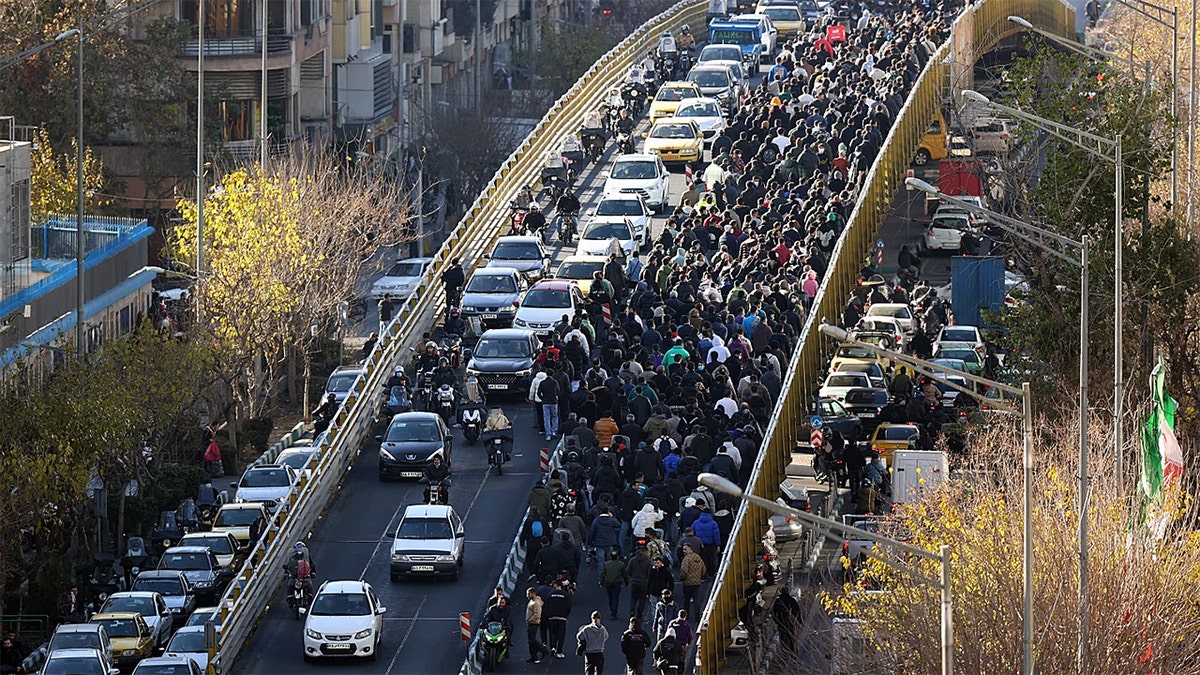
Protesters march in downtown Tehran, Iran, Monday, Dec. 29, 2025. (Fars News Agency via AP)
Cameron Khansarinia, vice president of the National Union for Democracy in Iran, said the latest demonstrations underscore a growing shift in public sentiment. “Iranians have once again taken to the streets.” Citing President Donald Trump’s remarks this week, he added that “each time they do, the regime tries to crush it,” but argued that “Iranians’ desire to be free is increasingly becoming greater than their fear of the regime.” Khansarinia claimed that chants in support of Crown Prince Reza Pahlavi have been growing in the protests, saying the protesters showed “remarkable bravery.”
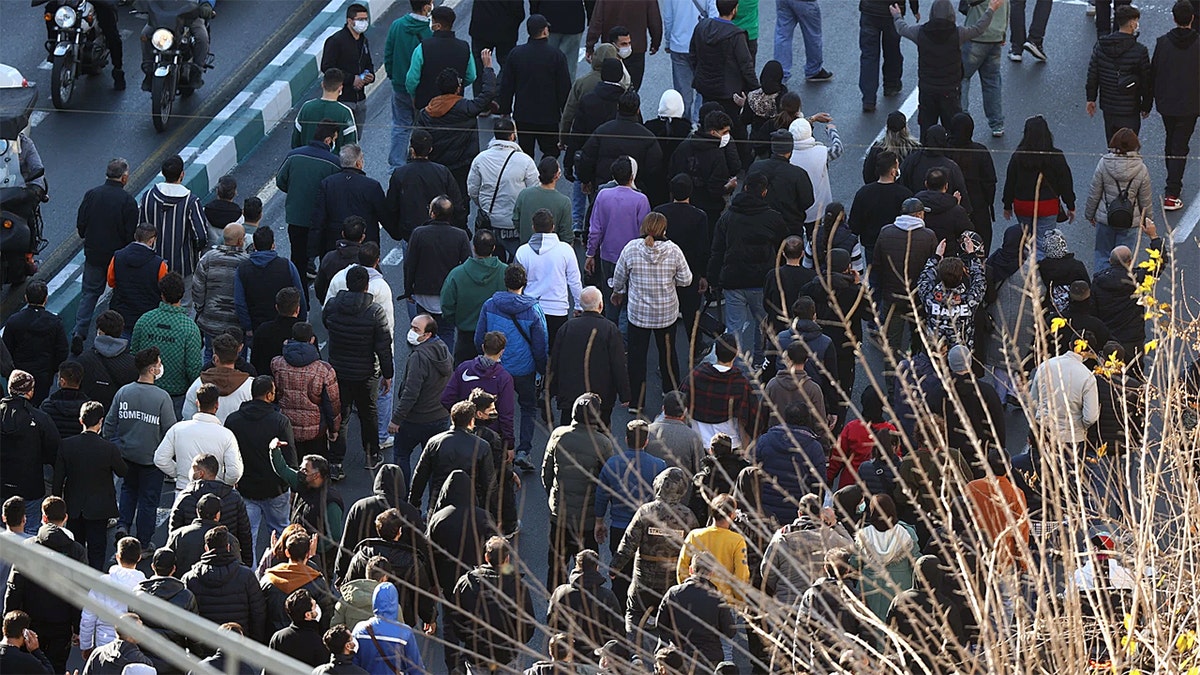
Protesters march in downtown Tehran, Iran, Monday, Dec. 29, 2025. (Fars News Agency via AP)
As protests continue, verification of casualties and arrests remains limited, but the scale and spread of the unrest underscore mounting pressure on Iran’s leadership amid economic free fall and growing public defiance.