
The infamous Zodiac Killer, known for his cryptic messages that taunted law enforcement, may have been alluding to a much earlier crime, according to the claims of an independent investigator. This investigator suggests that the Zodiac Killer’s criminal activities began 23 years prior with the murder of Elizabeth Short, infamously known as the Black Dahlia, in California.
Alex Baber, co-founder of Cold Case Consultants of America, has spent nine months unraveling a complex encryption technique used by the Zodiac Killer. Baber stated that he deciphered a double-layered code, involving both transposition and substitution within a 2 by 7 grid, which allegedly links this notorious killer to the Black Dahlia case.
During an interview with Fox News Digital at the Hamptons Whodunit event in East Hampton, Baber revealed a significant development: “For the first time in history, LAPD detectives have approached a suspect’s family to acquire DNA,” he remarked. “This is unprecedented for the Black Dahlia case… we’re confident that we’re on the right track.”
While Baber’s revelations have sparked interest, the Los Angeles Police Department has yet to provide a comment, and a spokesperson from the FBI chose not to comment on the developments.
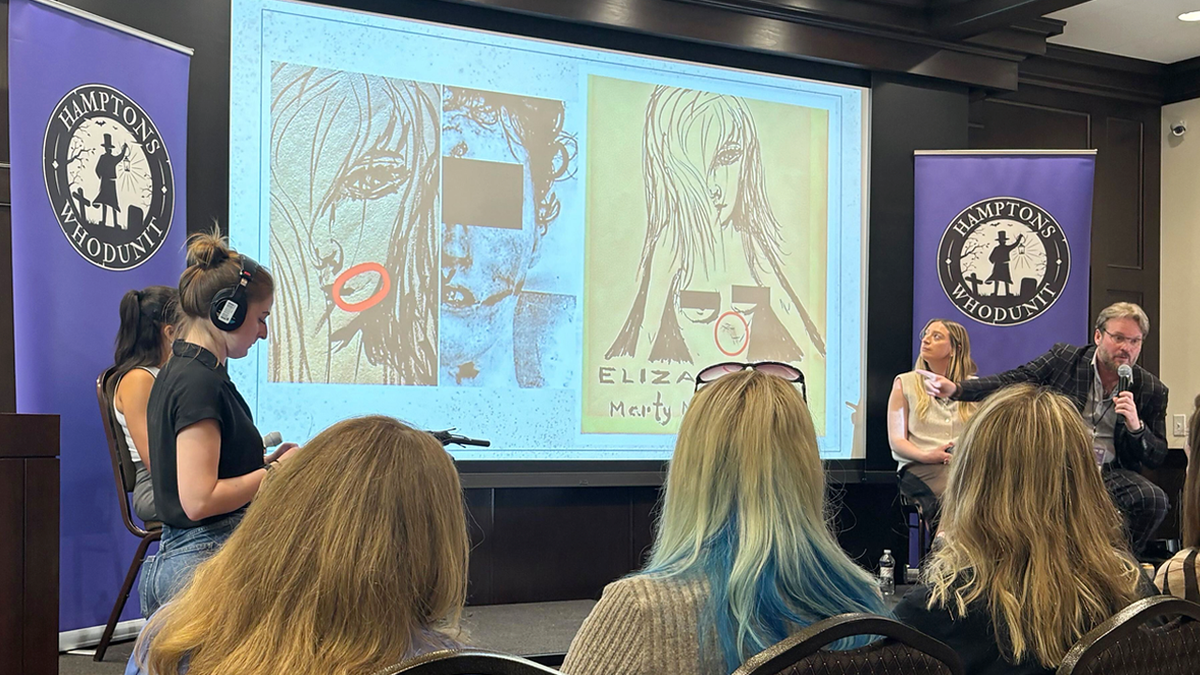
At the Hamptons Whodunit event on April 17, 2026, Baber, along with his team, detailed their extensive investigation into both the Black Dahlia and Zodiac cases, suggesting a possible connection between the two. Baber’s analysis indicated that the Zodiac’s “Z13” cipher might reveal the name of a primary suspect in the 1947 Black Dahlia murder, a theory first publicized in the Daily Mail and later shared with a broader audience at the East Hampton Library.
Baber’s finding, that the Zodiac’s “Z13” cipher depicts the name of a prime suspect in the 1947 Black Dahlia murder, was first revealed in the Daily Mail, and he presented them publicly Saturday at the East Hampton Library.
With help from a proprietary artificial intelligence software and self-taught knowledge of cryptography, he said the 13-character message is decoded to read “Marvin Merrill.” After further digging into social security records, he said he discovered that’s an alias for Marvin Margolis, who he said dated Short in the 1940s and had been on the LAPD’s suspect list after her murder and dismemberment. His AI software flagged the connection between the two cases, he added.
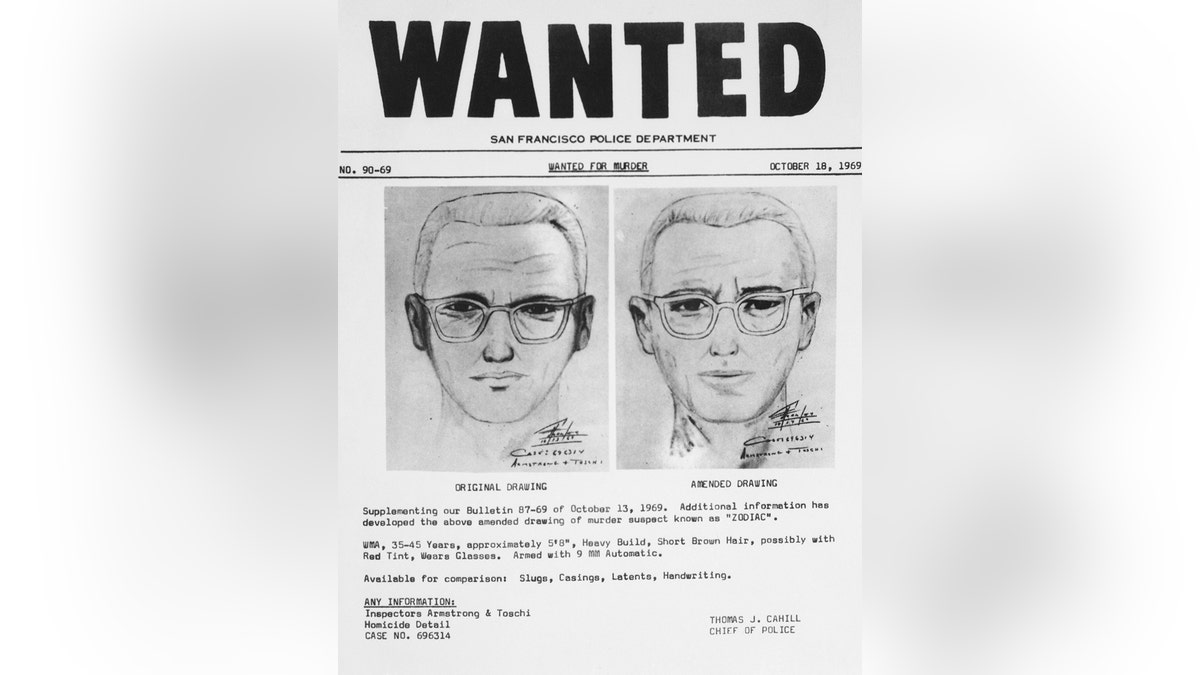
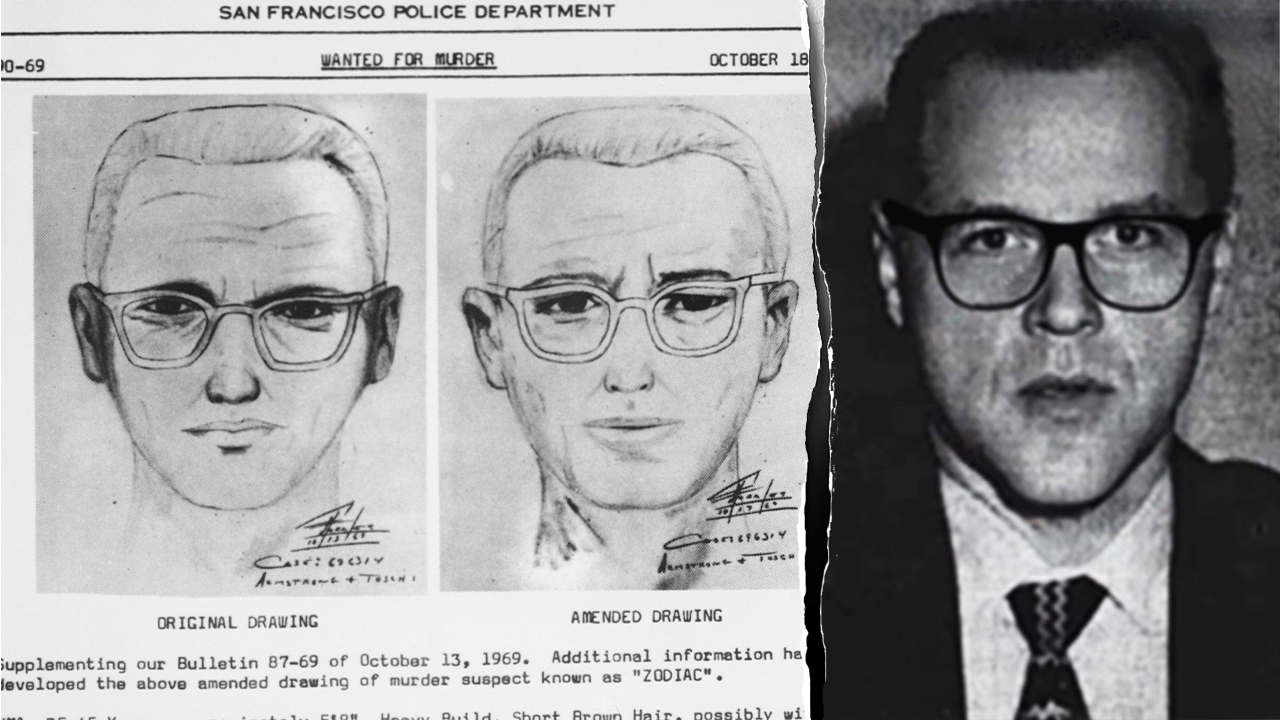
San Francisco police circulated composite sketches of the Zodiac killer based on witness descriptions following the slaying of a cab driver in San Francisco. The suspect is linked to four other slayings in Napa and Vallejo, California. (Getty Images)
Once he’d developed Margolis as a potential suspect, he said he went to visit his surviving son, who showed him a handwriting sample, which Baber said he suspected was a match to Zodiac both in terms of the handwriting and linguistically.
When Baber revealed his findings to the son, he recounted the following reaction:
“He immediately turned white, his hands started shaking and he reached across the table — when he grabbed my hand,” Baber said. “First time I’ve ever had an interview where they’ve initiated physical contact with me, and at that point, he says, ‘We’re gonna be OK.’”
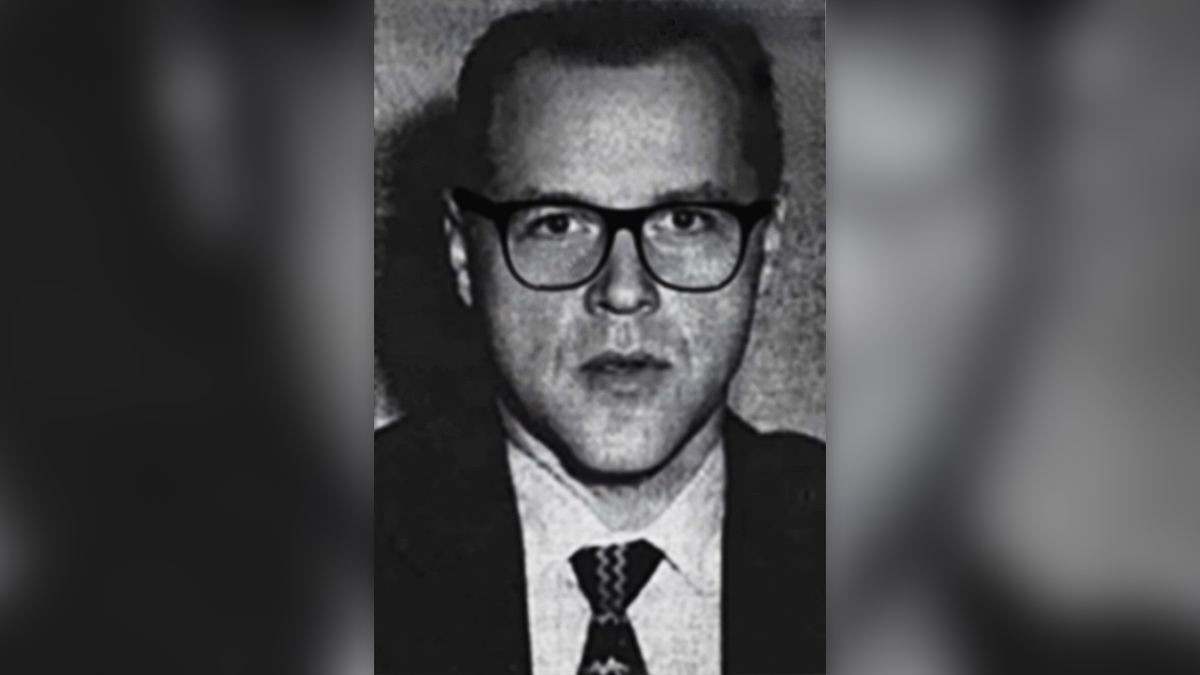
An image of Marvin Merrill in 1969. (Courtesy of Alex Baber)
The son provided writing samples showing both Zodiac and Margolis made the same phonetic spelling errors, Baber said.
“I said, ‘I hate to blow your mind, but he’s also suspect on record not from my agency but from the grand jury inquest with the original files for LAPD in 1947 of Elizabeth Short’s homicide,’” Baber recalled.
“He said, ‘Elizabeth? Well, let me show you something,’” Baber continued.
After flipping through his phone, he produced a haunting sketch, labeled “Elizabeth” across the bottom.
“The first thing I said is, ‘Holy s—,’” Baber said.
He provided images of a sketch Margolis drew 46 years after Short’s death, which he says showed additional detail when viewed in person — indentations on the page from a pencil tip used to add texture to the inked drawing. The alarming part about those features is that they coincide with injuries sustained by Short, he said, and that an impression of the word “Zodiac” is hidden within a black background on the bottom right of the image.
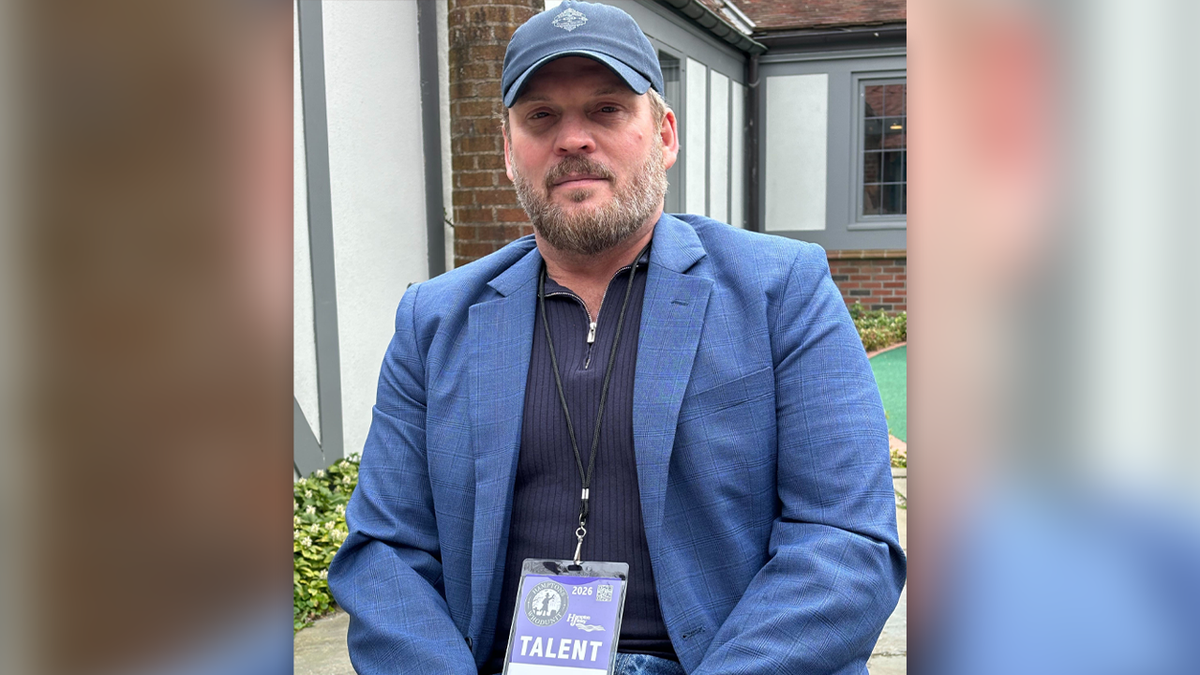
Alex Baber of Cold Case Consultants of America poses for a photo in the courtyard of the East Hampton Library during the Hamptons Whodunit event on Saturday, April 18. Baber presented evidence he says shows the Black Dahlia murder and Zodiac serial slayings were linked. (Michael Ruiz/Fox News Digital)
After Baber cracked the code, he said he shared it with the FBI and had it peer-reviewed by other experts, including one he described as a former National Security Agency codebreaker.
That one, he said, reverse engineered his decryption and realized that the key to the cipher was far simpler: the Black Dahlia victim’s first name, Elizabeth.
“Elizabeth was the key to solving the Z13,” he said. He said her name generates a numerical sequence used to rearrange the cipher.
Another notable connection Baber said he found was between Margolis and a close friend who specialized in encryption during World War II.
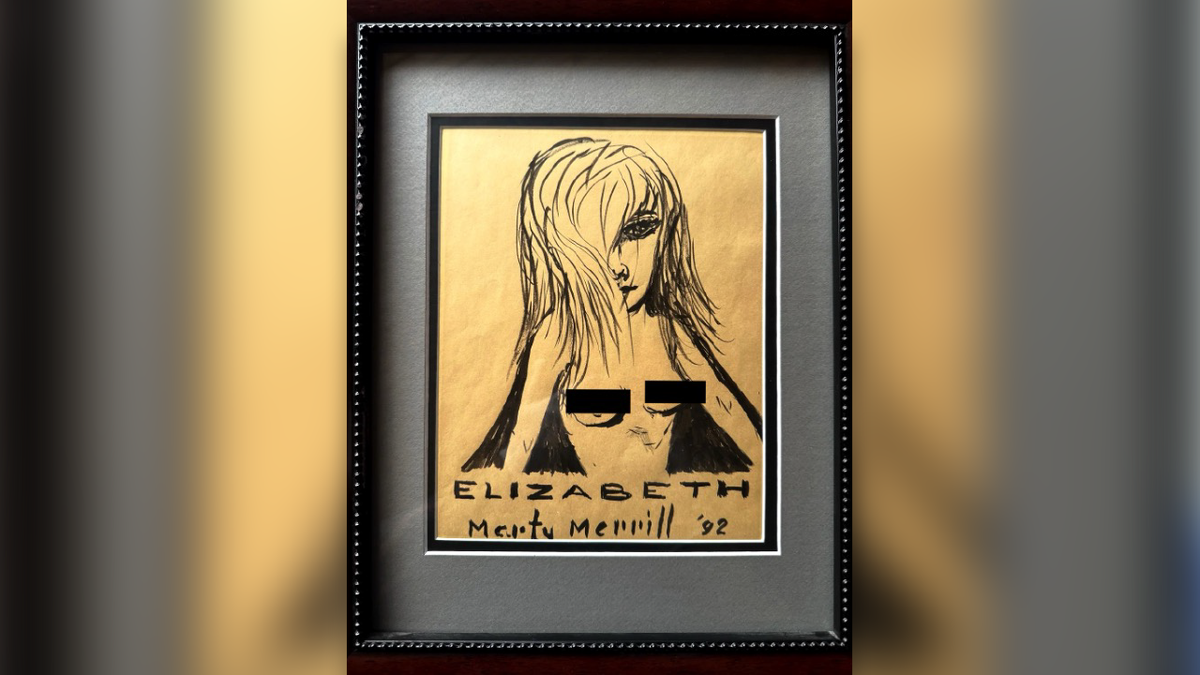
Baber said he believes this image shows Black Dahlia victim Elizabeth Short and was drawn by Marvin Margolis, who may have used the aliases Marvin Merrill and Marty Merrill. Margolis was an early suspect in Short’s 1947 murder. He was never charged and has since died. According to Baber, there are indentations from a pencil visible in person that add texture and new clues to the image, including wounds that are consistent with those found on Short and, more explosively, the word “Zodiac” in the lower right. (Alex Baber)
“His roommate Bill Robinson, who lived with him when he lived with Elizabeth Short, was actually one of the hand-picked cryptographers in World War II by General MacArthur,” he said.
Margolis lived with Robinson in Los Angeles at the time of Short’s murder, according to police records from the investigation Baber obtained and shared with his findings. The records also show Margolis was one of 22 persons of interest back in 1951.
John Kelly, a criminal profiler and psychoanalyst who has been following the case for years, told Fox News Digital he reviewed Baber’s materials and found his findings “have legs.”
“This person of interest has had numerous careers and failed at all,” Kelly told Fox News Digital.
But one that stood out was his service as a medic in the Pacific during World War II.
“The career field that produces the most serial killers is the medical field,” he said, pointing toward Dr. Harold Shipman, who killed more than 200 of his own patients, and nurse Charles Cullen, who killed dozens of his own.
Five of the 22 early suspects in Short’s murder were also doctors, the records show.
“In my opinion, this guy fits like a glove,” Kelly said.
<!–>
–>