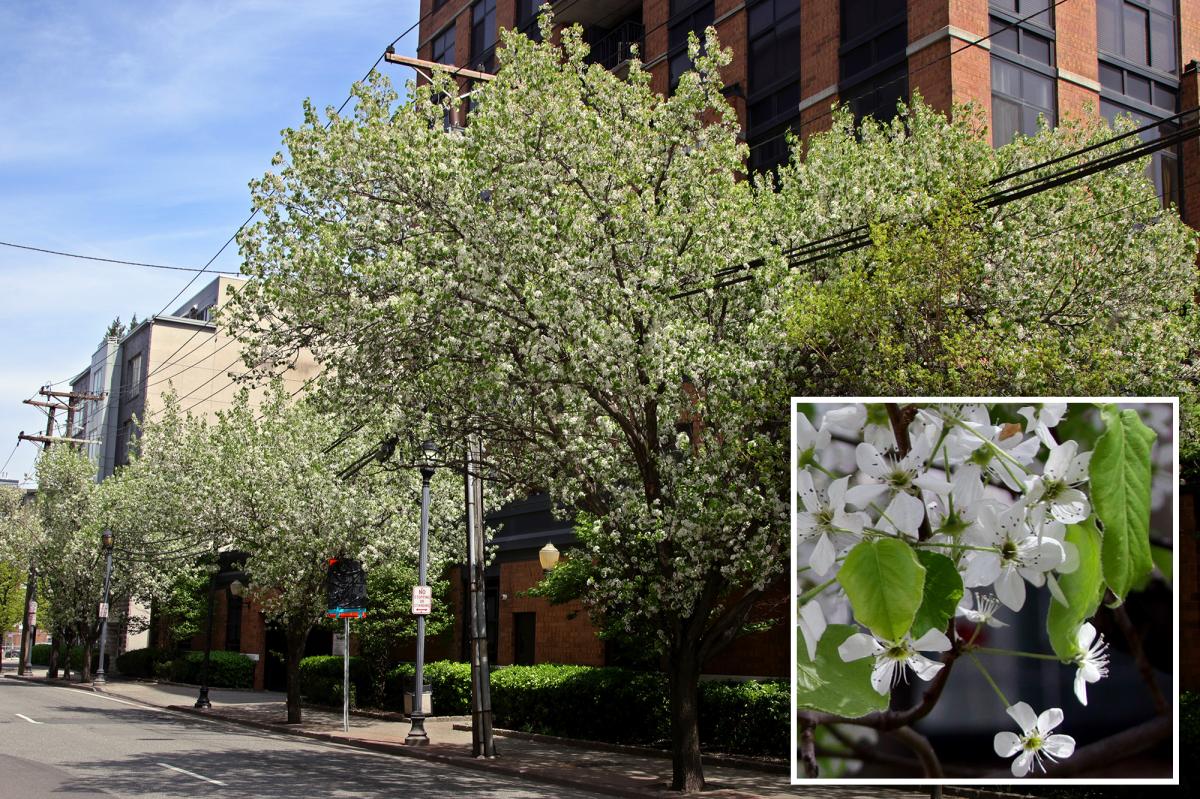


In New Jersey, the Bradford pear tree has earned a notorious reputation, akin to the legendary Jersey Devil.
As spring arrives, these visually appealing yet notoriously malodorous trees are starting to bloom across the Garden State, filling neighborhoods with a distinct and unpleasant fish-like scent.
However, their days are numbered.
A newly enacted law targets the Bradford pear tree, along with 29 other invasive plant species. These non-native plants have caused significant disruption to local ecosystems, posed public safety risks, and competed with native flora for resources. The law represents a decisive move to curtail their spread.
Signed by Governor Phil Murphy on his last day in office, January 20, this legislation marks a step toward a future with fewer invasive species under the leadership of the new Governor, Mikie Sherrill.
While these trees are also present in New York, the state has yet to implement a similar ban.
The Jersey rollout will be gradual. Bradford pear trees or other banned species won’t be cut down, no matter how many people hold their noses.
But by Spring 2027, no one will be allowed to propagate or import these now-banned plants without a waiver.
The ban will fully flower on Feb. 20, 2030, when the law makes it illegal to sell, distribute or import them or their seeds. Violation of the ban can result in fines of up to $2,000 .
Known for their tendency to split during storms, Bradford pears have long been a thorn in residents’ sides.
Complaints from locals and environmental groups finally helped lawmakers nip the problem in the bud.
Beyond the smell, these trees have been hogging sunlight and pushing out native plants local wildlife depend on.
And the “pear” is actually a hard brown nut that’s not edible.
“The Bradford pear trees are an offshoot of Callery pears, which were originally brought by ships from Asia in the early 1900s,” Jason Grabosky, Professor of Urban Forestry at Rutgers University, told The Post. “They became very popular and spread very quickly, becoming the Bradford pear.
“Because they’re not native to the area and they’re hugely invasive, they’re pushing out the native vegetation and changing the plant community, which changes the animal community.
“But once they began to spread, the horse was out of the barn, so to speak. Now, we’re trying to change the New Jersey landscape and phase out the Bradford pears with oaks and hickories.”
It won’t happen overnight, cautioned Grabosky.
“These types of changes take decades,” he said. “It’s going to take some time to control the spread and replace them with something else. It’s a public statement — let’s stop putting these trees into our eco-system and adopt a strategy to match a native species more fit for the environment.”
The New Jersey Department of Environmental Protection and Department of Agriculture will enforce the law’s rules, according to NJ.com.
The other 29 banned species include Norway maple, Tree of heaven, Mimosa tree, Porcelain berry, Japanese angelica tree, Autumn olive, and English Ivy.