
New York’s spending is climbing fast — and critics say the math is becoming harder to justify.
The state now devotes more money to its sprawling Medicaid system than to K-12 public schools, even as New York already leads the nation in Medicaid spending per resident, according to a striking new fiscal analysis.
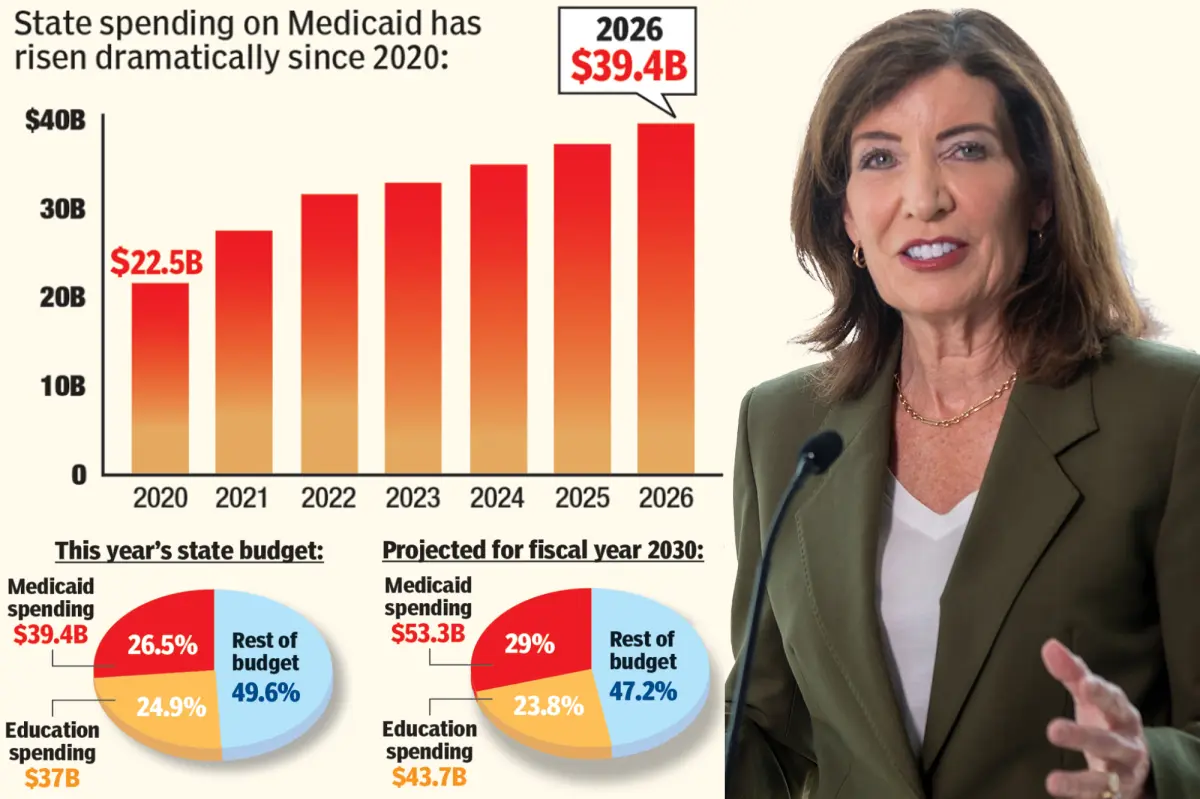
Taxpayers in New York covered $39.4 billion in Medicaid costs for the 2025-26 fiscal year, equal to 26.5% of the entire state budget, a new report from state Comptroller Tom DiNapoli found. That total surpassed the $37 billion the state spent on education.
The surge in Medicaid spending comes as federal officials examine Gov. Kathy Hochul’s administration and the state Medicaid program for potential waste, fraud and abuse.
“When Medicaid outranks math, the state’s fiscal diagnosis isn’t complicated,” Dr. Mehmet Oz, administrator of the US Centers for Medicare & Medicaid Services, told The Post. “Every tough decision New York makes to clean up Medicaid ensures that education is not crowded out.”
Most recently, the Trump administration turned its attention to multiple adult care centers serving seniors in New York City as part of a possible fraud inquiry.
Medicaid, the government health insurance program for low-income Americans, is funded through a combination of federal, state and local dollars.
New York already spends more per capita on Medicaid than any other state, while also ranking first nationally in education spending per student.
State spending on Medicaid has more than doubled over the last decade.
“In recent years, all [state] agency Medicaid spending has overtaken spending on School Aid,” DiNapoli’s report said, analyzing the effects of the state’s record-high $269 billion budget for 2026-27.
Combined spending on Medicaid and education accounts for more than half the current state budget.
DiNapoli’s analysis, citing Hochul’s budget division projections, said state Medicaid will soar in three years to $53.3 billion — 29% of state spending in three years — while School Aid spending will jump to $43.7 billion, or 23.8% — a nearly $10 billion gap.
“Spending on Medicaid is too high. It’s a free for all. There’s no accountability. They don’t care about the results,” said Bill Hammond, a fellow with the Empire Center for Public Policy who monitors New York’s health care policy.
ALSO READ: Support
Every sector of the influential health care industry receives Medicaid dollars — hospitals, nursing homes, medical clinics, drug manufacturers and home care services, Hammond said.
“It’s not about serving the public interest. It’s about serving special interests,” he said.
He said the foundation of the Medicaid program provides worthy services to needy patients including people with disabilities.
But in many cases New York overspends and wastes money, he said.
Adult care centers for elderly residents have proliferated and costs have skyrocketed, with prosecutors bringing cases against operators offering bribes for enrollment, he added.
Follow live updates on Mayor Zohran Mamdani’s socialist agenda and the latest in NYC politics
Albany’s generosity also comes at a hefty cost, with Hammond saying a majority of Medicaid recipients in New York have incomes above the poverty level.
DiNapoli said Medicaid spending is projected to increase by $5 billion to help medical facilities handle an influx of patients showing up in emergency rooms because federal cutbacks knocked them off the health insurance rolls.
Medicaid enrollment is projected to jump to 7.2 million, from 6.6 million, as non-citizens get booted off another state-run health insurance called the Essential Plan.
Hochul’s budget office reports that Medicaid spending increases are driven by minimum wage hikes for health care workers, rising medical and drug costs, higher reimbursement rates for hospitals and nursing homes, and continued growth in aging and other “high-utilization populations,” the analysis noted.
But DiNapoli also pointed out that the number of New York hospitals identified as “financially distressed” and eligible for emergency subsidies has also skyrocketed.
Some 75 of the state’s 261 hospitals, or 28.7%, were labeled financially distressed — a 200% from a decade ago. The surge in financially faltering hospitals triggered a 700% increase in federal and state aid to those facilities.
The just enacted state budget includes a $500 million in “one-time” assistance to distressed hospitals.
The increased Medicaid spending above the state spending cap coupled with a drop in health-related tax revenues will “require the State to make choices about the sustainability of the current trajectory of Medicaid spending,” the comptroller’s analysis said.