
Share this @internewscast.com
It seems the fierce struggle against the scales of justice has come to an end.
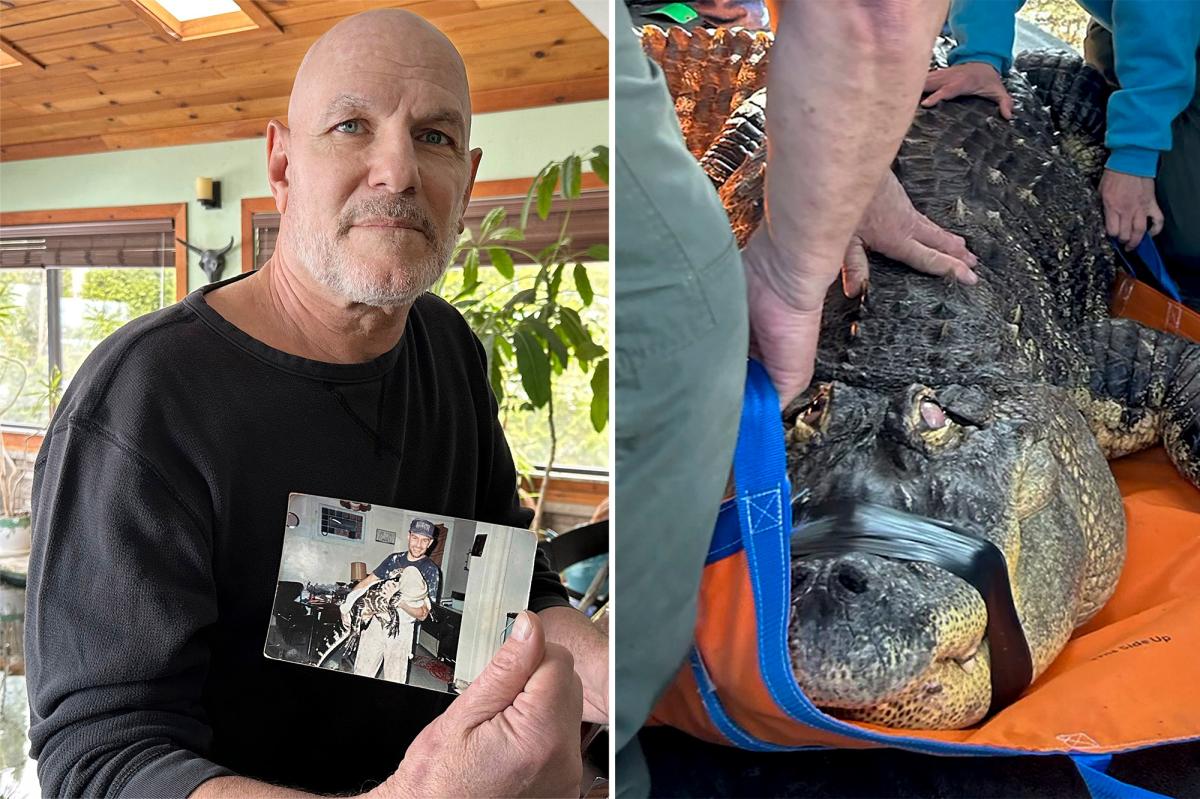
A man from New York has conceded defeat in his quest to retain his cherished pet alligator, affectionately referred to as his “emotional support animal.” Tony Cavallaro, a resident of Hamburg, had been the proud owner of the 12-foot, 750-pound reptile named Albert for over thirty years. Albert had become a fixture in the indoor swimming pool of Cavallaro’s home.
However, in March 2024, the Department of Environmental Conservation intervened and seized Albert. Cavallaro, 66, had been operating without a valid license for the alligator since it expired in 2021, prompting him to take legal action against the agency.
Cavallaro’s recent choice to abandon the lawsuit followed a ruling by a New York State Supreme Court justice. The court granted the state a 30-day window to reconsider Cavallaro’s application for a renewed license. When the application was denied, it became clear Cavallaro would need to initiate yet another application in court.

Faced with mounting legal expenses over two years, Cavallaro, who had procured Albert at a reptile show in Ohio when the alligator was just two months old, decided to relinquish his fight. The decision marks the end of a long-standing bond between a man and his unusual companion.
After two years of legal bills, Cavallaro, who had gotten Albert at an Ohio reptile show when the animal was two months old, decided to end his battle.
“They were never going to give me this alligator back, and it was going to cost me a ton more money. Another year and a half — at least — of stress,” Cavallaro said.
His attorney, Peter Kooshoian, told WIVB 4 this week that his client is distraught.
“Tony’s upset,” he said.
“He had the animal for over 30 years — never had a problem until this occurred. So he doesn’t feel he was treated correctly by the government.”

Cavallaro, who insisted that the animal was harmless and called him “just a big baby,” allowed people to enter the pool and pet it, which breaks the rules for animals that are classified as dangerous.
So even if he had won back Albert — who now lives in a rehabilitation center in Texas — his care of the pet would have been highly regulated.
“The DEC would’ve been all over him in terms of observation, checking in, and requirements. Ultimately, it didn’t seem worth it at the end of the day,” Kooshoian told the outlet.
“We discussed all the options and likely outcomes, and we decided at that point after two years of litigation we didn’t want to continue to do this.”
With Wires