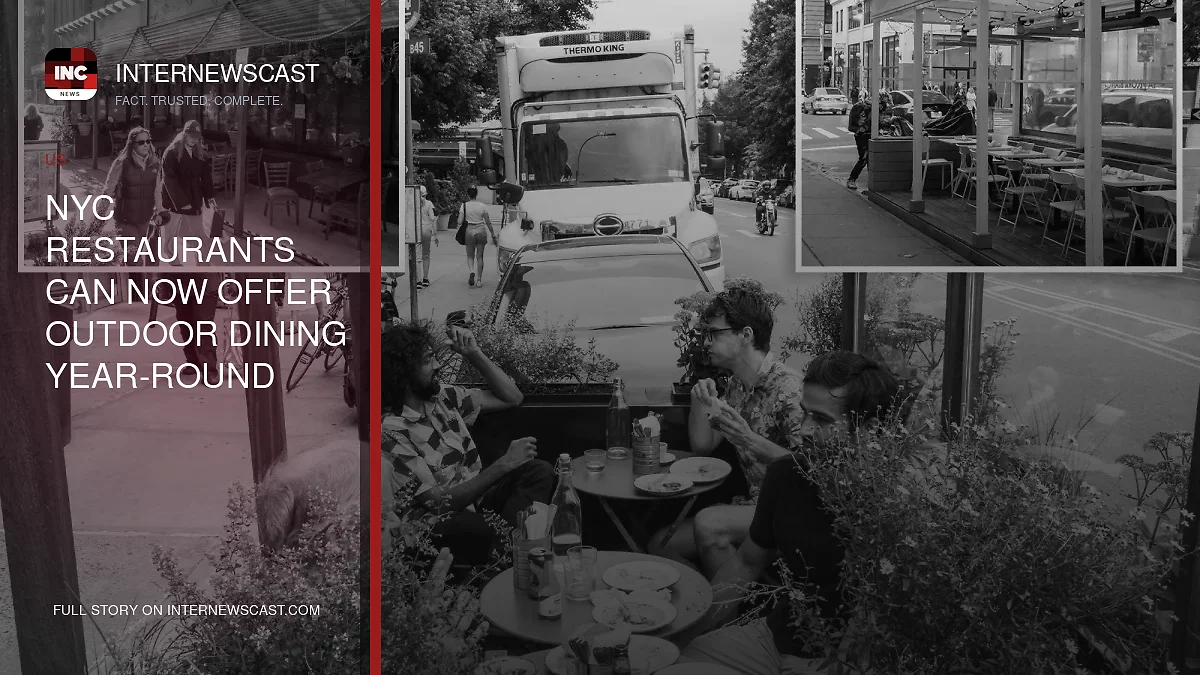

A fresh option is coming back to the menu for New York City restaurants.
The City Council voted by a wide margin Thursday to restore year-round outdoor dining across the five boroughs, rolling back a three-year-old decision that had limited the popular program to certain seasons.
As part of a package of measures, council members approved the use of vertical winterization coverings for restaurants and broadened the rules to cover roadway cafes, effectively undoing a 2023 vote that made those enclosed outdoor dining setups seasonal.
“As the summer comes to a close, I’m sure the last thing we want on our minds is the winter months, but restaurant owners are always looking ahead, and we in the council are looking out for them,” City Council Speaker Julie Menin said shortly before Thursday’s vote.
“After passing a package of bills on outdoor dining that we’re going to be doing today, sidewalk cafes can operate 365 days a year, and for many restaurants, the ability to serve customers outside all year round provides vital revenue,” Menin added.
Menin had pledged in February that the council would move to bring back year-round sidewalk dining in New York City.
“I thought it should be year-round because you’re burdening these businesses, making them pay this enormous fee for six months, and then they have to store the tables and chairs,” she said Thursday. “And most restaurants do not have space or capacity to store the table. So we had raised those concerns.”
In 2023, under the administration of former Mayor Eric Adams, the council tightened rules on the outdoor dining program, preventing restaurants from serving customers outside during the colder winter months.
Merchants complained that even those permits were hard to secure — last year more than 3,600 applications were in limbo due to the city’s “cumbersome” approval process.
Brooklyn Councilman Lincoln Restler, who proposed the revision to outdoor dining regs in October, said shutting down for the winter months “nearly broke outdoor dining in New York City.
“The explanation for why restaurants no longer offer outdoor dining is simple: It became stupidly expensive,” he said. “Stupidly expensive to have to build, deconstruct, and store these outdoor dining structures every year. For small neighborhood restaurants, it was just unfeasible.”
Lawmakers also noted that gripes about outdoor dining structures have largely evaporated, with just 11 complaints to 311 this year.
Restaurant owners who apply will be allowed to cover outdoor tables from Nov. 30 until March 31.
But the new regs come with limitations. Sidewalk cafes have to shut down at 11 p.m., and can lose their outdoor dining privileges if they have three violations for the same infraction within a two-year period.
Operators also have to keep the structures clear of trash, debris, graffiti, food scraps and vermin.
In the two most significant votes, lawmakers signed off on allowing winter coverings for outdoor dining by a 38-4 margin, and the move to expand to roadway cafes passed 37-5.
“This is great for our local economy, great for our neighborhood businesses, great for our workforce, and great for all of us to enjoy a meal outdoors,” Restler said.