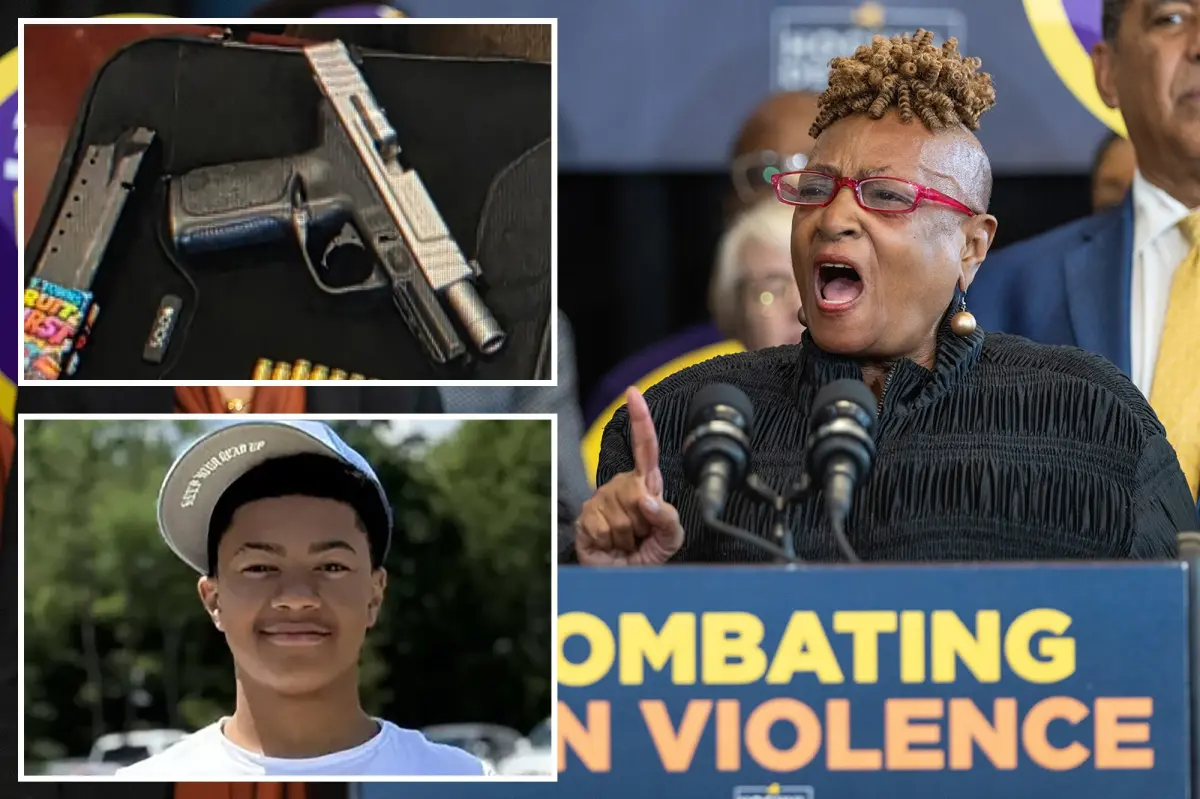

The number of teenagers arrested with guns in New York City has jumped 19% so far this year, even as police report some progress in addressing the city’s persistent youth-violence problem, new data show.
NYPD data show that 423 people under 18 have been arrested so far this year, compared with 355 during the same period in 2025.
At the same time, 76 juveniles have been shot this year—19% fewer than during the comparable period in 2025, when 93 were wounded by gunfire.
The 2026 total is also slightly below the 78 juveniles shot during the same period in 2024, according to the data.
The number of young people who shot someone has fallen 11% this year, with 83 alleged shooters recorded so far compared with 93 during the same period in 2025, the data show.
However, the number is up 6% from two years ago, when 78 juveniles were identified as having shot another person, according to the data.
Police blame part of the problem on New York’s 2017 “Raise the Age” law, which critics have labeled soft on crime and which requires juvenile offenders to be housed separately from adult inmates in correctional facilities.
Combined with laws that make certain offenses ineligible for cash bail, the policy means judges generally send juveniles to the city’s main detention centers only when they are accused of the most serious crimes.
“They’ve been sending the message for years that you’re not going to go to jail if you get caught with a loaded gun,” said retired NYPD Assistant Commissioner of Youth Strategies Kevin O’Connor. “It’s not only the guns, it’s the felony assaults with weapons.”
The NYPD says it has deployed several strategies to combat youth crime, including safety zones in areas heavily used by students.
The department also assigns specialized Youth Coordination Officers, supervised by sergeants, to track crime trends near schools and in surrounding neighborhoods while connecting young people with support programs.
The NYPD also promotes youth initiatives such as Saturday Night Lights, a citywide sports program, and programs operated by the Police Athletic League.
Still, the NYPD can do only so much to curb juvenile crime, said Kirk Burkhalter, a New York Law School professor who spent 20 years with the department before retiring as a first-grade detective.
“Sadly, this is nothing new,” he said.
“I remember being a cop in the 1980s and life was extremely cheap, and most of the folks doing the life-taking in large urban areas were very young,” Burkhalter said, pointing to the crack epidemic as the driving force at the time.
Experts say youth violence today often flares over neighborhood turf disputes between crews, as well as online threats and taunts exchanged by juveniles.
“It’s pretty amazing that there’s a segment of young people who are committing crimes that would be difficult to apprehend them for but for them putting the proceeds of those crimes—and holding an unlicensed firearm—on some type of social media, literally bragging about it,” he said.
Ultimately, Burkhalter said, the NYPD’s primary tool is making arrests.
“The police are literally keeping the top on the bottle,” he said. “The only thing they can do is apprehend offenders once they’ve committed a crime. There has to be a different approach.”
The latest youth shooting occurred when Jihadi Pack was shot in the stomach at about 6:20 p.m. Wednesday behind NYCHA’s King Towers building on West 115th Street near Malcolm X Boulevard, where he lived, police said.
He was rushed to Mount Sinai Morningside, but he could not be saved, authorities said.
A 57-year-old man – who law enforcement sources identified as a worker for the New York City Housing Authority – was struck in the right hand by an apparent stray bullet nearby, police and sources said. A 15-year-old was taken into custody but he wasn’t immediately charged, police said.
The motive wasn’t clear, cops said.
In another recent tragic case, 14-year-old Malakai Adams was fatally gunned down by a scooter-riding killer on Sept. 21 in Far Rockaway, Queens.
The shooter allegedly stole Adams’ ride after blasting him in the back around 3:40 p.m. but it wasn’t clear if that was the main motive, cops said. Investigators haven’t ruled out gang involvement in the shooting, police sources said.
Harlem mom Jackie Rowe-Adams, who lost two sons in shootings, wants inner city communities to do more to help stop youth gun violence, she said.
“Let’s tell the truth of what’s happening in the urban community,” said the 79-year-old who runs a group called Harlem Mothers and Fathers SAVE (Stop Another Violent End) and helps grieving parents who’ve lost their children to street violence.
“We as parents and community leaders must do more,” she said. “We must check their backpacks when they leave our houses. We have to check under mattresses. I’m not saying it will stop it, but it could really slow it down.”
Rowe-Adams’ son Anthony Bouldin was shot and killed in Harlem at the age of 17 in 1982. Sixteen years later, her 28-year-old son, Tyrone Bouldin, was murdered in Baltimore.
“You never, ever forget,” she said. “You learn to move on, but you never forget your loved ones. If I can save another mother or another family from feeling the hurt and pain, my life will not be in vain.”