
Share this @internewscast.com

The traditional 9-to-5 routine appears overwhelming for the younger generation today.
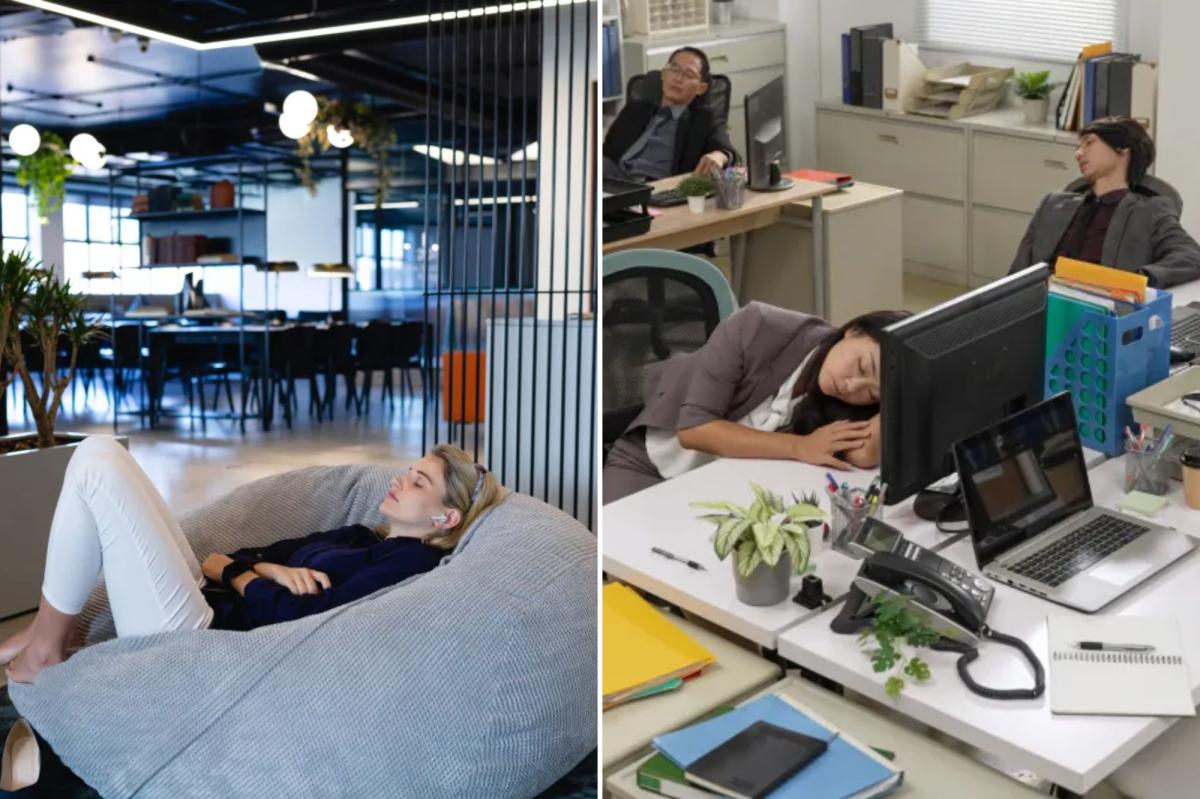
In response to mounting stress, many young professionals in New York City are abandoning their workstations in favor of more unconventional spots like store fitting rooms, movie theaters, and specially designated “nap pods.” These locations serve as refuges where they can grab a quick snooze, unwind, or even experience a full-scale emotional release during the workday.
What used to be a lunch break has now transformed into a coveted hour for a restorative nap.
Ben Sanderson, a TikTok content creator, recently went viral with a clip that amassed over a million views. In it, he admitted to indulging in a midday nap at an AMC theater in Midtown.
For a $15 ticket, Sanderson settled into a recliner, ready for a slumber.
“I dozed off in the recliner during the film, put in my earbuds, and used my beanie as an eye mask. It was one of the most refreshing naps I’ve ever had,” he shared.
He called movie theaters the “perfect place to nap in NYC” for commuters who live in Brooklyn, Staten Island, or New Jersey and can’t just dash home for a quick siesta during the work day.
But theaters aren’t the only option.
Other Gen Zers have flocked to Nap York, a series of private, rentable capsules in New York City designed for power naps, overnight stays, or just a much-needed temporary escape from the city chaos.
Each soundproofed pod comes with a mattress, lighting, and fan — making it a futuristic oasis for the sleep-deprived.
With flagship locations near Central Park and the Empire State Building, rates can run from about $83 to more than $280 a night — or around $27 an hour for a quick recharge — plus taxes, fees and a refundable $50 deposit, proving that even a midday meltdown in NYC comes at a premium.
An hour of shut-eye isn’t the only thing NYC Gen Zers are taking a break in their workday for.
Some young folks have go-to spots where they “crash out” — or, for the uninitiated, have a full-on mental breakdown in Zoomer lingo.
One creator said she felt “safe losing it” in the Zara fitting room in SoHo thanks to its secluded stalls.
The zillennial also pointed to Citi Biking over the Williamsburg Bridge mid-cry because it made her “feel like the main character” in a movie.
The Bowery J/Z subway station also made her list since it’s “so hot in there no one will know if you’re crying or sweating.”
And for a sweeter meltdown, the content creator swore by Veniero’s Pasticceria & Caffe in the East Village, saying it’s therapeutic to cry over cannolis.
More spots making the cry-safe cut among Gen Zers include the field on Governors Island facing the Statue of Liberty for a cinematic sob session and uptown’s Museum of Natural History for a dose of “Night at the Museum” nostalgia.
Additional New Yorkers pointed to Saint Paul’s Chapel churchyard in FiDi for “privacy when the mood strikes,” while the Oculus was dubbed ideal for “those who like to feel insignificant,” and more.
While it’s easy for older generations to roll their eyes at these anxious youngsters, experts like Forest Hills-based neuropsychologist Dr. Sanam Hafeez say it’s not as simple as deeming it laziness — it’s biology demanding a break.
“Your body remembers. After months or years of working in systems fueled by deadlines, ambiguity and zero recovery time, your nervous system stops politely asking for recovery and starts demanding it,” she told The Post.
“Skipping out is self-care. For many of these kids, that’s the best tool they know,” she said.
Napping, she says, is science-approved and more than just a midday indulgence.
There has never been a “culture of built-in recovery time during work hours,” Hafeez noted. “So, people are now identifying a problem and fixing it with what they have.”
Even a 10- to 20-minute power nap on a lunch break can reset your brain, boost decision-making, and restore patience.
Why now? Because generations before them seemed to have no choice but to grin and bear it through a long and stressful workday.
“This generation didn’t cause employee suffering. They just refused to ignore it. And whether older generations like it or not, I think it’s going to change the dialogue for all of us,” Hafeez said.
Unlike millennials or Gen X, these young adults were raised in a world where talking about mental health is normal, so they set boundaries and speak up before they hit burnout (even in surprising or strange ways).
Her advice for surviving the modern workday is simple: “stop thinking of rest as a reward.”
Instead, she says to see it as a necessity, but that also means knowing that everything has a time and place.
She urges young New Yorkers to use their downtime to actually rethink their jobs and lifestyles — not just schedule their naps or bathroom breakdowns around their 9-to-5.
She stressed that rest itself “will not change a poor manager, an unmanageable workload, or a company culture that doesn’t have your back.”
However, using “breathwork and walking for a mental rest” moment, any chance you can “will allow you to regulate” if, like many, you’re not able to just leave your office and nap elsewhere.