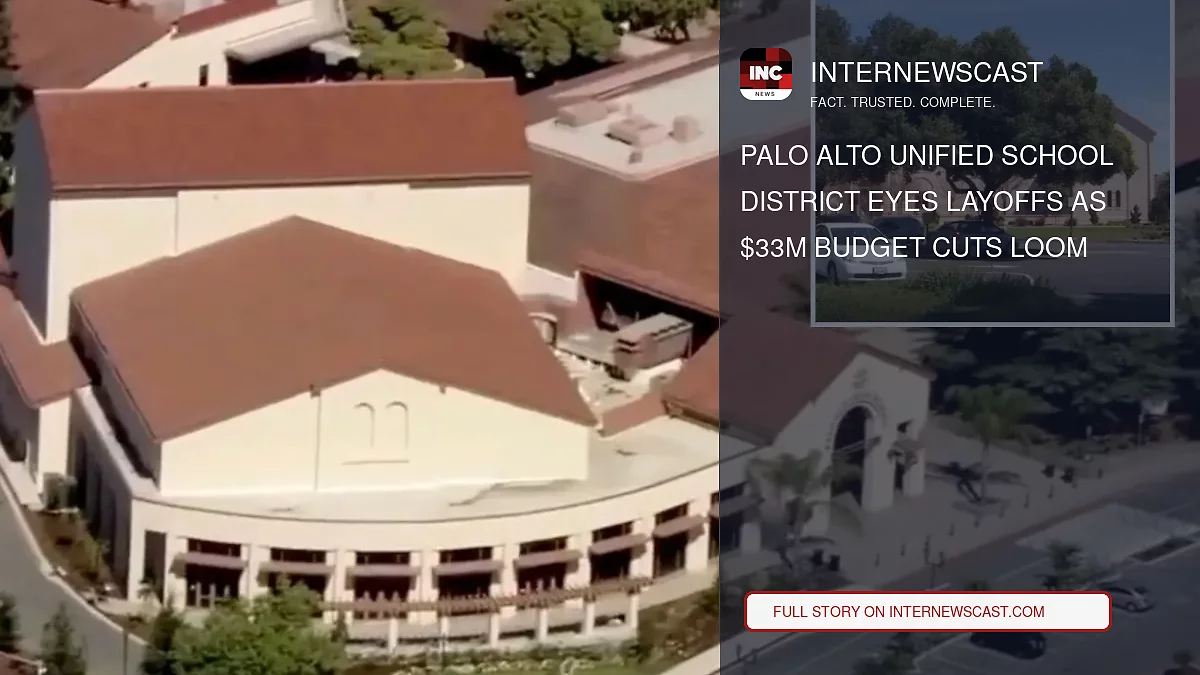

A Northern California school district is bracing for a severe financial squeeze, with Palo Alto Unified School District looking at $33 million in budget reductions for the next academic year — a shortfall that could trigger major staff layoffs.
New Superintendent Jason Glass said closing the gap will likely dominate the school board’s agenda for the next two years. He has warned that the choices ahead will be difficult, and in many cases, deeply unpopular.
Palo Alto is not alone in facing fiscal pressure. Across California, other districts are confronting similar challenges, including Sacramento City Unified School District, which is working to avoid a state takeover after county education officials rejected its latest financial recovery plan.
In Palo Alto, Glass said he anticipates heated debate, blame and even personal criticism as the district weighs its options. According to the Palo Alto Daily Post, he expects some residents to argue that the district is overstaffed or that the problem could be solved through smaller savings on items like paper, lightbulbs and copy machines.
But Glass said the size of the deficit makes those kinds of efficiencies nowhere near enough. Instead, he said trustees will have to look at cutting programs, services and positions that many families and employees consider important.
“We’re going to have to fire people,” board member Shounak Dharap said at an Aug. 18 meeting, according to the Daily Post.
Glass acknowledged the emotional toll the process is likely to take. “These conversations are going to make people scared and angry. We have to have them anyways,” he said.
District leaders plan to start by reducing the need for layoffs where possible, including keeping vacant jobs open and reassigning current employees to other roles. Some reductions are already underway at the district office, where Glass has opted not to fill certain administrative positions.
Board member Shana Segal said she wants the board to discuss making another attempt to renew the district’s parcel tax through a special election next spring. The proposed renewal fell short in the June 2 election.
A significant portion of the district’s projected deficit stems from recently approved labor agreements that gave employees a 10.4% raise and $10,000 in bonuses, according to the Daily Post.
Dharap said the board had wanted to avoid the possibility of a strike as a new superintendent took over the district, but the agreements have now left Glass in the “unenviable position” of having to recommend cuts.
Former board member Ken Dauber criticized the board for approving what he called “unaffordable and excessively generous” labor contracts.
“The board has created a financial crisis entirely of its own making,” Dauber said at Tuesday’s meeting. “This is a disastrous outcome that was entirely foreseeable … and unfortunately now the community is going to have to pay that consequence.”
The district faces a March 15 deadline to issue layoff notices, Chief Business Officer Charen Yu said.
And the financial pressure is expected to continue. Yu said the board is looking at another $10 million in reductions for the 2028–29 school year.
One of the biggest variables will be property tax revenue, an especially important source of funding for Palo Alto Unified.
The district expects to get updated property tax projections from the Santa Clara County Assessor’s Office in early September, according to Yu.


