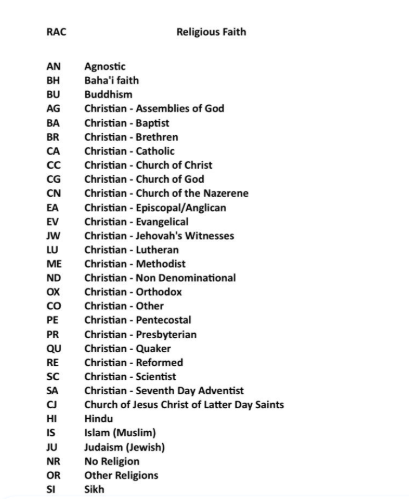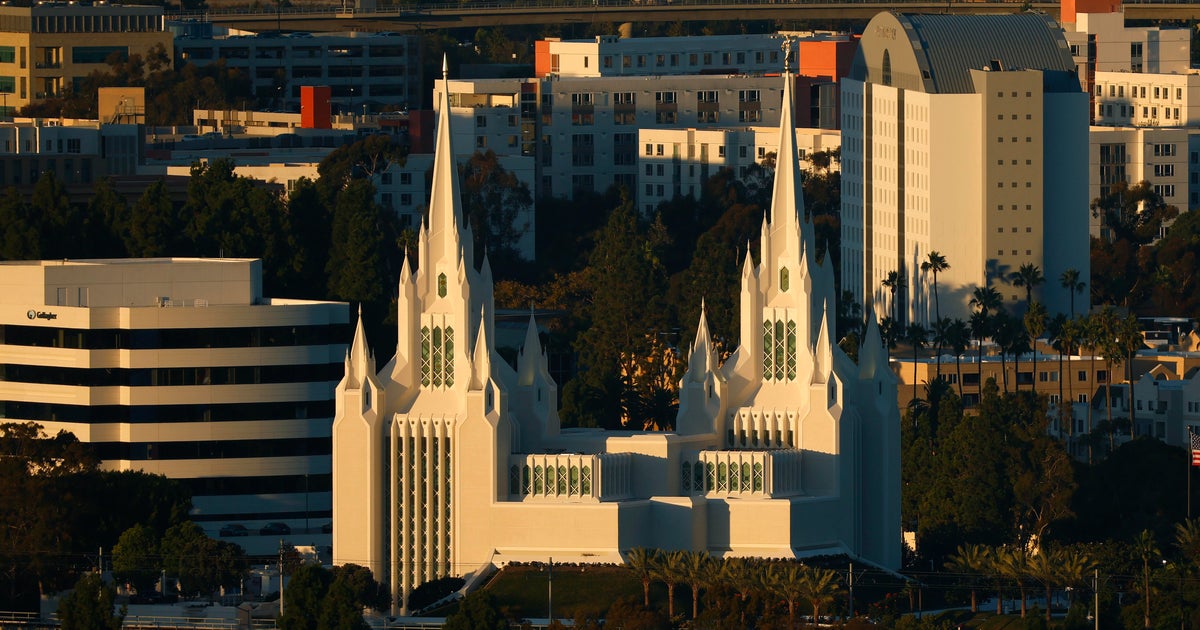

The Pentagon has revised its religious affiliation codes following criticism from members of the Church of Jesus Christ of Latter-day Saints, who were displeased with the initial classification that did not label LDS as a “Christian” faith.
Originally, on Friday, the Department of Defense reduced the extensive list of over 200 religious affiliation codes to 31, aiming to help military chaplains provide more efficient religious support. Among the 31, the Church of Latter-day Saints was included, but notably absent from the 21 groups recognized explicitly as “Christian.” This omission sparked discontent among LDS members and drew the attention of Utah Republican Senators John Curtis and Mike Lee.
“It is unacceptable for a government entity to characterize a faith in a manner that contradicts the religion’s own foundational tenets,” Senator Curtis expressed in a post on X on Saturday.
Responding swiftly to the backlash, the Pentagon issued an updated list on Monday afternoon. This time, they opted to omit the “Christian” descriptor altogether, simplifying the entries to include only the code and name of each religious faith.
In a clarifying statement, the Pentagon acknowledged that the previous list, shared publicly on X by chief Pentagon spokesman Sean Parnell, contained “redundant and unnecessary labeling,” which has since been corrected. The statement emphasized the purpose of the changes: “To clarify the work of chaplains and simplify the duties of commanders, the Pentagon has consolidated and streamlined the list to approximately thirty codes, using labels that had been previously adopted for these faiths. The Pentagon’s role is not to settle theological debates but to ensure that genuinely held beliefs are respected and supported within our ranks.”
“In order to clarify the work of chaplains, and simplify the work of commanders, the Pentagon has consolidated and simplified the list to roughly thirty codes – using the previously used labels for faiths,” the Monday statement said. “The Pentagon’s job is not to adjudicate theological debates, but to ensure sincerely-held faith is respected and encouraged in our ranks.”
In response to the statement, Lee posted on X, “I agree with this statement, and am grateful to [Secretary] Hegseth for correcting the error.”
Hegseth, who often invokes his Christian faith, began monthly voluntary prayer services early in his tenure and has welcomed the Christian evangelical pastor Doug Wilson to speak. Wilson, whose beliefs include that it was a mistake to give women the right to vote, has argued Mormons are not Christian.
In a video post from December, Wilson said, “Mormonism is not Christian. Not to put too fine a point on it – the Christian faith is monotheistic and Mormonism is polytheistic.” The nonprofit civil rights organization FAIR, which supports the LDS Church, argued that is not true – that the church believes in the Father, the Son, and the Holy Ghost, not multiple gods.
On Sunday, before the Pentagon updated the list, Lee said the government should not weigh in “on doctrinal disputes between various religious denominations.”
Some of the other religions represented on the list include Presbyterian, Quaker, Church of Christ, Christian (Non-Denominational), Catholic, Episcopal, Islam, Hindu, Sikh, and Judaism.
The list is part of Hegseth’s effort to overhaul the Military Chaplain Corps that he announced in December. His goal is to create “a top down cultural shift, putting spiritual wellbeing on the same footing as mental and physical health.” Amid this effort, the U.S. Army Chief of Chaplains Major Gen. William Green Jr. was fired from his position in April.
Hegseth initially announced the list of codes would be trimmed from over 200 to just 31 back in March after he said an internal review committee determined the roughly 30 codes were the most used by service members, but the Pentagon didn’t release the list publicly until Friday.
The codes are shown below: