Share this @internewscast.com
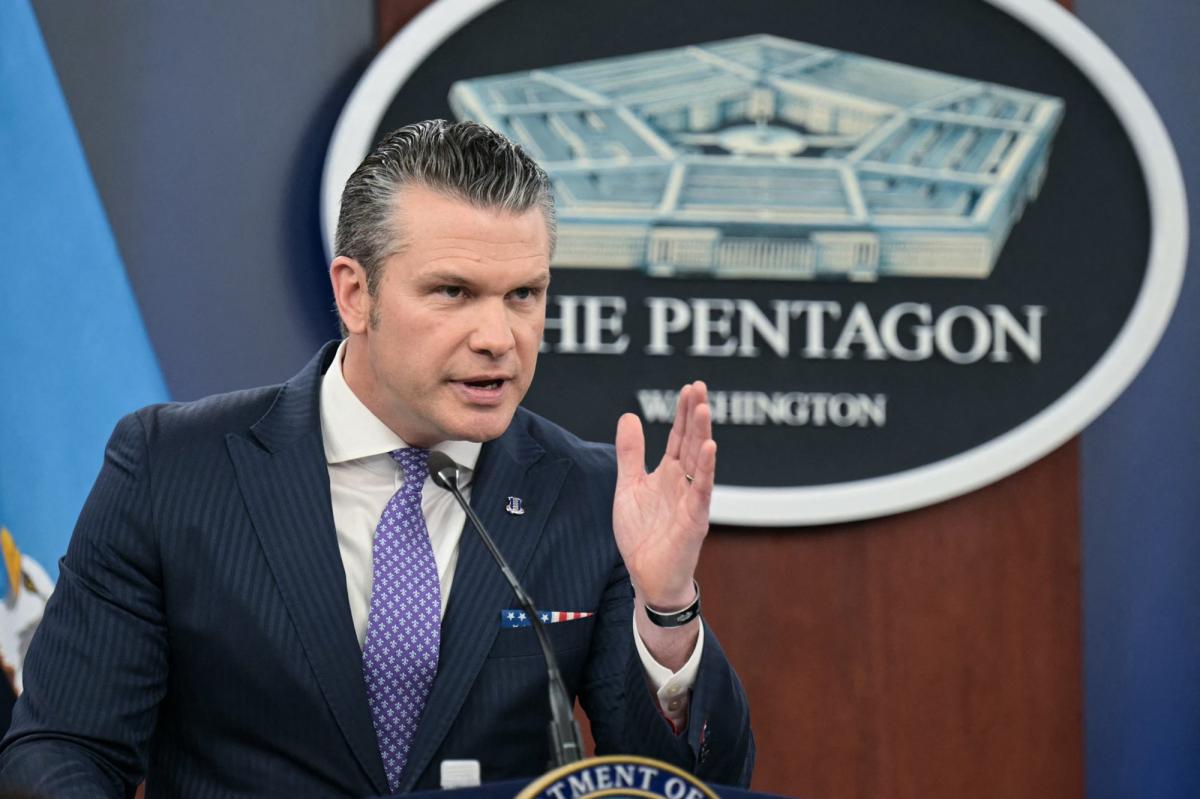
On Thursday, Defense Secretary Pete Hegseth announced a significant policy change, permitting service members to carry their personal firearms on military bases. This decision, rooted in the Second Amendment, comes in response to recent shooting incidents at various military installations across the United States.
Hegseth shared a video on X, revealing his plan to sign a directive that empowers base commanders to approve requests from troops wishing to carry privately owned guns. The guideline operates under the assumption that such measures are essential for individual safety.
Should a service member’s request to carry a firearm be denied, Hegseth emphasized that a comprehensive written explanation must be provided.

“Our military bases have effectively served as gun-free zones,” Hegseth explained.
“Without being in a training scenario or serving as a military police officer, service members were not permitted to carry their firearms for personal protection on base.”
In the aftermath of shooting incidents on military grounds, the question of why service members couldn’t access their weapons has frequently surfaced.
Such shootings have ranged from isolated events between service members to mass casualty events, such as the shootings by an Army psychiatrist at Texas’ Ford Hood in 2009 that left 13 people dead.
Hegseth cited some of the events in his video, including a shooting that injured five soldiers at Fort Stewart in Georgia last year.

Officials said the shooter, an Army sergeant who worked at the base, used his personal handgun before he was tackled by fellow soldiers and arrested.
“In these instances, minutes are a lifetime,” Hegseth said.
“And our service members have the courage and training to make those precious, short minutes count.”
Defense Department policy has prohibited military personnel from carrying personal weapons on base without permission from a senior commander, with strict protocol for how the firearms must be stored.
Typically, military personnel must officially check their guns out of secure storage to go to on-base hunting areas or shooting ranges, then check all firearms back in promptly after their sanctioned use.
Military police are often the only armed personnel on base, outside of shooting ranges, hunting areas or in training, where soldiers can wield their service weapons without ammunition.
Tanya Schardt, senior counsel at the Brady gun violence prevention organization, said in a statement that Defense Department leaders and the military’s top brass have opposed relaxing the current policy, which was originally enacted under President George H.W. Bush.
“Our military installations are among the most guarded, protected properties in the world, and they’ve never been ‘gun-free zones,’” Schardt said.
“If there is a problem with violent crime on these installations, then the Secretary of Defense has an obligation to alert the American people and describe how he’s working to prevent that crime.”