Share this @internewscast.com
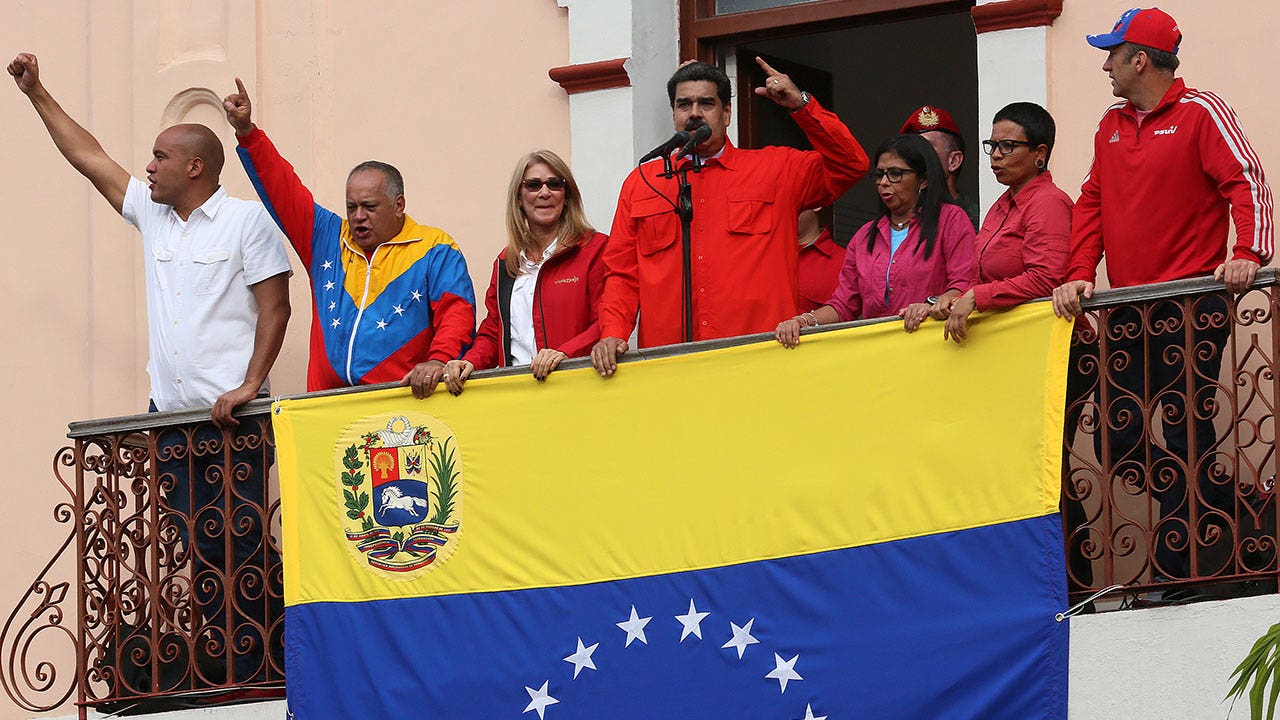
As Venezuela transitions away from the leadership of Nicolas Maduro, experts and former officials caution that the nation might not be heading toward democracy. Instead, it could face heightened instability and internal strife as potential successors vie for power, potentially creating a scenario more chaotic than Maduro’s regime.
According to Marshall Billingslea, who previously served as the assistant secretary for terrorist financing and financial crimes at the U.S. Treasury Department, Maduro’s departure has unveiled a fragmented system. It was never unified under a singular leader but rather consisted of various competing criminal factions, each now acting independently.
“The cartel has always operated as a loose network, with each faction leader maintaining their power base,” Billingslea explained. “While Maduro served as the figurehead, he lacked absolute control. We are now witnessing these factions branching out on their own initiatives.”

Images released by the U.S. State Department portray Venezuelan Defense Minister Vladimir Padrino López and high-ranking official Diosdado Cabello, both of whom are accused by U.S. authorities of being involved in corruption and drug trafficking activities.
Billingslea highlighted that the capture of Cilia Flores, Maduro’s wife, holds significant weight, comparable to Maduro’s own removal.
“Capturing Cilia Flores is notably impactful because she was the strategic mind behind operations and effectively eliminated potential adversaries,” he noted. “Her absence is just as pivotal.”
Billingslea outlined what he described as five competing power centers, four within the regime and one outside it. “The removal of Maduro, and particularly the removal of Cilia Flores, leaves a huge power vacuum in the cartel,” he said. “We haven’t yet reached a new equilibrium here.”
In the interim, he foresees a high risk of internal power struggles, violence and further repression as rival factions maneuver to secure control in a post-Maduro Venezuela. But he notes that the Trump administration anticipates this and is executing a clear-eyed strategy to first secure U.S. core interests, followed by the gradual restoration of democracy, all without needing American “boots on the ground.”
Delcy Rodríguez takes over, but power remains contested
Delcy Rodríguez, Maduro’s longtime vice president, was quickly installed as interim leader. But her rise has done little to reassure Venezuelans or international observers that meaningful change is coming.
Rodríguez is deeply embedded in the Maduro system and has long played a central role in overseeing Venezuela’s internal intelligence and security apparatus. According to regional reporting, her focus since taking office has been consolidating control within those institutions rather than signaling political reform.
Former U.S. and regional officials say Delcy Rodríguez’s rise has revived long-standing questions about who truly influences her decisions as she moves to consolidate power.
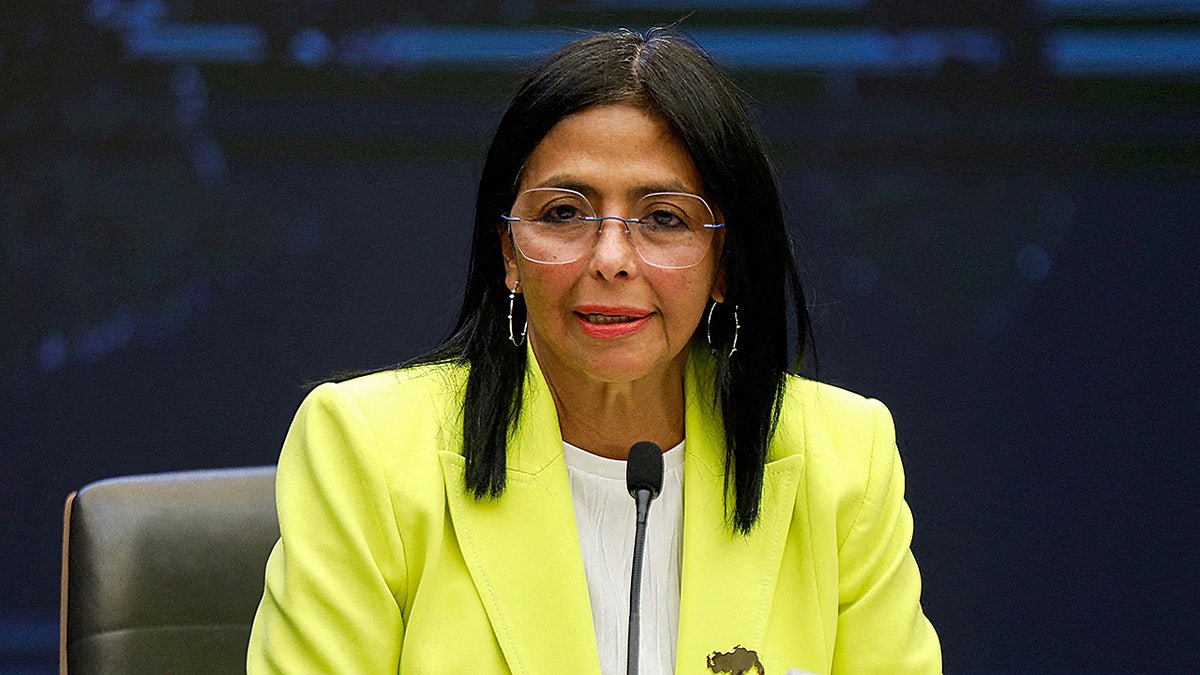
Venezuela’s Vice President Delcy Rodriguez addresses the media in Caracas, Venezuela, on March 10, 2025. (Leonardo Fernandez Viloria/Reuters)
Those officials point to Rodríguez’s deep ties with Cuban intelligence, which helped build and operate Venezuela’s internal security and surveillance apparatus over the past two decades. Cuban operatives played a central role in shaping how the regime monitored dissent and protected senior leadership, embedding themselves inside Venezuela’s intelligence services.
At the same time, former officials say Rodríguez appears to be testing cooperation with Washington, creating uncertainty over how much leverage the United States actually holds. Some view her limited engagement with U.S. demands as tactical, aimed at buying time while she works to secure loyalty inside the regime and neutralize rival factions.
A former Venezuelan official previously told Fox News Digital that Rodríguez “hates the West” and represents continuity with the Maduro regime, not a break from it.
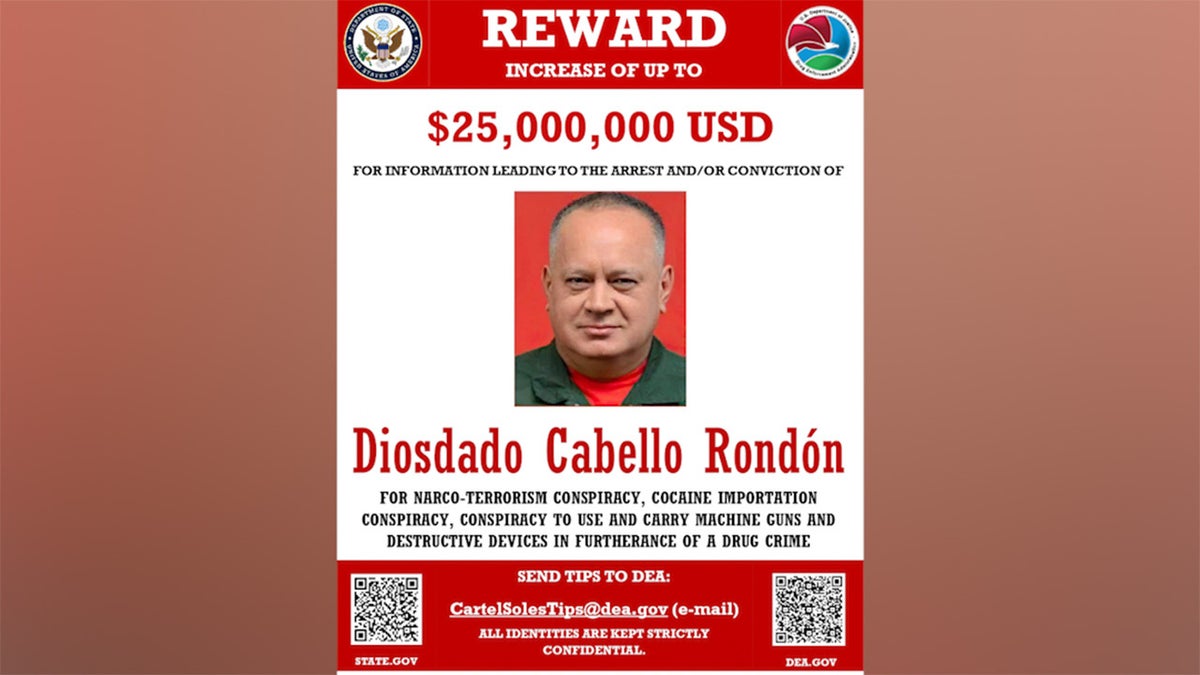
A U.S. State Department “wanted” poster for senior Venezuelan regime figure Diosdado Cabello Rondon, whom U.S. authorities have accused of ties to narcotics trafficking and narco-terrorism (U.S. State Department )
Cabello mobilizes loyalists
Diosdado Cabello, one of the most feared figures in the country, has emerged as a central player in the post-Maduro scramble for control.
Cabello, who wields influence over the ruling party and interior security, has been rallying armed colectivos and loyalist groups. Those groups have been active in the streets, detaining opponents and reinforcing regime authority through intimidation.
Sanctioned by the U.S. Treasury for corruption and alleged ties to drug-trafficking networks, Cabello is widely viewed as a figure capable of consolidating power through force rather than institutions.
Jorge Rodríguez holds the levers of control
Jorge Rodríguez, president of the National Assembly and brother of Delcy Rodríguez, remains one of the regime’s most important political operators.
Rodríguez has served as a key strategist for Maduro, overseeing communications, elections and internal coordination. Recent reporting indicates he continues to work closely with his sister to maintain control over intelligence and security structures, reinforcing the regime’s grip despite Maduro’s removal.
Experts say Rodríguez could play a central role in shaping any managed transition that preserves the system Maduro built.

U.S. State Department “wanted” posters show Venezuelan Defense Minister Vladimir Padrino López accused by U.S. authorities of conspiracy to distribute cocaine on board an aircraft registered in the U.S.
Padrino López
Defense Minister Vladimir Padrino López, long considered the backbone of Maduro’s survival, remains a critical figure as well.
While Padrino López has not publicly positioned himself as a successor, analysts note that the armed forces are no longer unified behind a single leader. Senior generals are split across competing factions, raising the risk of internal clashes or a shift toward overt military rule if civilian authority weakens further.
Beyond the power struggle among regime elites, Venezuela faces a broader danger.
Large parts of the country are already influenced by criminal syndicates and armed groups. As centralized authority weakens, those actors could exploit the vacuum, expanding control over territory and smuggling routes.
Experts warned that an uncontrolled collapse could unleash forces more violent and less predictable than Maduro’s centralized repression, and the events unfolding now suggest that risk is growing.
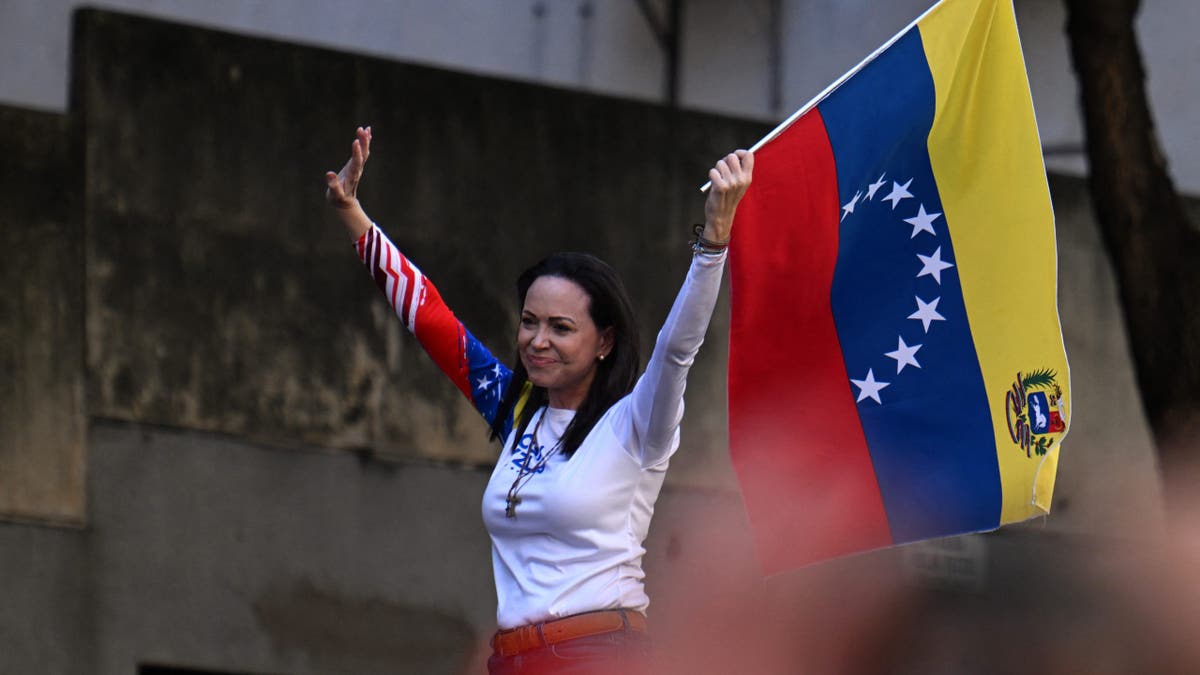
Venezuelan opposition leader Maria Corina Machado waves a national flag during a protest called by the opposition on the eve of the presidential inauguration, in Caracas on Jan. 9, 2025. (Juan Barreto/AFP via Getty Images)
Outside the regime, opposition leader María Corina Machado remains the most popular political figure among Venezuelan voters. But popularity alone may not be enough to translate into power.
Machado lacks control over security forces, intelligence agencies or armed groups. As repression intensifies and rival factions maneuver, her ability to convert public support into political authority remains uncertain.

Police patrol in La Guaira, Venezuela, Saturday, Jan. 3, 2026, after U.S. President Donald Trump announced that President Nicolás Maduro had been captured and flown out of the country. (AP Photo/Matias Delacroix)
Maduro’s fall, analysts say, did not dismantle Venezuela’s power structure. It fractured it.
With armed loyalists in the streets, rival factions competing behind the scenes, and an interim leader struggling to assert authority, Venezuela now faces a dangerous period in which the aftermath of Maduro’s rule could prove more chaotic — and potentially more brutal — than what came before, experts say. For Venezuelans, the question is no longer whether Maduro is gone, but whether anything that replaces him will be better.