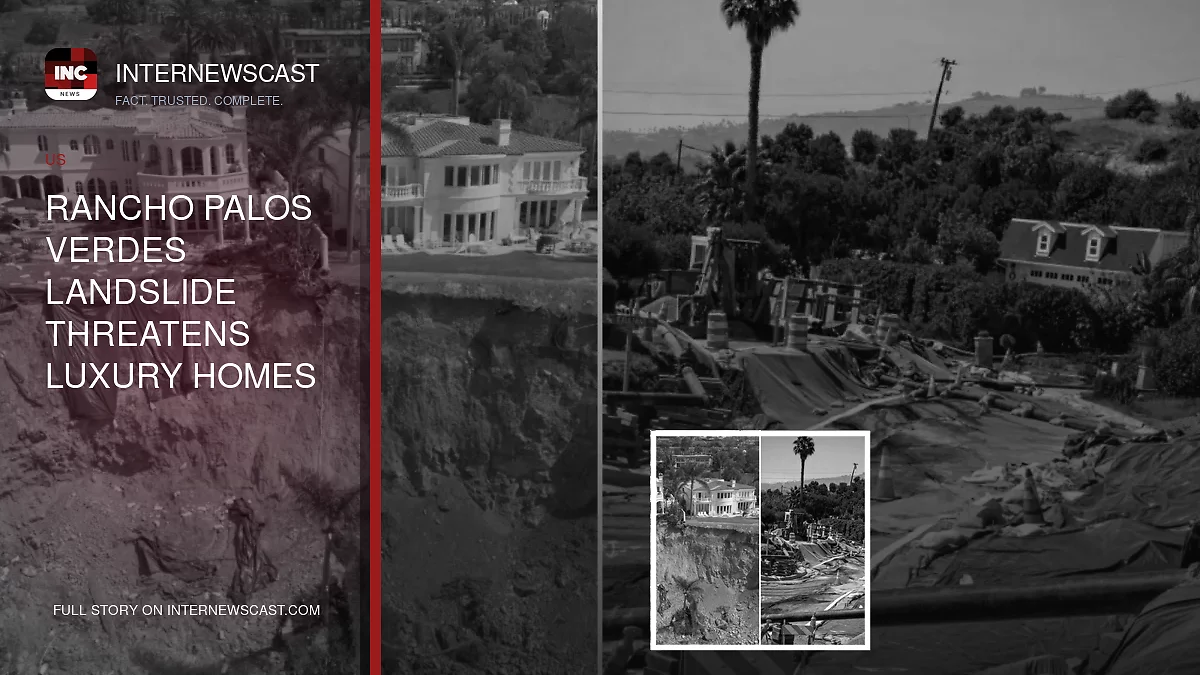
The ground is shifting beneath one of Los Angeles’ most exclusive coastal communities, sending million-dollar properties inching toward the Pacific as a potentially rain-soaked winter threatens to intensify the damage.
Portuguese Bend in Rancho Palos Verdes is now moving more than an inch each week. The renewed acceleration has officials watching the damaged coastline closely as another bout of heavy rain approaches.
The latest surge came after tropical storm-driven waves battered the Southern California coast in mid-October, stripping away more of the shoreline.
It is a troubling development for a community celebrated for sweeping views of the Pacific Ocean and Catalina Island. While the scenery remains, the terrain has been torn open by enormous fissures, some reaching 20 feet deep and others stretching roughly 12 feet wide.
The hillside has already demonstrated how quickly conditions can deteriorate.
After decades of limited movement, above-average rainfall in recent years triggered a much more dramatic slide. In some sections, the ground shifted by as much as a foot per week.
The movement has since slowed, partly because the city installed wells to draw water from the soil. But the destruction remains, and the underlying landslide threat is unlikely to be eliminated entirely.
CONTINUE READING: Driver Convicted of Murdering Headteacher He Mowed Down and Dragged
Now, the enclave faces another challenge as a super El Niño is expected to bring heavy rain to Southern California in the coming weeks. For residents already living on unstable ground, another wet winter is unwelcome news.
There has been at least one positive development. City officials said preparations for winter, including the filling of large cracks, “fared well” during recent rainfall.
Palos Verdes Drive South, which runs through the slide area and normally floods during rainy weather, also did not require pump trucks during the latest downpour.
Still, a short-term reprieve is far from an all-clear.
The land is moving more rapidly than it was in August, the hillside remains deeply scarred, and officials are preparing for another potentially waterlogged season without a permanent solution.
The financial stakes are particularly high in a neighborhood where median listing prices range from approximately $1.99 million to $2.21 million. Larger luxury homes and coastal properties outside the affected zone can sell for substantially more.


