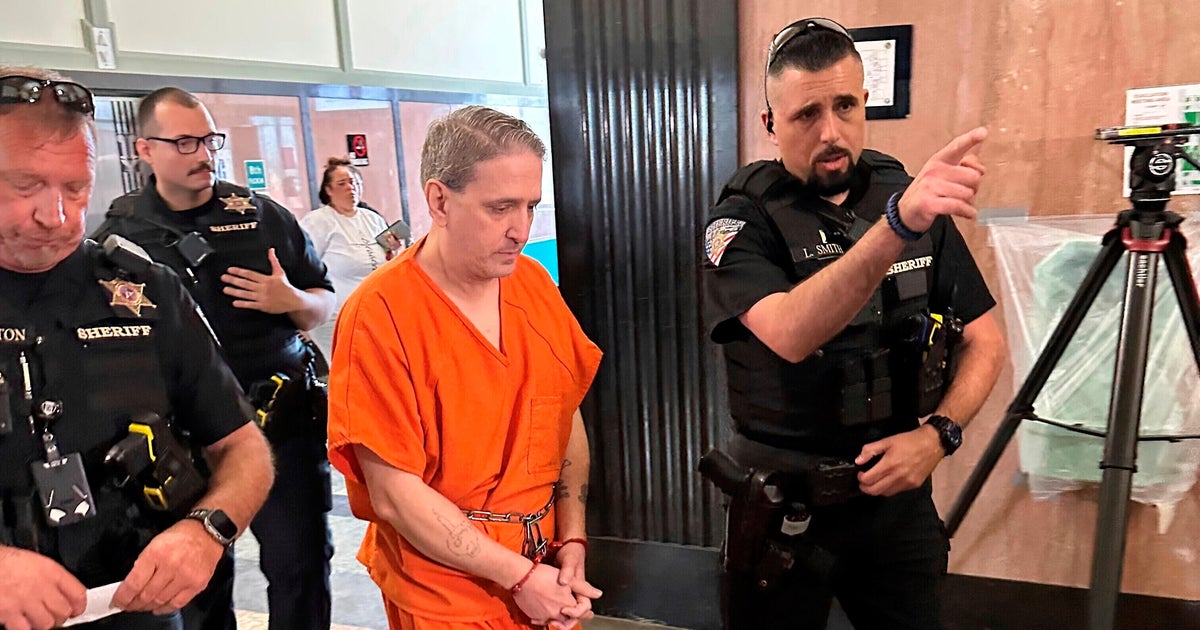

An inmate from Oklahoma, who has spent almost 30 years on death row, is now on the cusp of freedom after being granted bond following a new trial. Richard Glossip, 63, has been in prison since his 1997 arrest for the murder of his former employer, Barry Van Treese. After enduring numerous legal battles, execution dates, and even “last meals,” Glossip has finally been offered a chance to leave incarceration.
Judge Natalie Mai of Oklahoma set Glossip’s bond at $500,000, according to a recent court order. This arrangement requires him to wear a monitoring device and restricts his movements outside the state. Additionally, Glossip must refrain from contacting any potential witnesses involved in his case and is prohibited from using drugs or alcohol.
The decision references a 2023 letter addressed to Oklahoma’s Pardon and Parole Board, which highlighted that the evidence “does not support that he is guilty of first-degree murder beyond a reasonable doubt.”
Van Treese, at the time of his demise, was the proprietor of a motel in Oklahoma City where Glossip was employed. Court documents reveal that Van Treese was fatally beaten with a baseball bat.
Justin Sneed, who confessed to the physical act of the murder, alleged that Glossip hired him for the task. Sneed’s testimony was pivotal in securing Glossip’s conviction during the trial, leading to his own life sentence. However, in 2022, questions arose about the reliability of Sneed’s statements after it was discovered that Oklahoma prosecutors had undisclosed knowledge of a possible mental illness affecting him.
Another man, Justin Sneed, confessed to physically carrying out the killing but claimed Glossip paid him to do it. Sneed, who received a lifetime prison sentence, was a crucial witness for the prosecution during Glossip’s capital murder trial. But the validity of his testimony was called into question in 2022, after the state of Oklahoma found evidence that he may have had a mental illness known to prosecutors that went undisclosed in court.
That was the focus of a Supreme Court case that ultimately determined the prosecution’s failure to correct Sneed’s testimony violated Glossip’s constitutional right to due process, granting him a new trial with an order issued in February 2025. Oklahoma Attorney General Gentner Drummond said in June that the state intended to retry Glossip for Van Treese’s death and would not toss out the first-degree murder charge against him, although his office planned to seek a sentence of life imprisonment rather than the death penalty.
Glossip was convicted twice of capital murder. He maintained his innocence throughout his time on Oklahoma’s death row, which saw him narrowly avoid execution three separate times. Nine execution dates were scheduled for him in total. In one instance, an execution was called off after correctional officers had already strapped Glossip to a gurney and begun preparing to give him a lethal injection.
Glossip’s wife told AP in a text that the couple were “grateful for the court’s decision.”
“We have been praying for this day,” she said.


