
Share this @internewscast.com
A Chicago-based doctor has raised concerns following the recent vote by a federal vaccine advisory committee to discontinue the longstanding guidance for administering the hepatitis B vaccine to all newborns in the U.S. on their first day.
This move marks a significant shift from decades of established vaccine policy in the United States. While some have welcomed this change, detractors argue it could pose risks to children’s health.
ABC7 Chicago is now streaming 24/7. Click here to watch
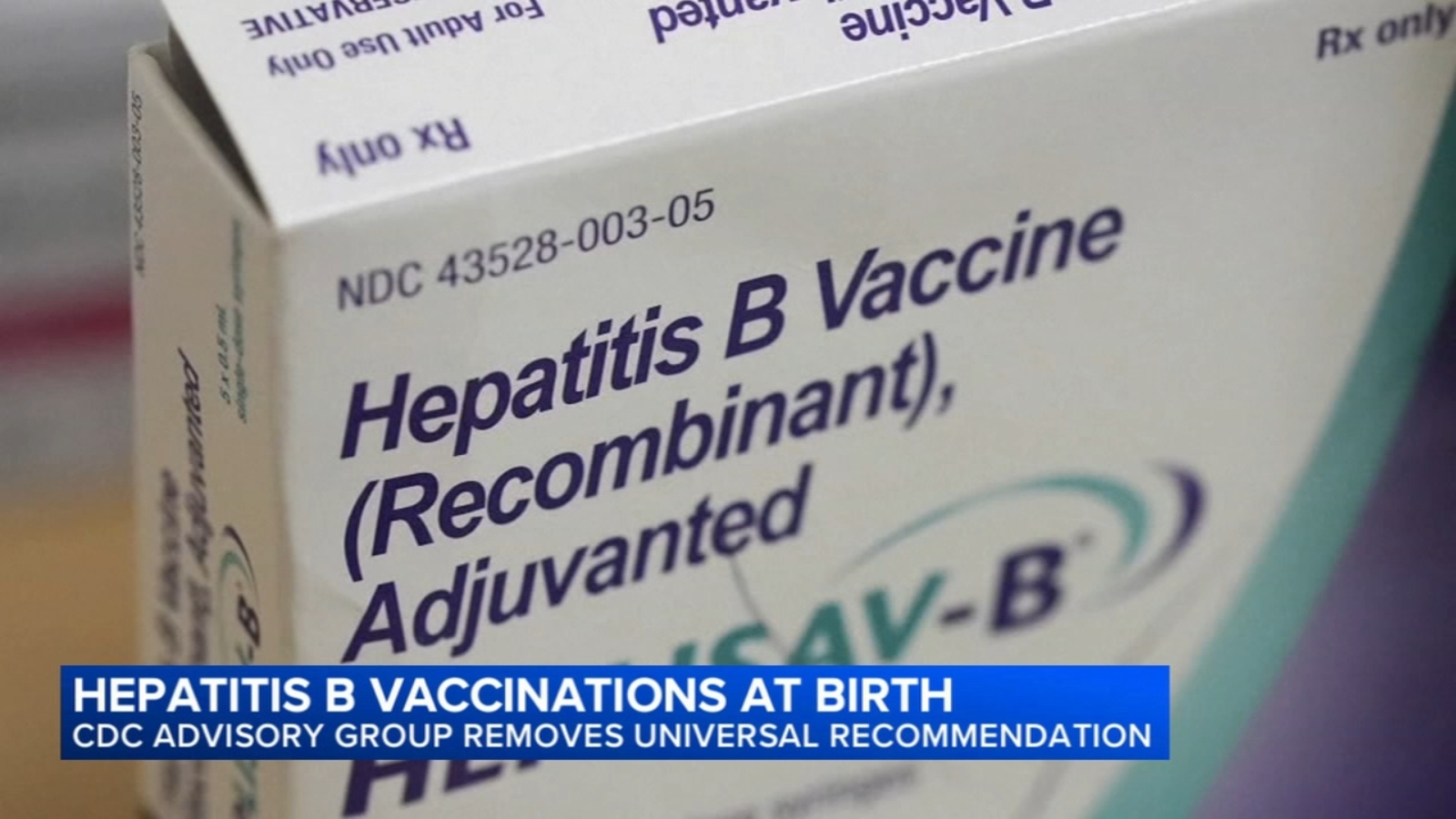
The Centers for Disease Control and Prevention’s Advisory Committee on Immunization Practices has opted to revoke the universal recommendation, meaning that some infants will no longer receive the hepatitis B vaccine at birth.
Dr. Margaret Scotellaro from Rush Children’s Hospital voiced her concerns, stating, “These decisions are not grounded in science and thus jeopardize infants by potentially exposing them to a life-threatening illness.”
Dr. Scotellaro is among the healthcare professionals and public health experts expressing alarm over the committee’s recent decision.
The panel voted 8-to-3 in favor of ending the birth vaccination requirement. The members were appointed by Health and Human Services Secretary Robert F. Kennedy Jr., who has a history of criticizing certain vaccines. Earlier this year, he dismissed the panel’s previous 17 members.
“The language offers flexibility, access, coverage at any time. I vote yes,” ACIP member Hillary Blackburn said.
The panel wants the vaccine recommendation to be based on a mother’s testing status instead, relying on individual decision-making in consultation with a health care provider, meaning if a mother tests negative for hepatitis B, parents should decide, with the guidance of their doctor, whether the shot is right for their newborn. If a mother tests positive for hepatitis B or has unknown status, parents should continue to get their newborn vaccinated.
Hepatitis B is a liver infection caused by a virus. It is highly infectious and can be dangerous to children and infants, and make them more likely to develop chronic disease.
Critics say the new policy change could have wide-reaching consequences.
“The problem is the infants that do get hepatitis B easier in that situation or they didn’t know that someone in the family is a carrier of the illness, and so parents think they’re making decision for their individual case, not thinking that they could be one of those other people who felt the same way. The wider implication is that this is eroding people’s confidence in vaccines are safe and effective,” Scotellaro said.
The policy change is not expected to affect insurance coverage.
Although the CDC acting director is expected to sign off on the recommendation, the change may not have much effect in Illinois after the governor signed into law a landmark bill ordering the state’s department of public health to establish and publish its own vaccine guidelines.
The committee is expected in the near future to make other recommendations regarding older children and vaccine policy.