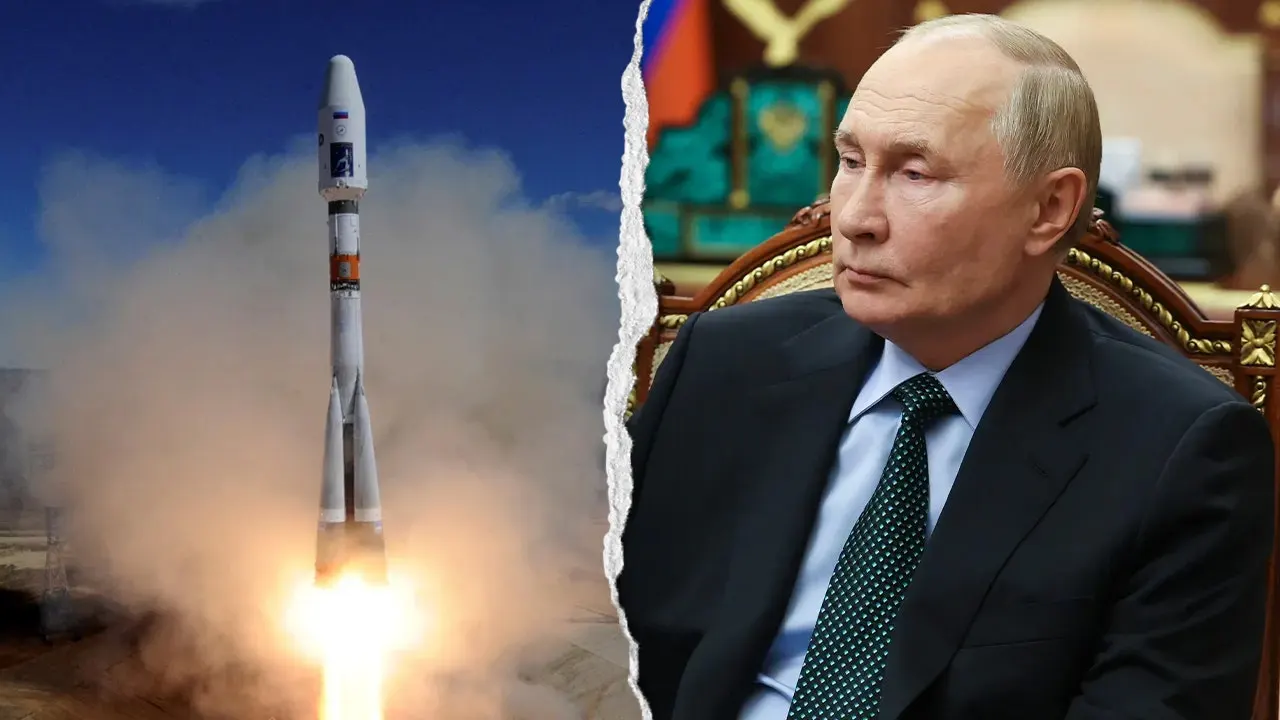
US confirms weapons in orbit as Russia and China issue fresh space warnings
Chief national security correspondent Jennifer Griffin joins ‘The Faulkner Focus’ to examine the expanding threat of orbital warfare after the U.S. acknowledged that weapons have been deployed in space. She discusses the national security risks as concerns grow over the space capabilities of Russia and China.
Russia may be capable of launching a nuclear-armed satellite within 60 days, according to Western intelligence assessments reported Monday. The warning has fueled concern that Moscow could deploy a weapon capable of disabling or disrupting thousands of satellites operated by the United States and its allies.
The assessments surfaced four days after President Donald Trump met with Russian President Vladimir Putin and Chinese President Xi Jinping at a closely watched summit in Shenzhen, China, where nuclear arms control was among the key issues discussed.
The three leaders released a joint statement declaring that nuclear war must never be fought, but they did not announce any legally binding arms-control agreement.
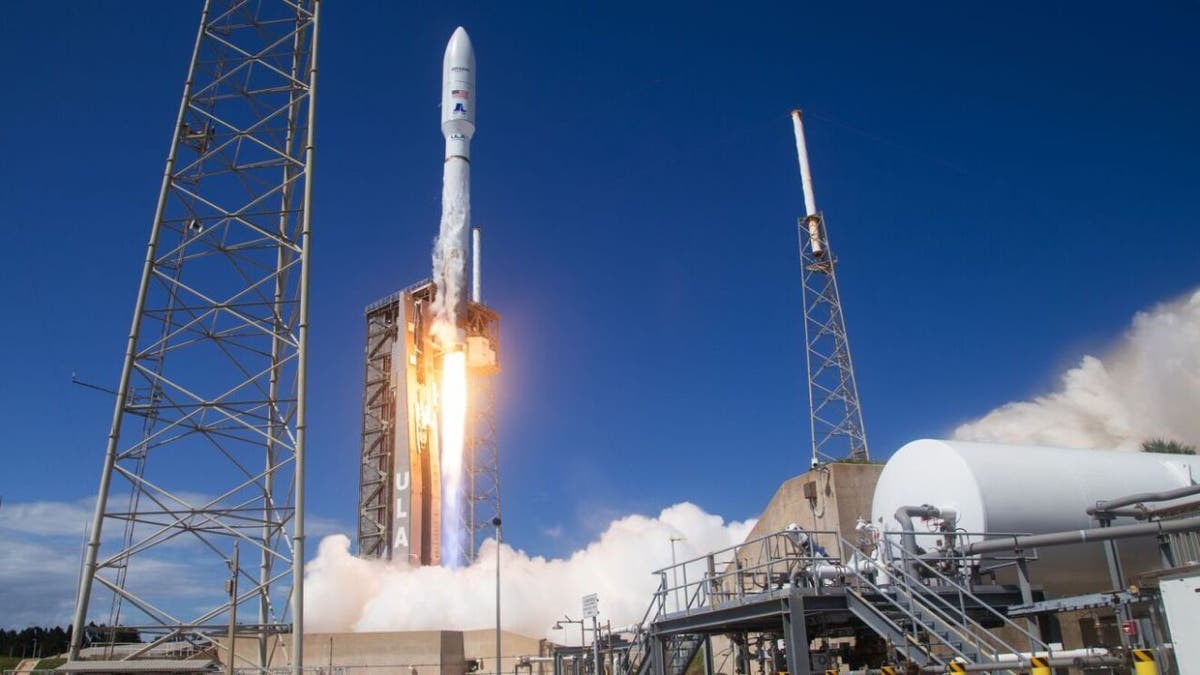
Next-generation satellite launch (Amazon)
NATO Secretary General Mark Rutte and German Chancellor Friedrich Merz addressed the intelligence reports publicly Monday, while the Kremlin rejected the allegations.
A joint investigation released Nov. 23 by German broadcasters WDR and NDR and the newspaper Süddeutsche Zeitung said Western intelligence agencies believe Russia has built a satellite called “Sputnik-S.” The spacecraft has reportedly been held in the Moscow region for several years.
Intelligence briefings shared with several NATO nations in early November reportedly indicated that the satellite could be launched within 60 days and may be equipped to carry a nuclear warhead. Germany’s military Space Command reportedly judged that a December launch was possible.
The German report said military officials had also briefed senior government leaders, including Defense Minister Boris Pistorius, about the potential danger.
The disclosures quickly drew reactions from European officials.
Appearing with Rutte in Berlin on Monday, Merz called the reports “shocking,” while acknowledging that Russia’s suspected nuclear ambitions in space had been a subject of concern for some time.

German Chancellor Friedrich Merz drew criticism while discussing the country’s migration policies. (Thomas Traasdahl/Ritzau Scanpix via AP)
Rutte said NATO was continuing to review and strengthen its defensive posture.
“I can assure you, we will always make sure that we defend every inch of NATO territory,” Rutte said, according to Reuters.
He said NATO’s defense planning took potential threats in space into account and noted that the alliance had response measures that would not necessarily be made public.
CONTINUE READING: Exclusive: Ohio Rep. Michael Rulli Urges a GOP ‘Awakening’
The Kremlin rejected the claims. Russian presidential spokesperson Dmitry Peskov challenged the reliability of the intelligence reporting, arguing that it relied on numerous unsupported assertions that were “hardly worth taking seriously,” according to The Moscow Times.
“We haven’t seen the report. But there are so many ‘alleged’ and ‘possible’ claims in it, attributed to who knows whom, that it’s certainly hardly worth taking them seriously,” Kremlin spokesman Dmitry Peskov told reporters at his daily briefing.
Russia’s Embassy in Berlin also characterized the reports as part of a propaganda effort, insisting that Moscow’s space program was peaceful and complied with international law.
The new warnings follow an earlier assessment from the U.S. Defense Intelligence Agency, which publicly disclosed in October that Russia was developing a nuclear-capable satellite. “Russia is developing a satellite designed to carry a nuclear weapon,” the DIA said in its 2026 Challenges to Security in Space assessment.
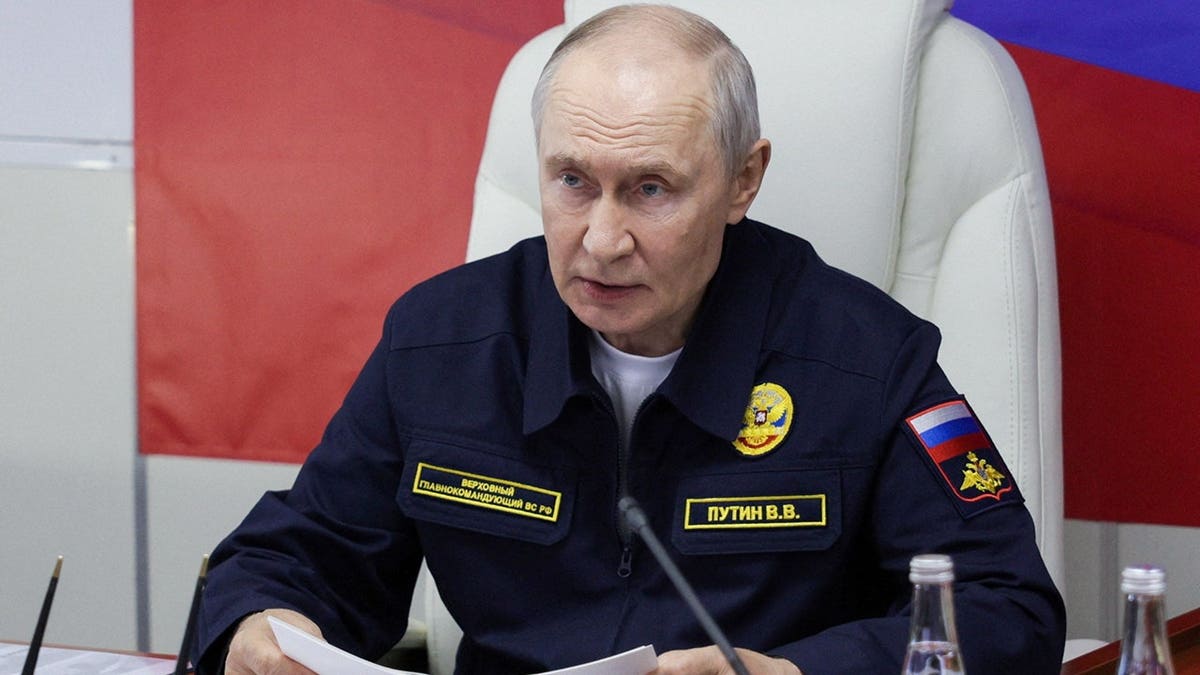
FILE – Russian President Vladimir Putin leads a meeting aboard the missile cruiser Varyag in Russia’s far eastern Sakhalin region on Wednesday, Aug. 12, 2026. Putin has previously denied that Russia is conducting a sabotage campaign against Europe. (Reuters)
As News Outlet reported Oct. 29, the agency said such a weapon could rapidly damage or destroy thousands of satellites operated by governments and commercial companies.
A nuclear blast in orbit would differ from a conventional anti-satellite attack aimed at one spacecraft. Its radiation and electromagnetic effects could potentially disable large portions of the satellite network at once.
The impact would not be limited to military operations. Satellites help power GPS navigation, global communications, financial systems, weather monitoring and other critical infrastructure.
The potential threat is especially significant for Ukraine, whose forces depend heavily on satellite communications, including SpaceX’s Starlink network, during the war with Russia.
The Biden administration first publicly acknowledged the concern in February 2024, saying Russia was developing a dangerous anti-satellite capability. Officials emphasized at the time that no such weapon had yet been deployed.
Deploying a nuclear weapon in orbit would breach the 1967 Outer Space Treaty, which bars nations from placing nuclear weapons or other weapons of mass destruction in space.
The German investigation indicates that the threat may be moving closer to an operational phase, although major questions remain. It is not known whether the satellite is already carrying a nuclear warhead or whether Western intelligence agencies have independently confirmed preparations for a launch.
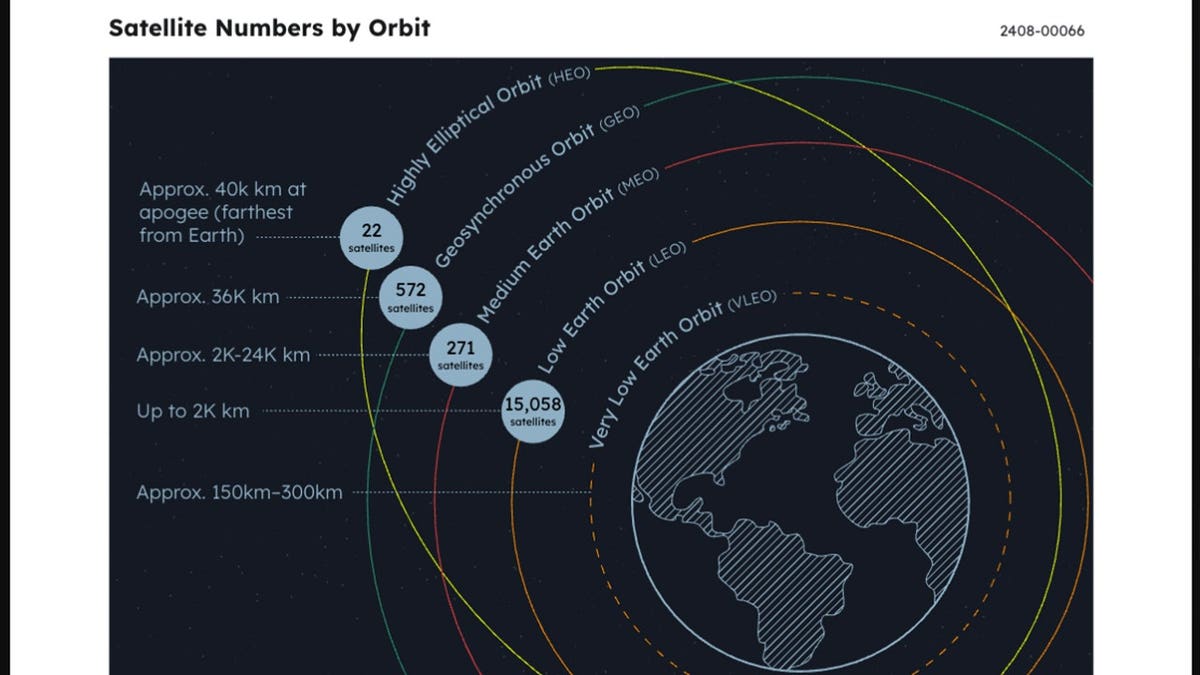
A Defense Intelligence Agency graphic illustrates satellite traffic at various orbital altitudes, including more than 15,000 satellites in low-Earth orbit. (Defense Intelligence Agency)
News Outlet has requested comment from the White House, Pentagon, U.S. Space Command and the German Embassy.
CONTINUE READING: TV Star Sam Wood’s ‘Perfect’ Noosa Trip Before His Arrest